
A community college lab asks which OSI layer opens, keeps, and closes the dialogue between two applications. Which layer owns that job?
Select an answer to reveal the explanation.
Short Explanation
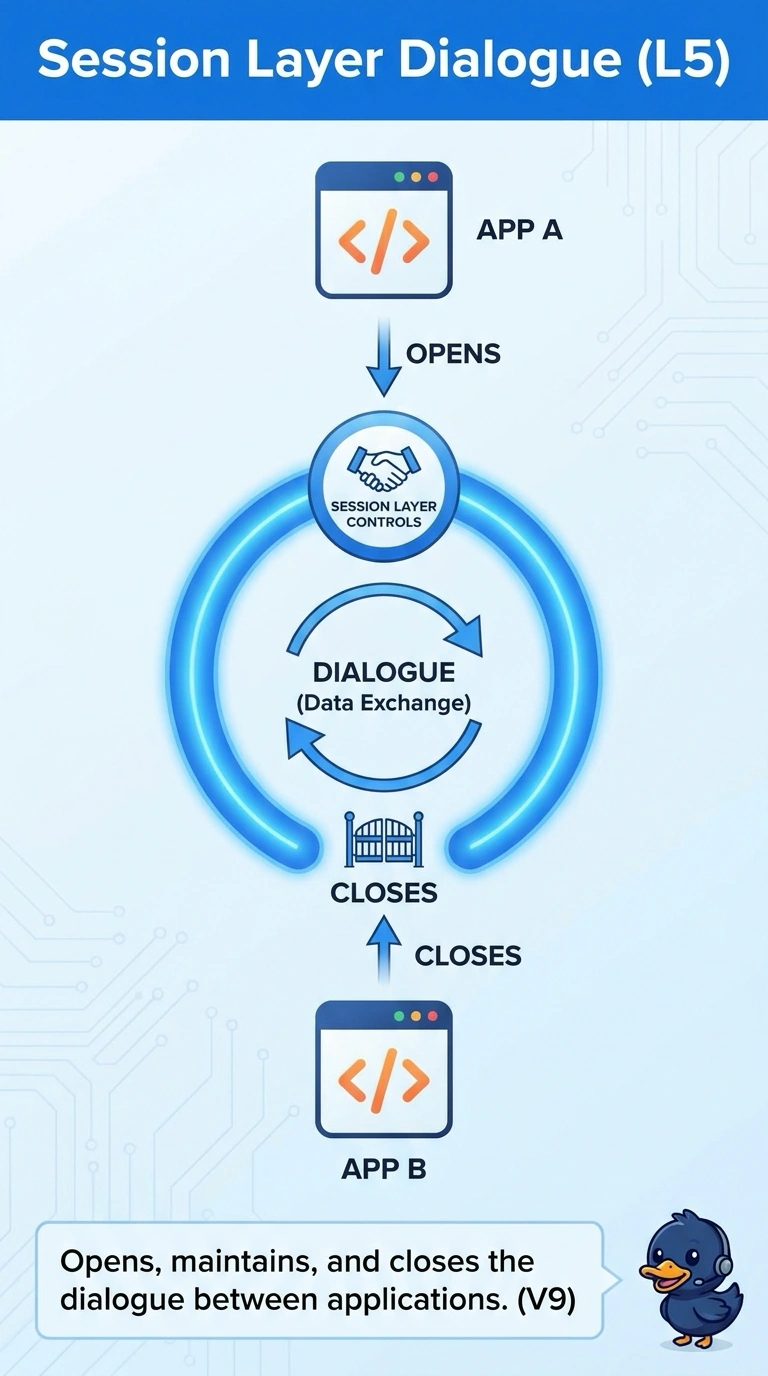
Think of a phone call: somebody has to set the call up, keep it going, and hang up, and that job is separate from the words you speak. On the OSI model this exam uses, that dialogue belongs to the session layer. The trap is treating a TCP connection as if it were the session layer, or handing the job to presentation just because it sits next door.
Full Explanation
The OSI session layer is responsible for establishing, managing, and terminating the communication dialogue between applications. It is the layer this exam associates with setting up and tearing down that conversation, distinct from moving segments reliably and distinct from formatting or encrypting the payload. A TCP connection is a transport-layer function. Students often call it a session because the word shows up in everyday speech, but on this model the transport layer handles port-to-port delivery and reliability choices, not the session-layer dialogue. The presentation layer deals with formatting, translation, and the encryption placement this exam uses. It does not open the dialogue. The physical layer moves bits on the medium and does not reassemble an application dialogue. Exam caveat: real applications often fold session behavior into the application itself, and the exam still expects the session layer when the stem asks who manages the dialogue. Operational check: when you map a symptom, ask whether the failure is a dropped conversation between applications, a port that never answers, or a cable with no link, and name the layer that matches that symptom.