
Staff at a school must browse the internet through one system that authenticates them and logs every site they open. Which system does that job?
Select an answer to reveal the explanation.
Short Explanation
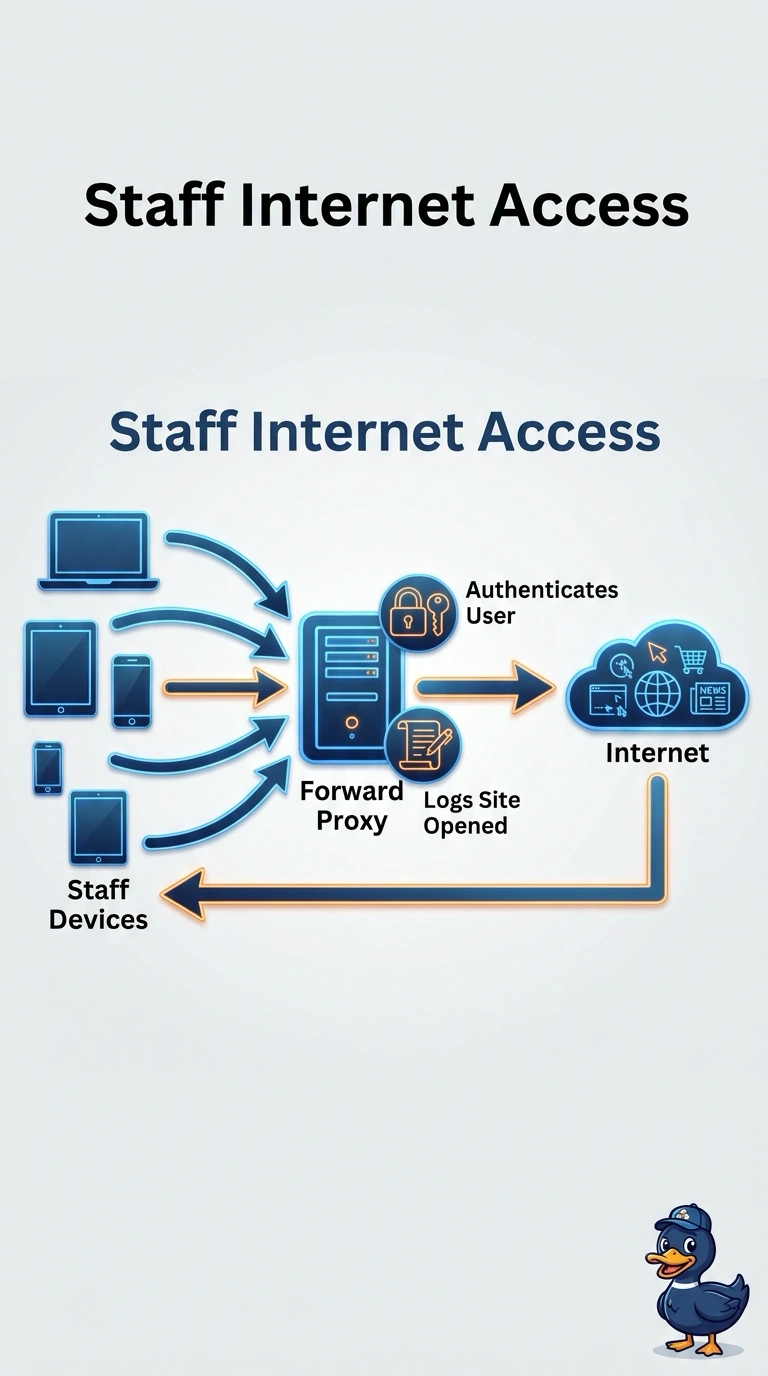
The browser has to check in with a receptionist who writes down every site, instead of walking straight out the door. You point staff browsers at a forward proxy so that one system authenticates them and logs what they open. A reverse proxy, a DNS filter, or a proxy the browsers are not pointed at does not do that job.
Full Explanation
A forward proxy sits in front of internal users. Browsers are pointed at it, it authenticates the person, it opens the outside connection, and it logs the site. A reverse proxy publishes a school server to outsiders. It does not log staff as they browse. A DNS filter can block a name. It does not authenticate the person, and it does not log the site after the lookup succeeds. A transparent proxy is the tempting twin because it can also sit in the path. The stem says the browsers are pointed at the system. A proxy they are not pointed at is not the one this design named. Exam caveat: the proxy only logs browsing that actually goes through it. A client that bypasses it leaves a hole in the log. Operational check: browse to a test site from a staff PC, confirm the proxy challenges for authentication, and confirm the log names that user and that site. Record the reading before the change and the reading after it so the next shift can see the symptom actually moved. Leave both readings in the ticket with the time, and do not close the item on a guess.