
On the OSI model this exam uses, a study item asks which layer is associated with data formatting and encryption. Which layer should the candidate name?
Select an answer to reveal the explanation.
Short Explanation
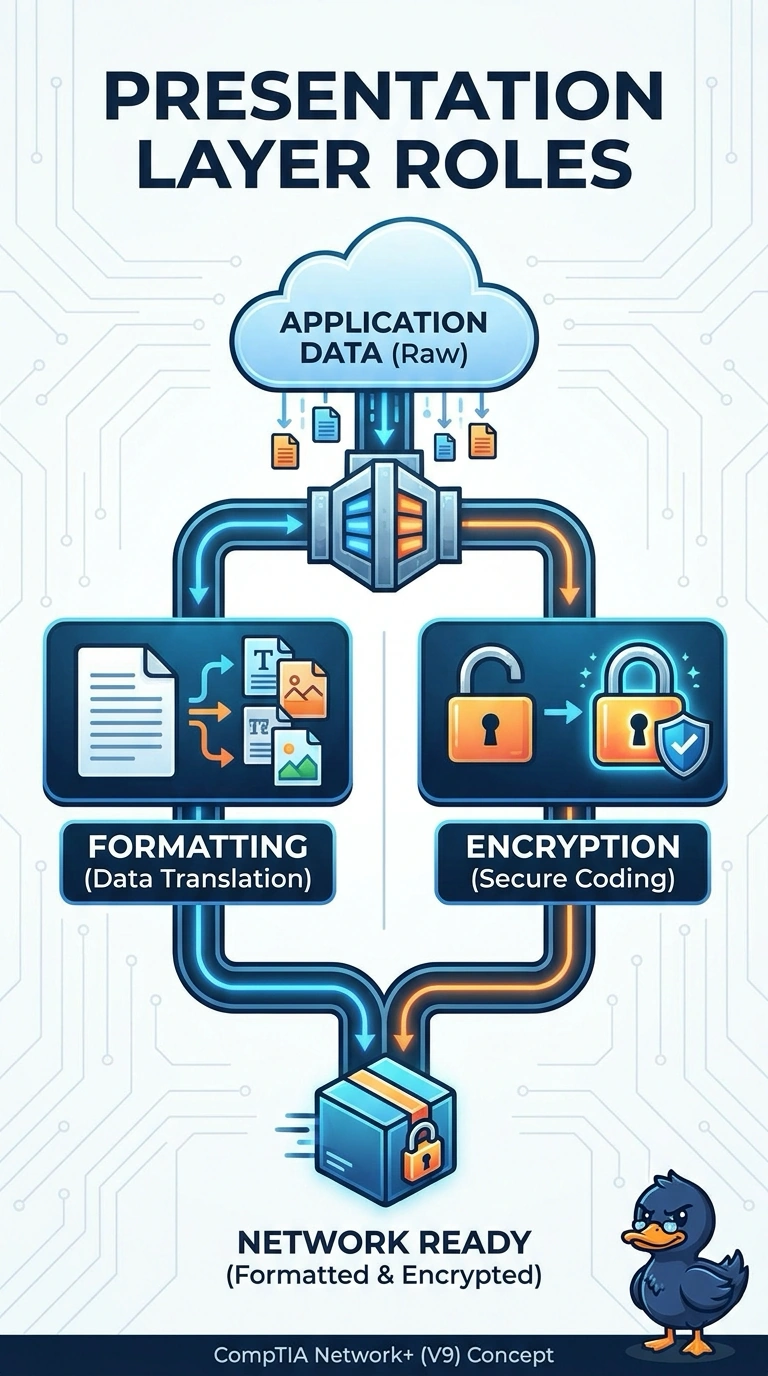
This exam's OSI chart hangs formatting and encryption on one peg, and that peg is the presentation layer. You name presentation when the item asks where this model puts those jobs. Real TLS is not confined to a single layer, and the exam still wants presentation for encryption anyway.
Full Explanation
On the OSI model CompTIA uses for this exam, the presentation layer is the layer associated with data formatting and with encryption. A candidate who is asked where this model places those functions should name the presentation layer. The session layer, in the same model, is associated with setting up, managing, and ending a dialogue between systems. It is the neighboring layer people confuse with presentation, and it is not the encryption peg on this exam. The transport layer is associated with end-to-end delivery, segmentation, and port numbers. Ports matter to a secure session, and they are not the formatting and encryption association the item is asking for. The application layer is associated with the network process closest to the user, such as a browser or a file service. Encryption can serve that process, and the exam's chart still does not put the encryption function there. Exam caveat: real TLS is not confined to one OSI layer. It sits in the stack in a way textbooks argue about, often described around the boundary above transport, and a working design does not fail because a diagram drew it in one box. On this exam, encryption is still placed at the presentation layer. Operational check: when a practice item pairs formatting or encryption with a layer number, answer presentation, and keep a separate note that a packet capture of TLS will show the handshake above the transport port rather than a clean single-layer box.