
A library branch is installing a cable modem, and the coax lead ends in a threaded connector that screws onto the modem. Which connector is that?
Select an answer to reveal the explanation.
Short Explanation
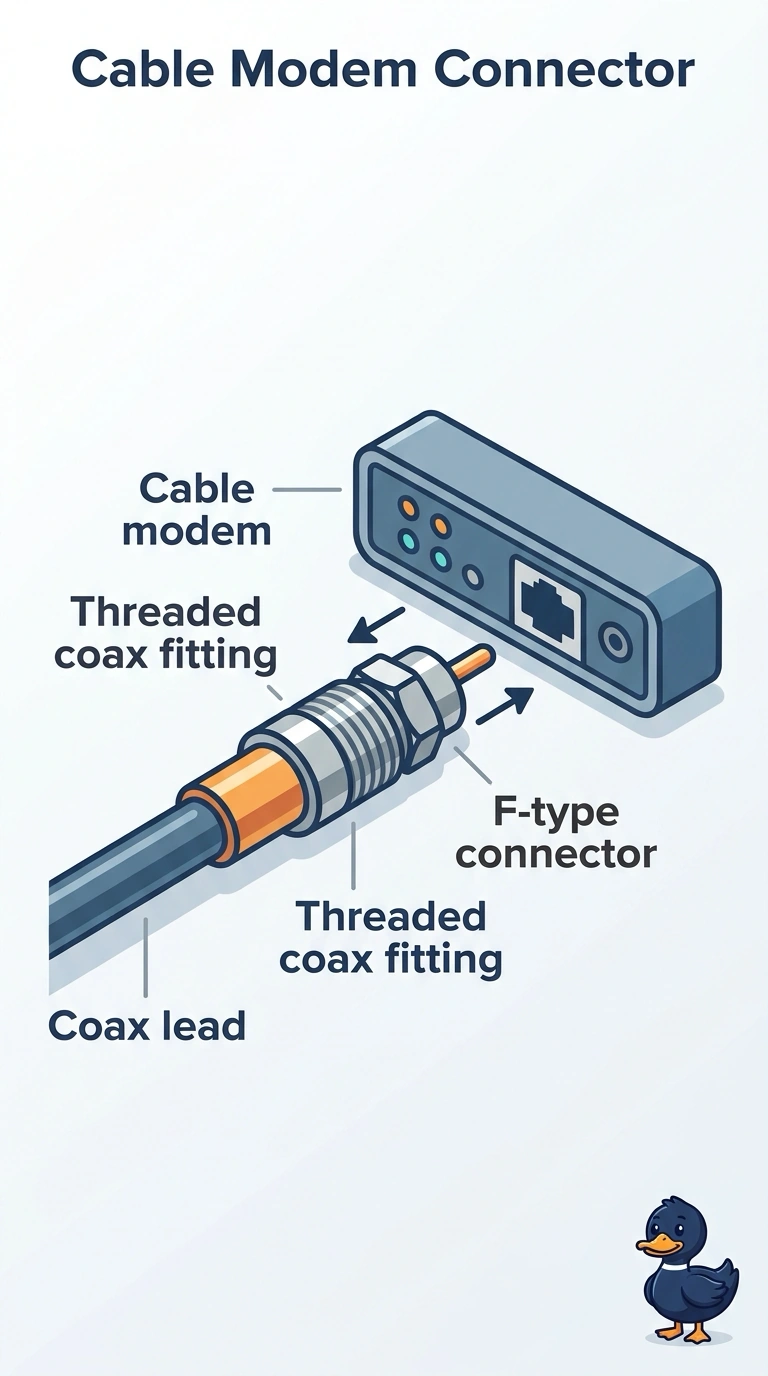
You can tell this is a coax lead because its fitting screws onto the modem. That threaded fitting is an F-type connector. The LC fiber plug, RJ45 Ethernet plug, and RJ11 telephone plug attach differently and do not screw onto a coax jack.
Full Explanation
An F-type connector is the threaded coaxial fitting used on cable-television and cable-modem leads. It screws onto the matching jack, bringing the center conductor and shield into contact. Since the library branch lead is coax and its fitting screws onto the modem, it uses an F-type connector. An LC connector is a small fiber connector commonly used as a duplex plug on a switch’s fiber module; it latches into the module and carries an optical signal rather than connecting coax. An RJ45 plug terminates copper Ethernet runs. Its rectangular, eight-position body clicks into a jack and is not the threaded fitting on the modem’s coax lead. An RJ11 plug is the smaller modular connector used for telephone wiring, including the handset cord described here; it clicks into a jack and is not designed for coax. Exam caveat: cable modems may also have an Ethernet connection, but the question identifies the cable entering the modem as coax and describes a threaded fitting, which points to F-type. Practical check: trace the lead to confirm it is coax, check that its connector threads directly onto the modem, and distinguish that coax input from the modem’s separate RJ45 Ethernet port, which connects toward the branch router.