
A factory database team wants a block device delivered over the storage network, so the server sees a disk as if it were local. Which design provides that?
Select an answer to reveal the explanation.
Short Explanation
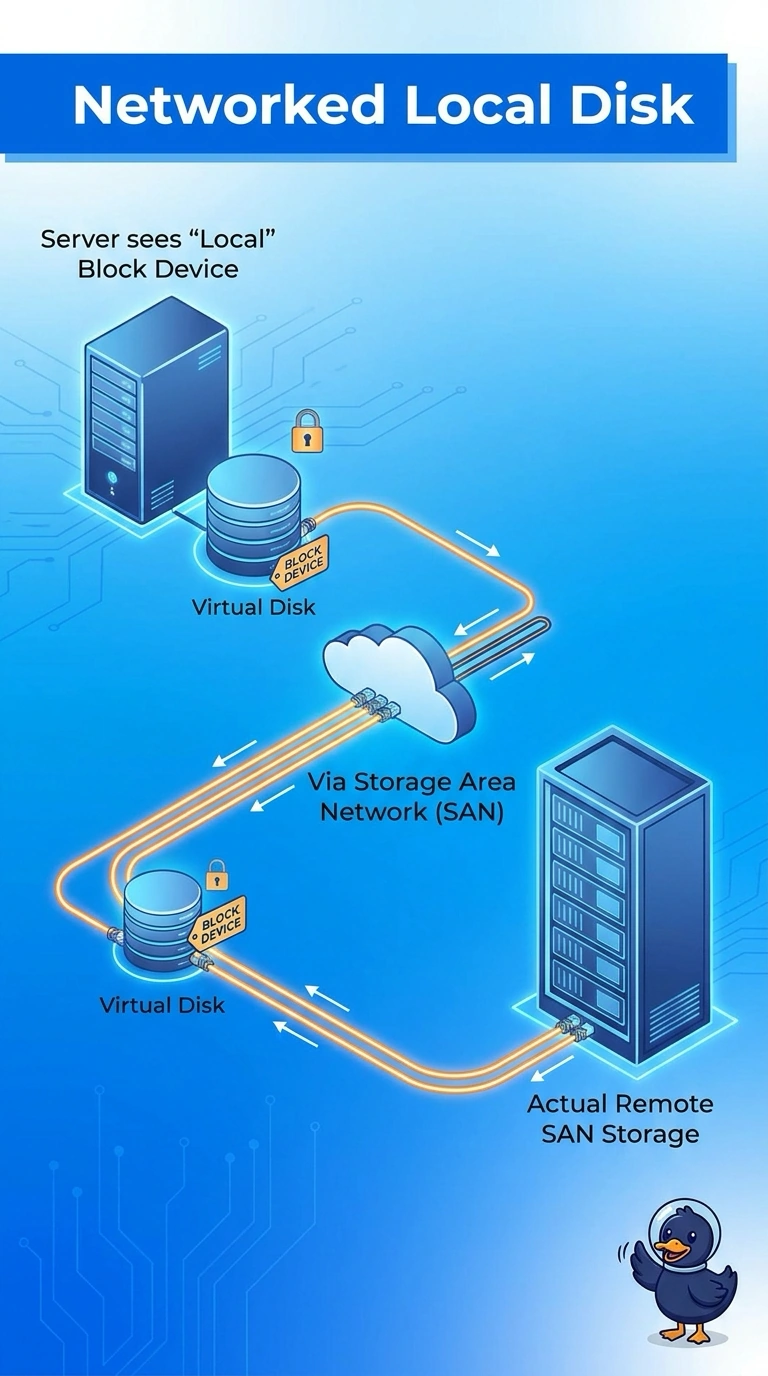
A storage area network hands the server a raw disk and lets the server bring its own filing system. You asked for a block device that looks local, delivered over the storage network, and that is a SAN. A file share is folders, even if you wish it were a disk, and disks inside the chassis never cross the storage network.
Full Explanation
A storage area network presents block storage across a storage network. The server sees a disk, writes blocks, and usually formats it with its own file system. That is the local-looking device the database team asked for. Network-attached storage is the near miss. The server mounts a share of files and folders, and the appliance owns the file system. Useful for department files, and not a block device the database server formats as a local disk. Calling a file mount the same view as a local disk skips that split. Direct-attached disks do look local, and they sit in the chassis. The stem requires delivery over the storage network, so internal disks miss the path. Exam caveat: a server can use a SAN volume for the database and a file share for exports. The requirement here is the block device. Operational check: confirm a new block device appears, confirm the operating system can format it as a disk, and confirm the path is the storage network rather than a file-share mount. A drive letter that is actually a mapped folder is still the file share.