
A firewall rule must allow encrypted command-line administration of a Linux server and must keep clear-text Telnet blocked. Which destination port should the allow rule use?
Select an answer to reveal the explanation.
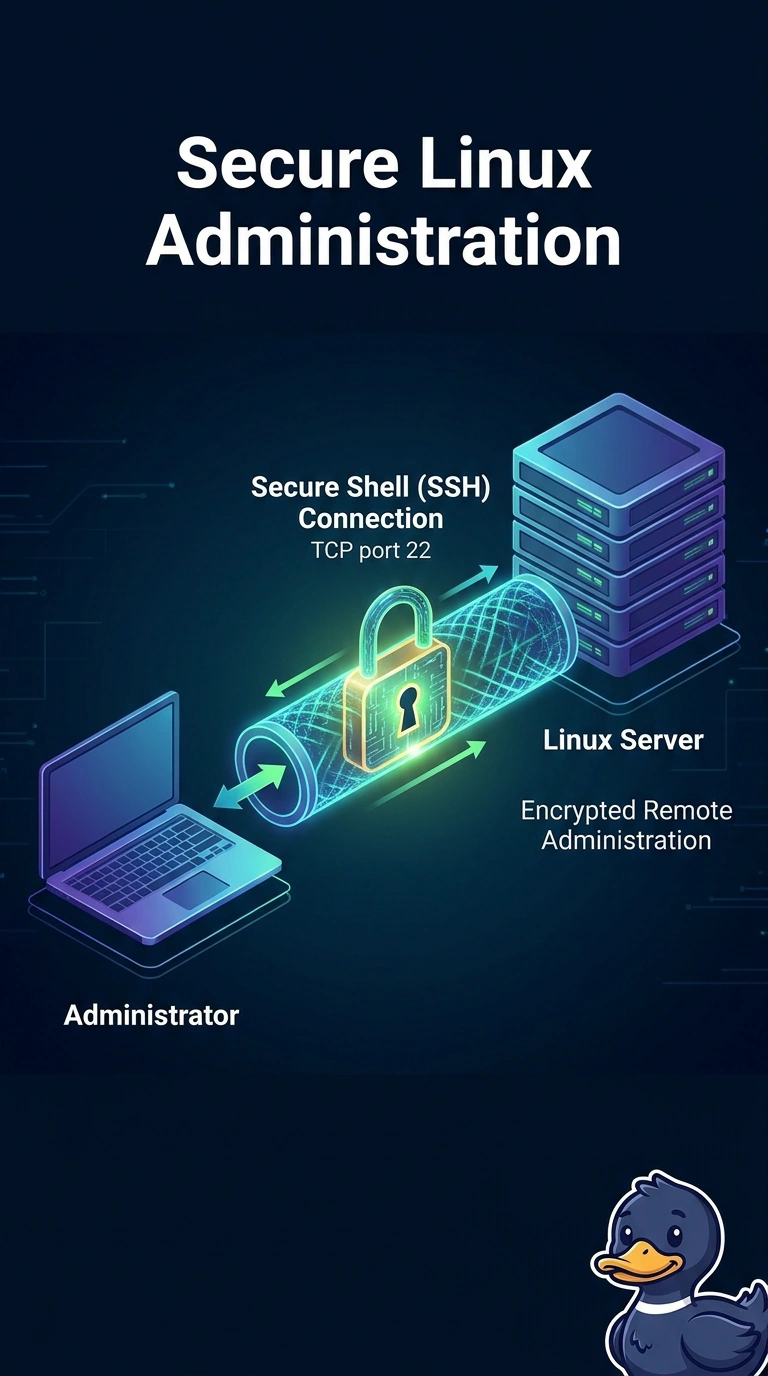
Short Explanation
You want a remote command line that is locked in a tunnel, and that service is Secure Shell. You open TCP 22 for it and you leave TCP 23 shut, because Telnet would type the same session in clear text. Remote desktop and HTTPS are encrypted options for other jobs, not for this Linux shell.
Full Explanation
Secure Shell provides an encrypted remote command line, and the exam's published port list assigns it TCP 22. An allow rule for encrypted administration of the Linux server should permit TCP 22 to that server. Telnet is the clear-text predecessor, assigned TCP 23, and the change request says it must stay blocked. Opening 23 would provide the command line and violate the security requirement at the same time. TCP 3389 is Remote Desktop Protocol, a graphical session used by Windows hosts. It is not how an administrator opens a shell on Linux, even though the traffic can be protected. TCP 443 is HTTPS, encrypted web traffic. A browser session to a web console might use it, and the stem asks for command-line administration, which is Secure Shell rather than a web page. Exam caveat: the same port 22 is also the published port for SFTP, because SFTP rides on Secure Shell. A rule that allows TCP 22 allows both the shell and SFTP file transfer unless a later control restricts the subsystem. Operational check: from a permitted admin host, open a Secure Shell session to the server and confirm it completes on port 22, then confirm a Telnet attempt to port 23 is denied and logged.