
A city clerk needs a hosted permitting application, will use it only through a browser, and must not patch either the operating system or the application. Which service model fits?
Select an answer to reveal the explanation.
Short Explanation
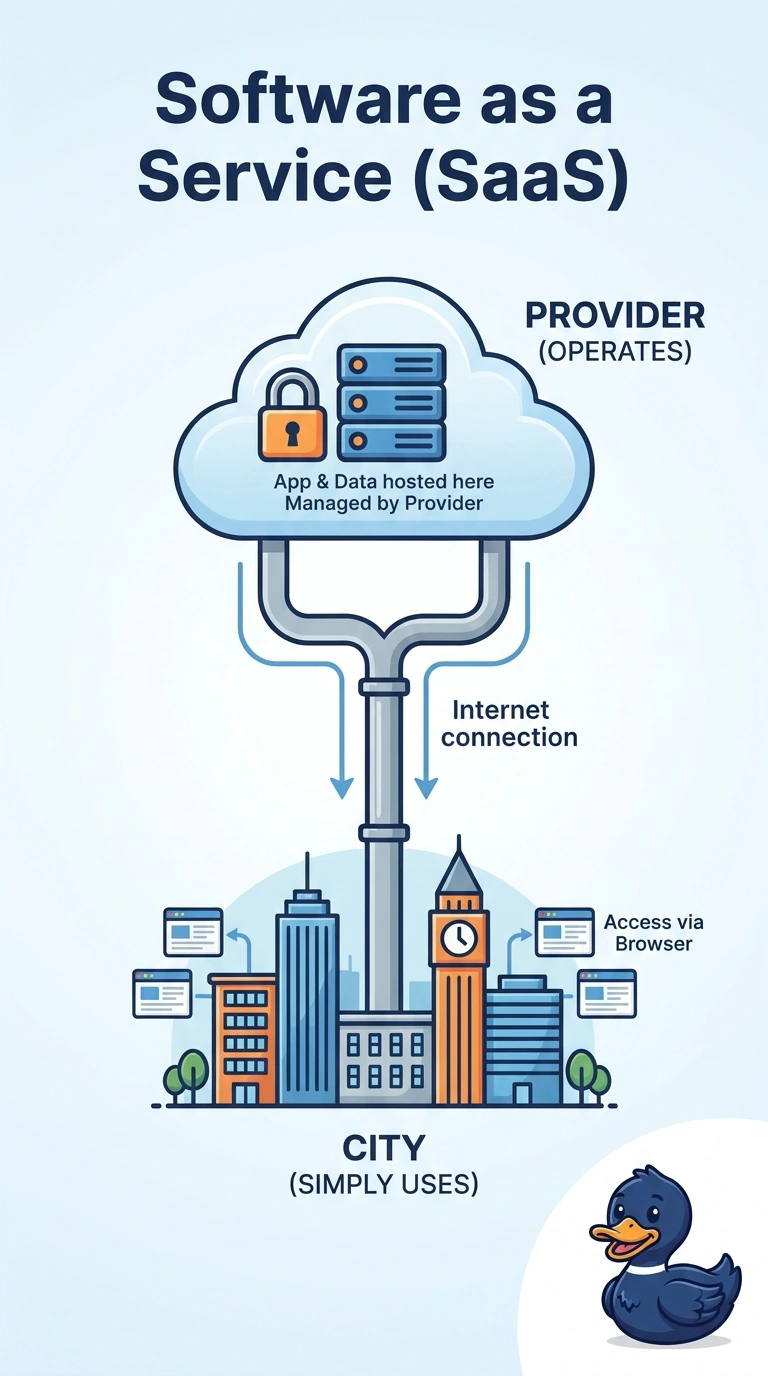
When you use a finished application through a browser and the provider handles its patches, software as a service fits your needs. You avoid maintaining a machine or deploying your own permitting code. A public-cloud label alone doesn’t tell you who operates the application.
Full Explanation
Software as a service delivers a finished application that the provider operates and patches, while you use it, commonly through a browser. That fits your requirement not to patch either the operating system or the permitting application. With infrastructure as a service, you receive virtual machines, networks, and storage, but you must patch the guest operating system and install and maintain the application. That leaves you with the work you want to avoid. With platform as a service, the provider manages the runtime and underlying operating system, but you deploy and maintain your own permitting code. That still makes the city responsible for its application. A public-cloud deployment describes infrastructure offered to multiple customers; it can host infrastructure, platform, or software services, so the label alone does not mean the provider patches every guest system or application. Exam caveat: service boundaries can be mixed by contract, so check the actual division of responsibilities rather than relying on a model name. Practical check: confirm the provider’s service description assigns it application patching and operation, and that your role is limited to using the application through a browser and managing your access and data.