
Clients on every VLAN served by one campus DHCP server receive 169.254 addresses. Each scope still has many free addresses, and the relays are configured. The server process is stopped. Which fault is this?
Select an answer to reveal the explanation.
Short Explanation
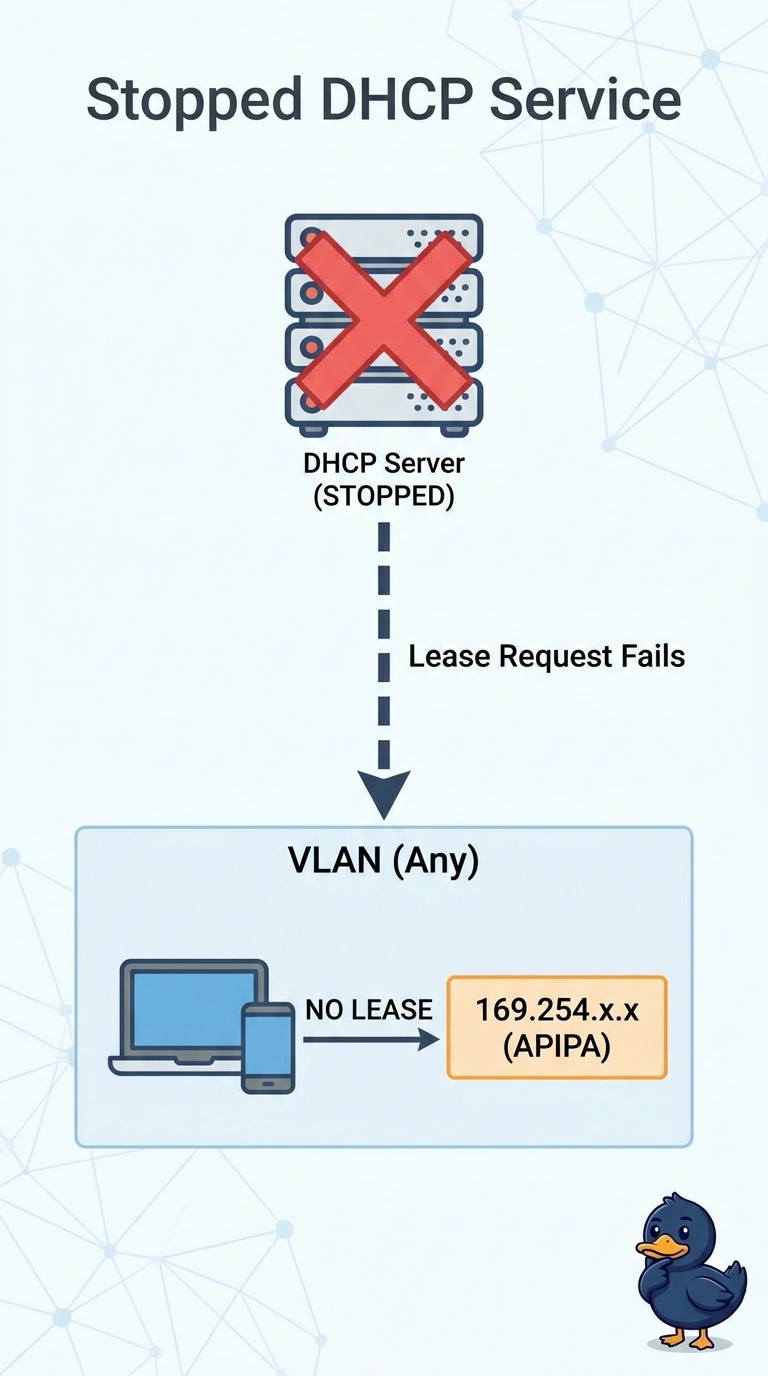
You can rule out pool exhaustion because every scope still has free addresses, and the relays are already configured. The DHCP service is stopped, so no VLAN can get a lease from that server and clients fall back to 169.254 addresses; a missing PTR record would affect reverse lookups, not DHCP.
Full Explanation
Clients use 169.254 addresses when IPv4 DHCP fails. Here, every VLAN served by one server is affected, the scopes still have free addresses, the relays are configured, and the server process is stopped. With the DHCP service stopped, the server cannot offer leases, so no VLAN receives a lease from it; this is the fault described. Pool exhaustion does not fit because the scopes have free addresses, and it would not explain why every VLAN fails while relying on this stopped service. A missing relay does not fit because the relays are confirmed in place; a relay missing on one VLAN would affect that VLAN, not make all VLANs fail. A missing PTR record affects reverse lookups, not DHCP lease delivery, so it does not cause clients to use 169.254 addresses. Exam caveat: use the stated server-process status to distinguish a stopped service from the other listed causes; do not overlook that direct evidence while diagnosing the shared failure. Practical check: start the DHCP service, confirm that test clients on two VLANs receive leases, and investigate why the process stopped.