
A new hotel desk run is 40 meters of Category 5e. The PC negotiates 1 gigabit, but a 10GBASE-T interface on that same run never establishes a 10-gigabit link. Which limitation explains it?
Select an answer to reveal the explanation.
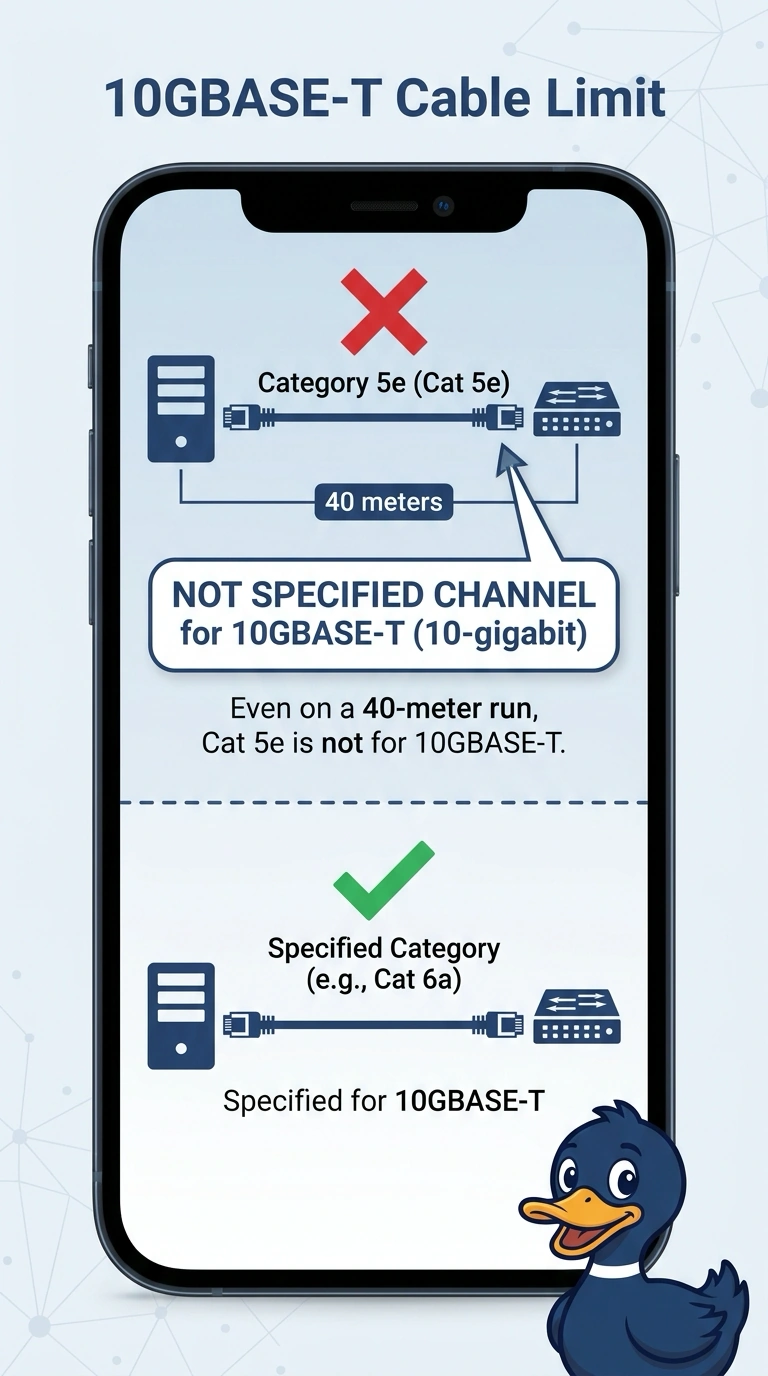
Short Explanation
The run is short enough to be a legal copper channel, and 1 gigabit already proves the pairs carry a signal. What you are asking that cable to do is a faster standard than Category 5e is specified for. 10GBASE-T is a copper standard, so blaming fiber or a VLAN tag misses a link that never trains.
Full Explanation
10GBASE-T is specified over Category 6 for shorter channels and over Category 6A for a full channel. Category 5e is a gigabit copper category, and it is not a specified 10GBASE-T medium. A 40-meter run is inside the 100-meter twisted-pair channel limit, which is why the length distractor is backwards: the run is not too long for copper in general, and 1 gigabit negotiates. 10GBASE-T is the twisted-pair form of 10-gigabit Ethernet, not a fiber standard, so single-mode fiber is the wrong medium to require. A native VLAN mismatch affects which VLAN untagged frames land in after a link is up. It does not prevent only the 10-gigabit speed from training while 1 gigabit works on the same pairs. Exam caveat: some gear may link 10 gigabit over short Category 5e in a lab, and that still is not the specified channel you should accept in a hotel install. Operational check: read the cable jacket, confirm it says Category 5e, and replace the run with Category 6A when the interface must be 10GBASE-T for the full channel.