
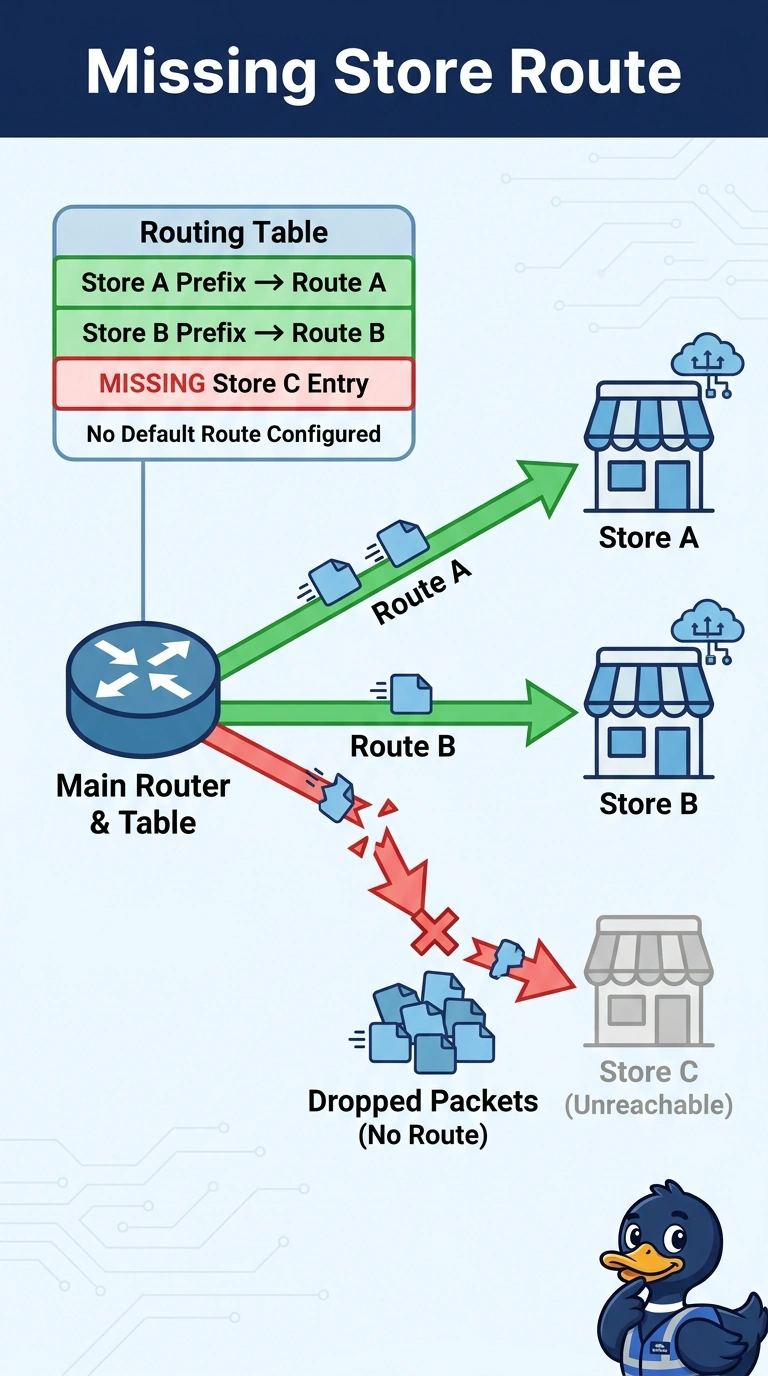
A retail chain's core router has every branch prefix in its routing table except one store. There is no default route to hide the gap. That store is unreachable, and every other store works. Which fault fits?
Select an answer to reveal the explanation.
Short Explanation
Every road is on the map except the one town nobody can reach. You are missing the route for that single store prefix, and there is no default route papering over the hole, which is why the other stores still work. A mask error on every interface, a prefix that is present with a dead next hop, or the default the stem already says is missing does not match an empty spot in the table.
Full Explanation
A router forwards a packet only when the destination matches a route. Every branch prefix is present except one store, and there is no default route to catch the gap. That store is unreachable because its prefix is missing. A wrong mask on every interface would have broken the other stores too. A route whose next hop is down is the tempting twin because that store would also be unreachable. The prefix would still be in the table, and the stem says it never entered. The missing default is already stated. It is not a hiding place for this one store, because the other stores are reached by their own prefixes. Exam caveat: a missing route and a bad next hop both make a site fail, and they look different in the table. Here the prefix is absent. Operational check: compare the table with the branch list, restore the missing advertisement or static route, and confirm the other stores' routes did not change. Record the reading before the change and the reading after it so the next shift can see the symptom actually moved.