
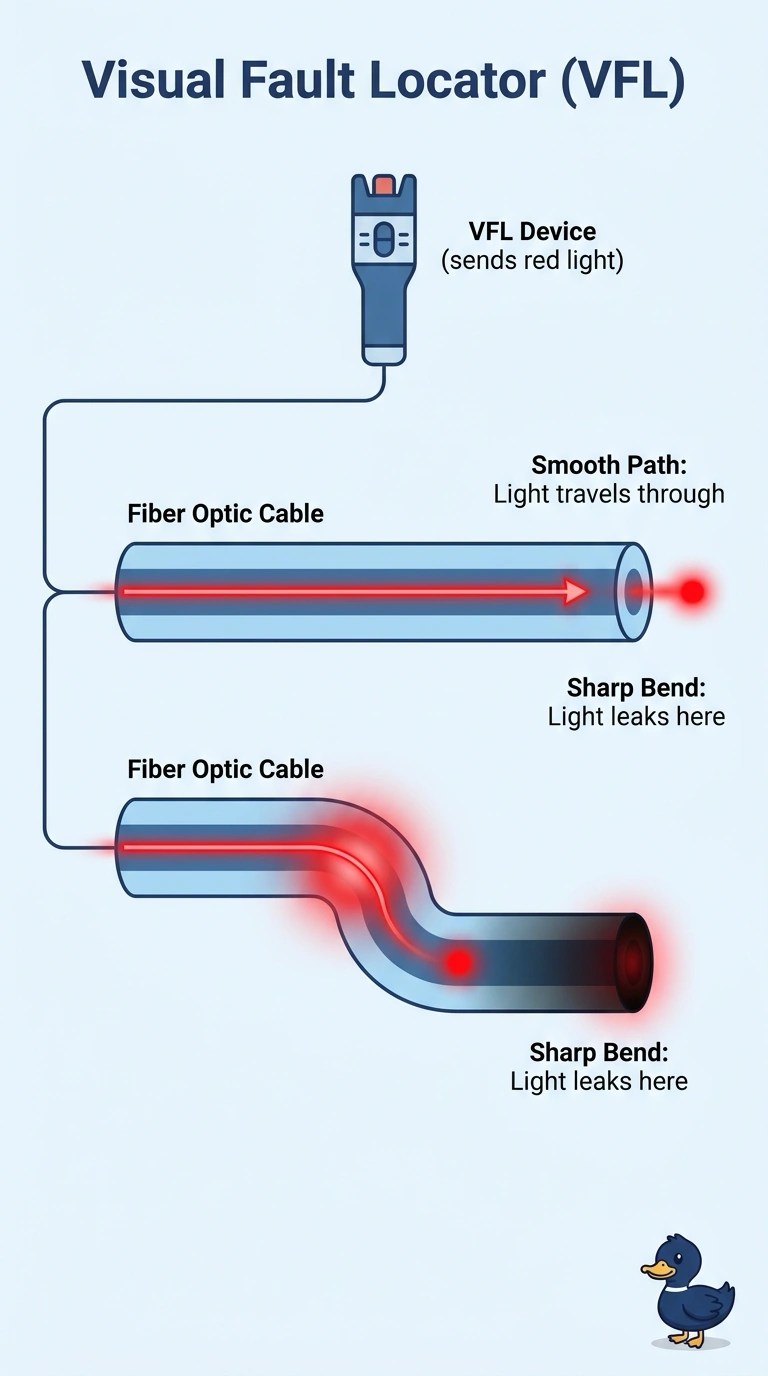
A campus technician injects a red light into a fiber, and the light shines out at a sharp bend in the tray. Which tool is in use?
Select an answer to reveal the explanation.
Short Explanation
Fiber does not hum the way a copper pair does, so you look for the light instead of listening for a tone. A visual fault locator injects visible red light, and a sharp bend in the tray leaks it where you can see it. A copper probe, a wireless analyzer, and a table of learned addresses will not make that bend glow.
Full Explanation
A visual fault locator injects visible red light into a fiber. A sharp bend, a break, or a poorly seated connector lets some of that light escape, so a technician can see the fault in the tray without an optical power meter. The campus test matches that tool: red light in one end, light visible at the bend. A copper tone generator places an electrical tone on a wire, and an inductive probe hears it at the far end or along the pair. Fiber does not carry that tone, and a toner cannot make a glass bend glow red. A wireless analyzer measures radio channels, signal level, and nearby network names. It has no connection to a fiber strand in a tray. The MAC address table on a switch lists hardware addresses learned on each port. It can show which port a live device is using, and it does not inject light or reveal a bend. The fiber may not even be linked while the locator is attached. Exam caveat: a visual fault locator finds a gross bend or break that leaks visible light. It does not measure loss on a link that looks dark and is only a little below the optical budget. Operational check: relieve the bend until the leak disappears, reseat the connector, and then test the span with the appropriate optical meter before calling the path good.