
A school technician theorized that a classroom cord was bad. A tester shows the cord is good, and the link is still down. Which methodology step comes next?
Select an answer to reveal the explanation.
Short Explanation
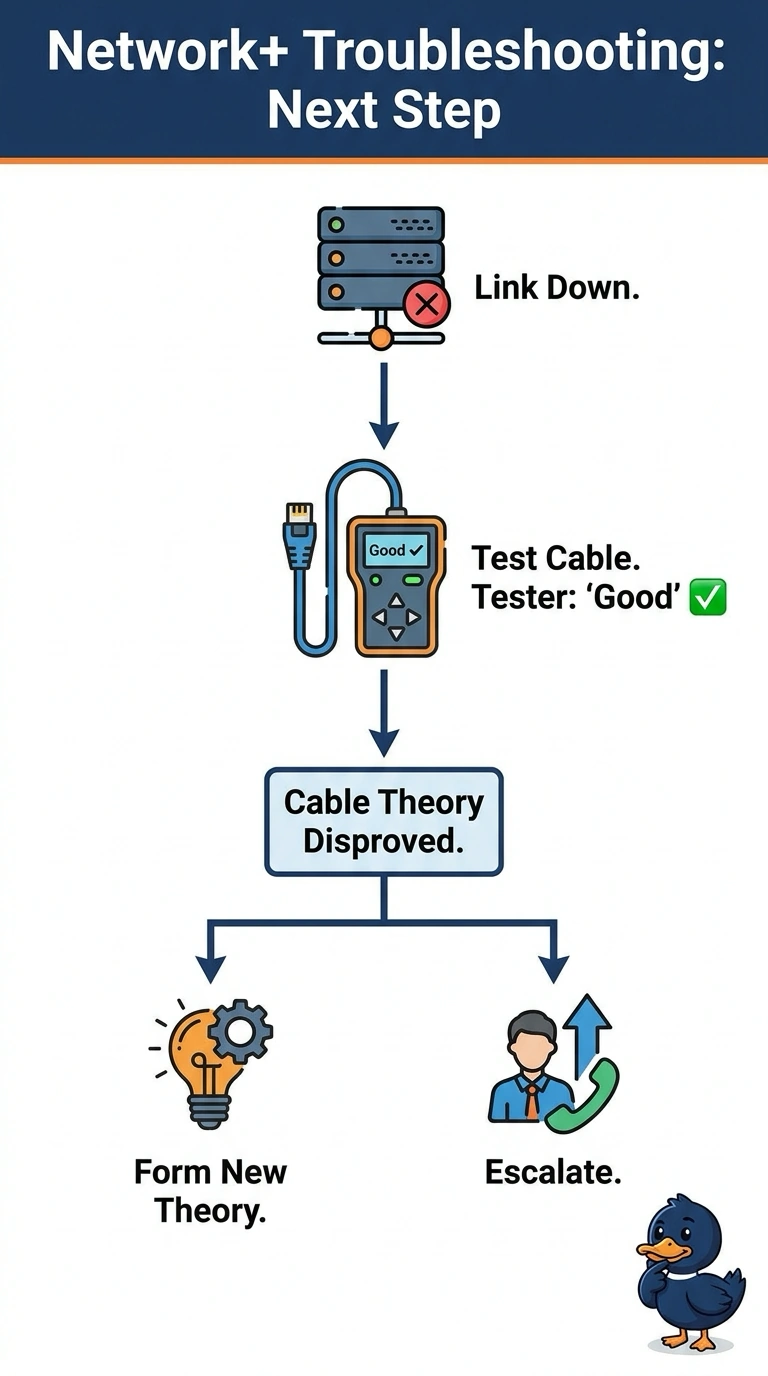
A hypothesis is a guess you agreed to test, not a verdict. You tested the cord, the tester says it is good, and the link is still down, so that theory is finished. The next step is a new theory or an escalation, not a cord swap you already disproved and not a ticket closed on the cause you just eliminated.
Full Explanation
Structured troubleshooting tests a theory against evidence and then branches. If the test supports the theory, the technician plans a fix. If the test contradicts the theory, the technician forms a new theory or escalates. The cable theory said the classroom cord was bad. A tester shows the cord is good, and the link remains down, so the evidence killed that theory. The next step is another theory, such as the switch port, the patch panel, or the far-end device, or an escalation to someone who can test those pieces. Implementing a cord replacement anyway carries out a fix for a cause the test removed. That spends time and changes a part that was not broken. Closing the ticket and naming a bad cord records a cause the tester contradicted, and it leaves the classroom down. Documenting the cord as the cause and stopping treats documentation as a substitute for a theory that survived its test. Documentation comes after a verified fix, and it should describe what was actually found. Exam caveat: escalation is not a failure of the process. When the remaining tests need access or skills the technician does not have, escalating is the step the methodology allows once a theory has failed. Operational check: attach the tester result to the ticket, state that the cord tested good, write the next theory, and either test that theory or hand the ticket to the person who can.