
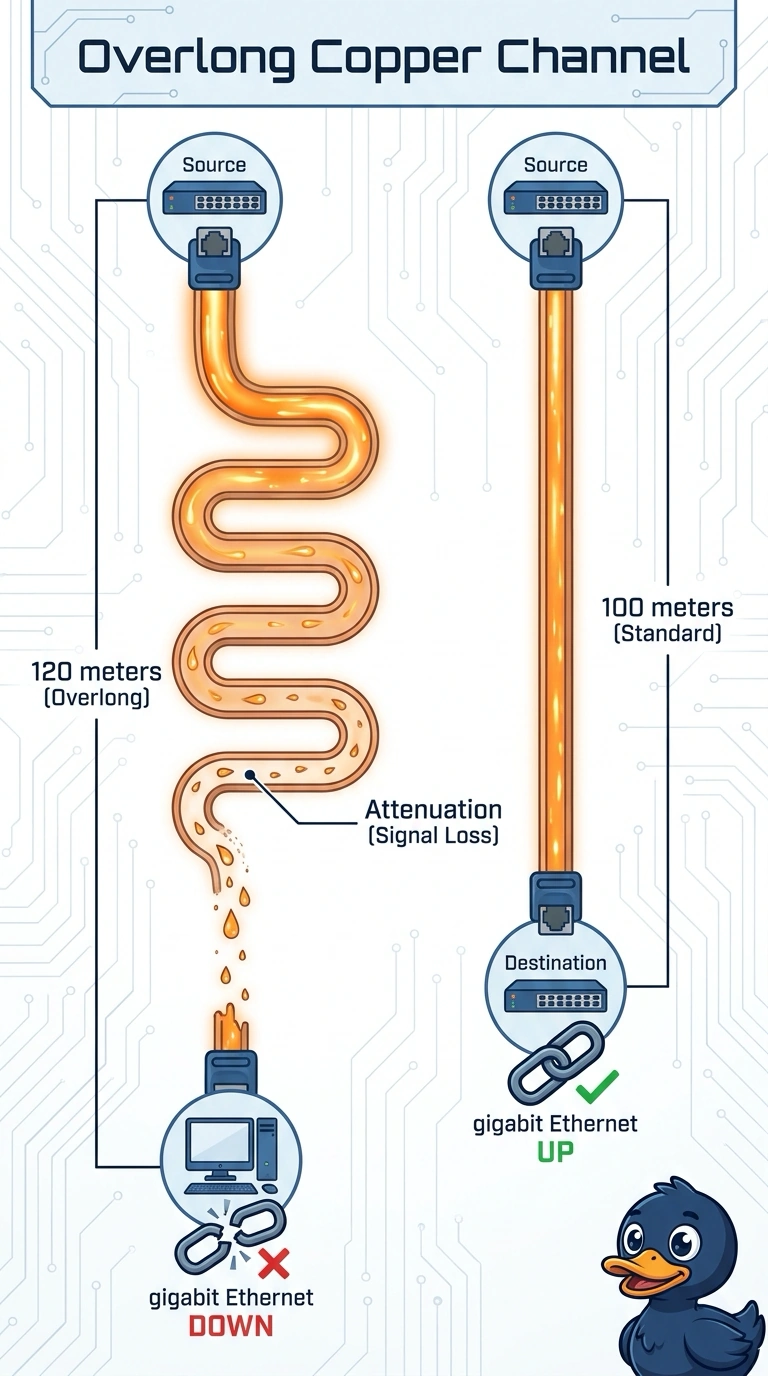
A copper run to a hotel guest room measures 120 meters, and gigabit Ethernet will not stay up. The standard Ethernet channel is 100 meters. Which fault fits that measurement?
Select an answer to reveal the explanation.
Short Explanation
Copper gigabit is a conversation that fades out if the hallway is too long. You measured 120 meters, and the standard Ethernet channel is 100 meters, so the signal is attenuating past what gigabit can keep up. A duplex mismatch can also drop a link, and it does not change the tape measure that already failed the standard.
Full Explanation
The standard Ethernet channel on copper is 100 meters, including the permanent link and the patch cords. This guest-room run measures 120 meters, so the channel is past the standard. Extra length attenuates the signal until gigabit cannot stay up. The claim that attenuation starts only past 150 meters is the tempting revision of the standard. The channel limit you are measured against is 100 meters, so 120 is already over it. Crosstalk from split pairs is a real gigabit killer, and a length reading does not create split pairs. The tester's relevant number here is the footage. A duplex mismatch also keeps a link from staying clean, often with collisions when one side is forced. It is the usual guess for a flapping gigabit port, and the stem's measurement is the length, which duplex will not shorten. Exam caveat: the 100-meter figure is the whole channel, not the permanent link alone. Here the whole run is already 120 meters. Operational check: re-measure end to end, confirm 120 meters, shorten the channel to 100 meters or less, and only then retest gigabit.