
A hotel front-desk PC pings the reservation server by IP address and fails when the same test uses the server's name. Which tool should test the name lookup next?
Select an answer to reveal the explanation.
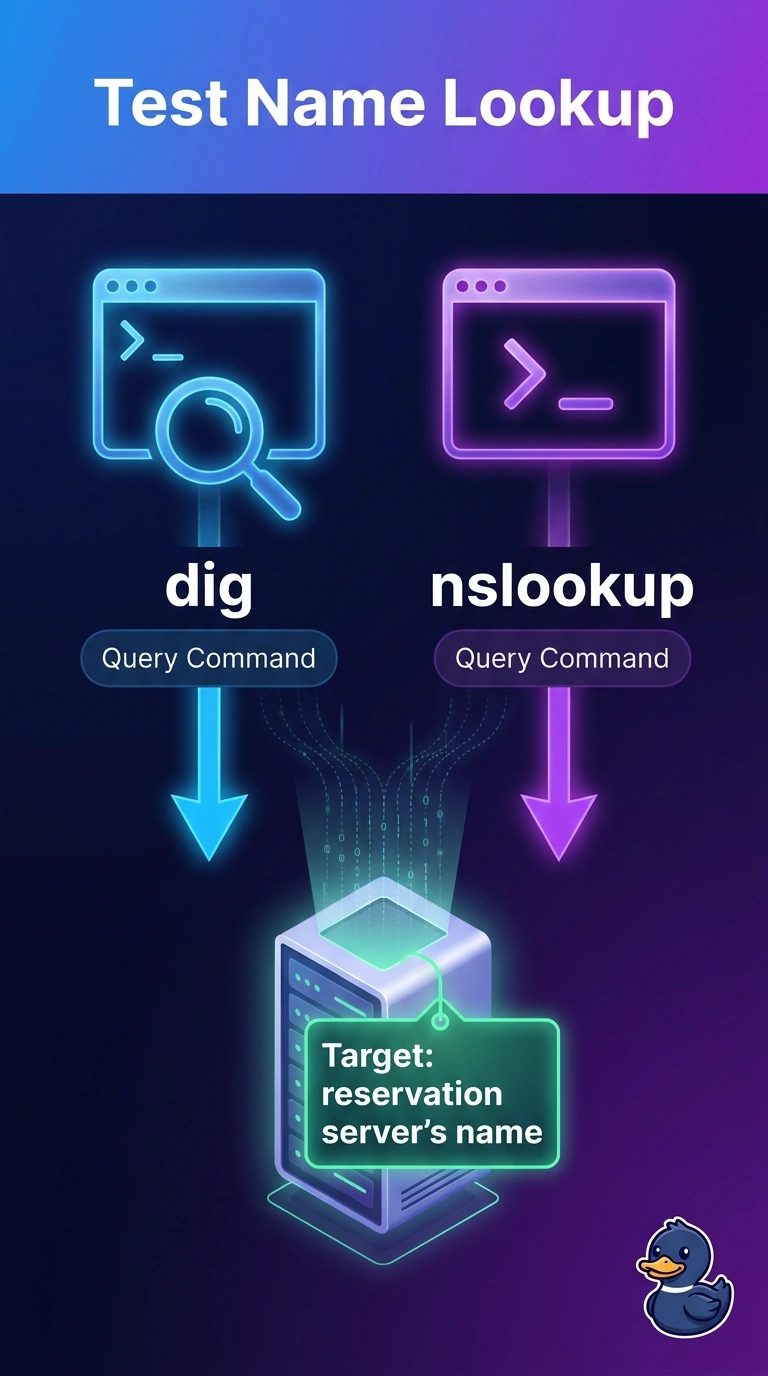
Short Explanation
If you can drive to the building by its street number and you get lost only when you use the name, the road is fine and the directory is the suspect. You already pinged the reservation server by address, so the next test is dig or nslookup against that name. Pinging the name again, or reading which resolver is configured, does not ask that resolver for the record.
Full Explanation
Name resolution and IP forwarding are separate steps. The front-desk PC can ping the reservation server by IP address, so the path to that host already carries ICMP. The same test fails when it uses the server's name, so the PC is not getting a usable address from that name. dig and nslookup ask a resolver for the name and show the answer or the failure. That is the next test. Another ping of the name repeats the symptom and does not display the record, the server that answered, or the error. Traceroute lists routers along a path. The address is already reachable, so a hop list does not explain a name that fails. The DNS server setting shows which resolver the PC will ask. It does not send the reservation name to that resolver, so you still do not know whether the name resolves. Exam caveat: a lookup that returns a stale address looks successful and still sends the PC to the wrong host. Compare the address dig returns with the address that just answered the ping. Operational check: run dig or nslookup for the reservation name, confirm which resolver answered, and compare that address with the IP the ping already proved was alive.