
A technician suspects a single patch cord because one desk has no link and the switch port works with a laptop and a different cord. No cable test has been done yet. Which methodology step comes next?
Select an answer to reveal the explanation.
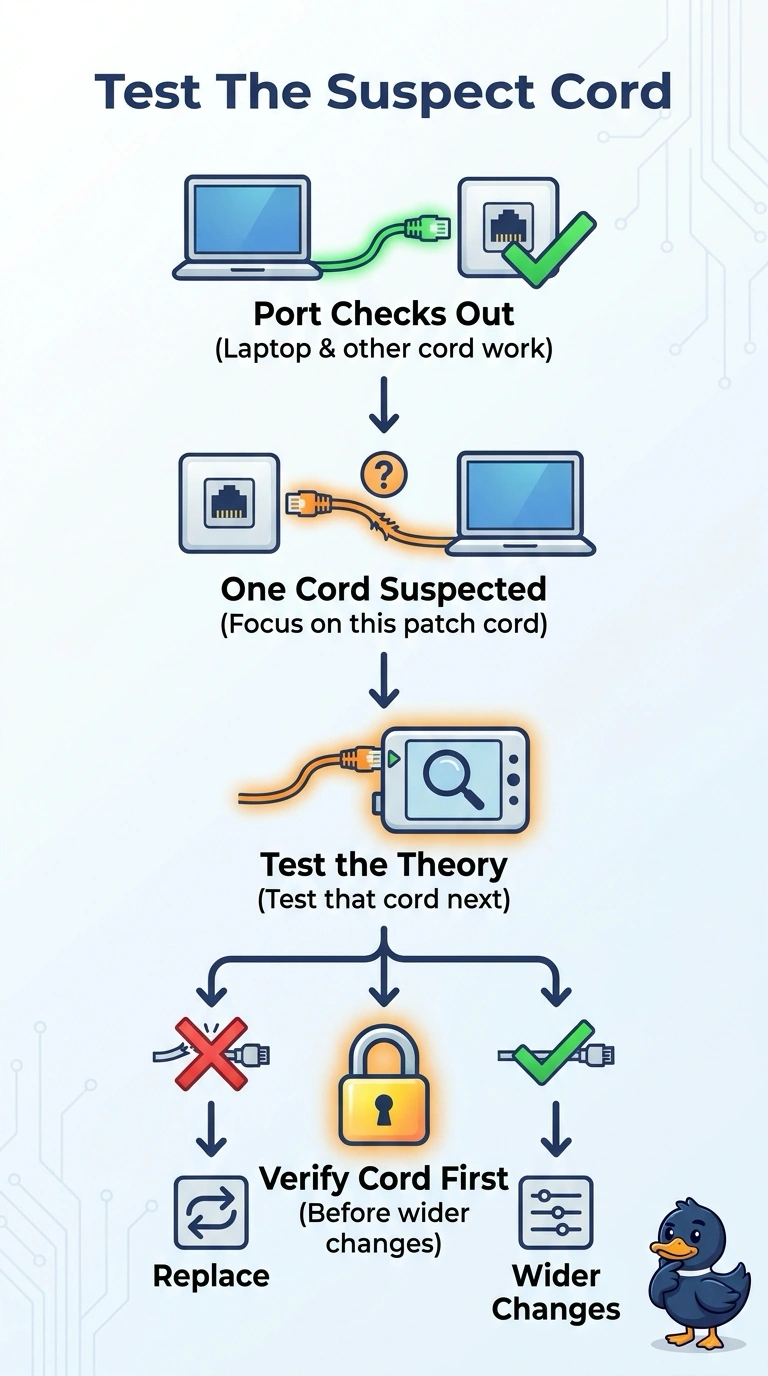
Short Explanation
You have a focused suspect, so your next step is to test that theory on the one patch cord before making a wider change. You can check or swap that cord and see whether the desk gets link. Replacing the switch, changing the floor’s VLAN, or closing the ticket without testing the cord would skip confirmation.
Full Explanation
Once you have a probable cause, the next methodology step is to test it. The evidence is narrow: one desk has no link, while the switch port works with a laptop and a different cord. The theory is that the original patch cord is faulty, so test that cord and observe whether the desk’s link returns. If the test supports the theory, you can then plan the permanent correction; if not, the cause remains unconfirmed. Replacing the access switch before testing the cord makes a much broader change than the evidence justifies and could disrupt other desks. Documenting the cord as the cause and closing the ticket before testing records an assumption as a confirmed finding. Moving the whole floor to a new VLAN changes the network configuration but does not restore a physical link if the cord is bad. Exam caveat: even a confirmed cause needs a correction plan that accounts for side effects. Practical check: test or swap only the suspected cord, confirm that the original desk gets link and passes traffic, and then document the finding.