
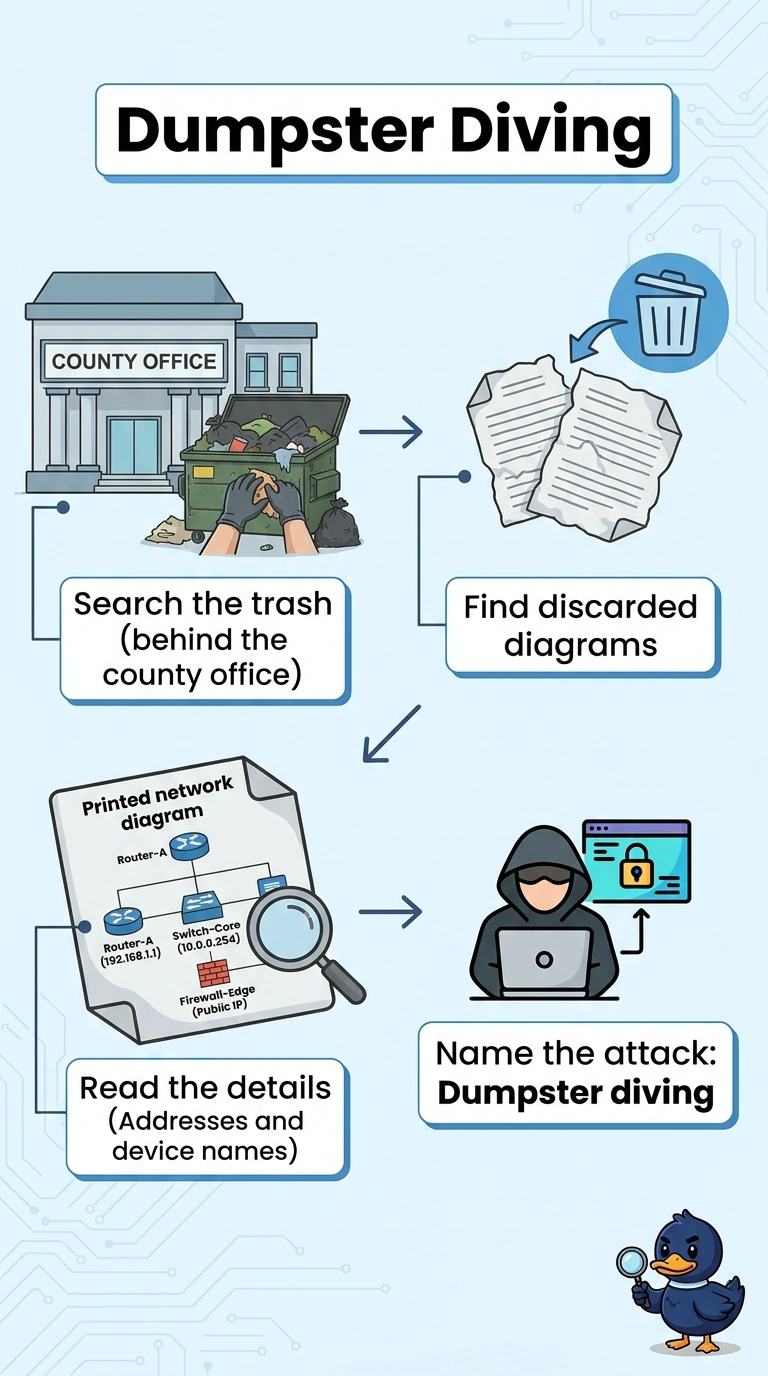
Printed network diagrams, with addresses and device names, are found in the trash behind a county office. Which attack gathered them?
Select an answer to reveal the explanation.
Short Explanation
Somebody went through the bags out back and pulled your map out of the trash. That search of discarded paper is dumpster diving. Watching a screen, following someone through a door, and a fraudulent email are different ways to get information, and none of them is a bag of shredded diagrams behind the office.
Full Explanation
Dumpster diving is searching trash for information people threw away, such as printed diagrams, addresses, and names. Finding those pages behind the county office is that attack. Shoulder surfing watches a person enter a secret, usually over their shoulder. It does not search trash. Tailgating follows an authorized person through a door. It is a physical entry method, not the way a diagram ends up in a dumpster. Phishing uses a fraudulent message to trick a person. It does not require, and it is not defined by, papers in the trash. Exam caveat: the fix is operational. Cross-cut shredding and a locked disposal bin matter more than a longer password. Operational check: shred the diagrams, lock the disposal bin, and confirm the cleaning vendor is not leaving bags accessible behind the office. Shred the diagrams and lock the disposal bin so the next bag is not readable behind the office. Tell the cleaning crew the bags stay in the locked bin until they are destroyed.