
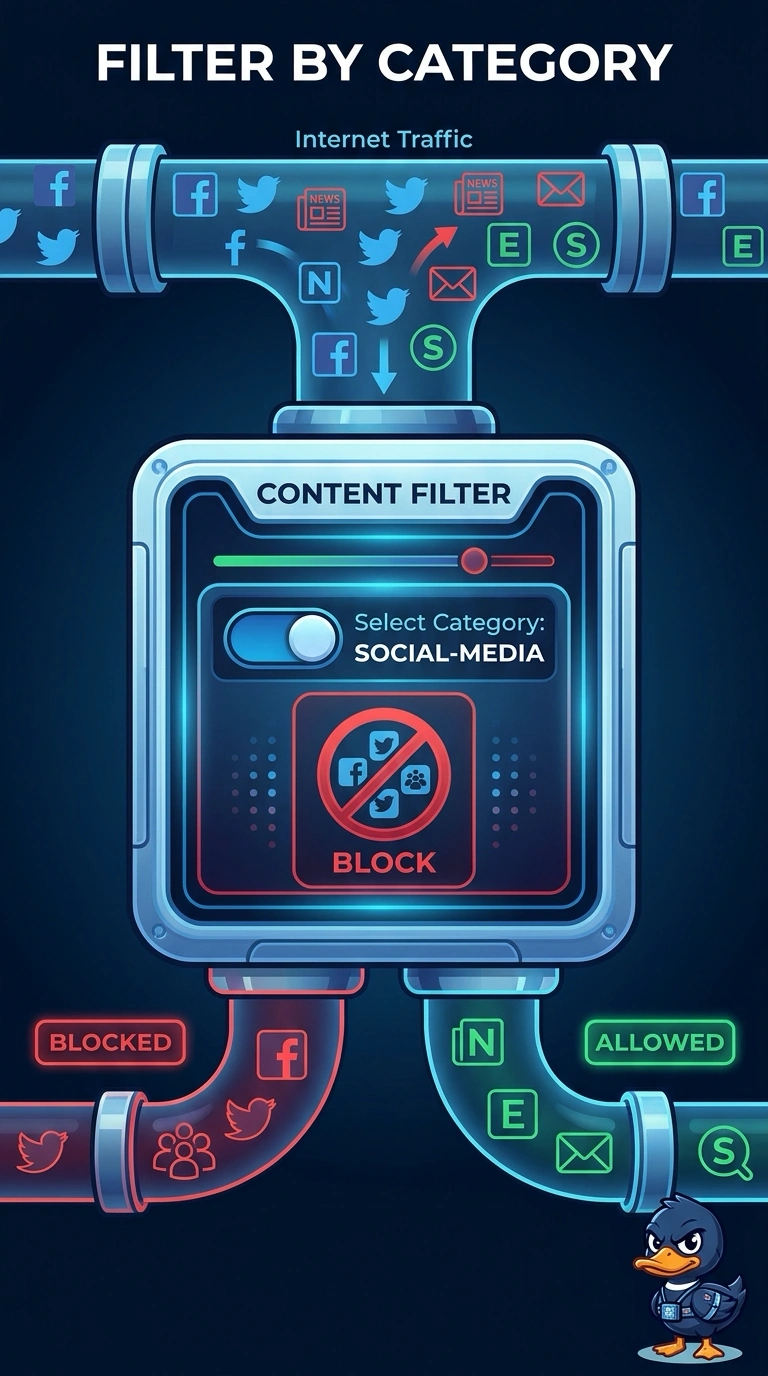
A school wants to block the whole social-media category and still allow other categories of websites. Which control fits?
Select an answer to reveal the explanation.
Short Explanation
You want the whole aisle of that kind of magazine off the shelf, not one title, and you do not want to close the store. A category content filter does that. One address leaves the rest of the aisle, turning off name resolution closes everything, and a decoy host does not classify websites.
Full Explanation
A content filter can block or allow sites by category. The school wants the social-media category blocked and other categories left alone, so the filter should be set to that category. A filter for one address leaves every other social-media site reachable, which misses the request. The distractor claims a single address also blocks the category. It does not. Disabling DNS stops name resolution for every site, not for one category. A honeypot is a decoy that logs attacks. It does not classify and block website categories. Exam caveat: category lists are only as current as the vendor's database, so a new social site can slip through until the list updates. Operational check: apply the category block, browse a site in that category and a site in a different category, and confirm only the social-media site is denied. Browse one social-media site and one site in another category, and confirm only the social site is denied. Recheck the category list after the filter vendor updates it, because a new social site can appear under another name.