
A university standby site already has servers installed. Data must be restored from backup after a disaster. The university can wait several hours and cannot wait days to buy equipment. Which site is this?
Select an answer to reveal the explanation.
Short Explanation
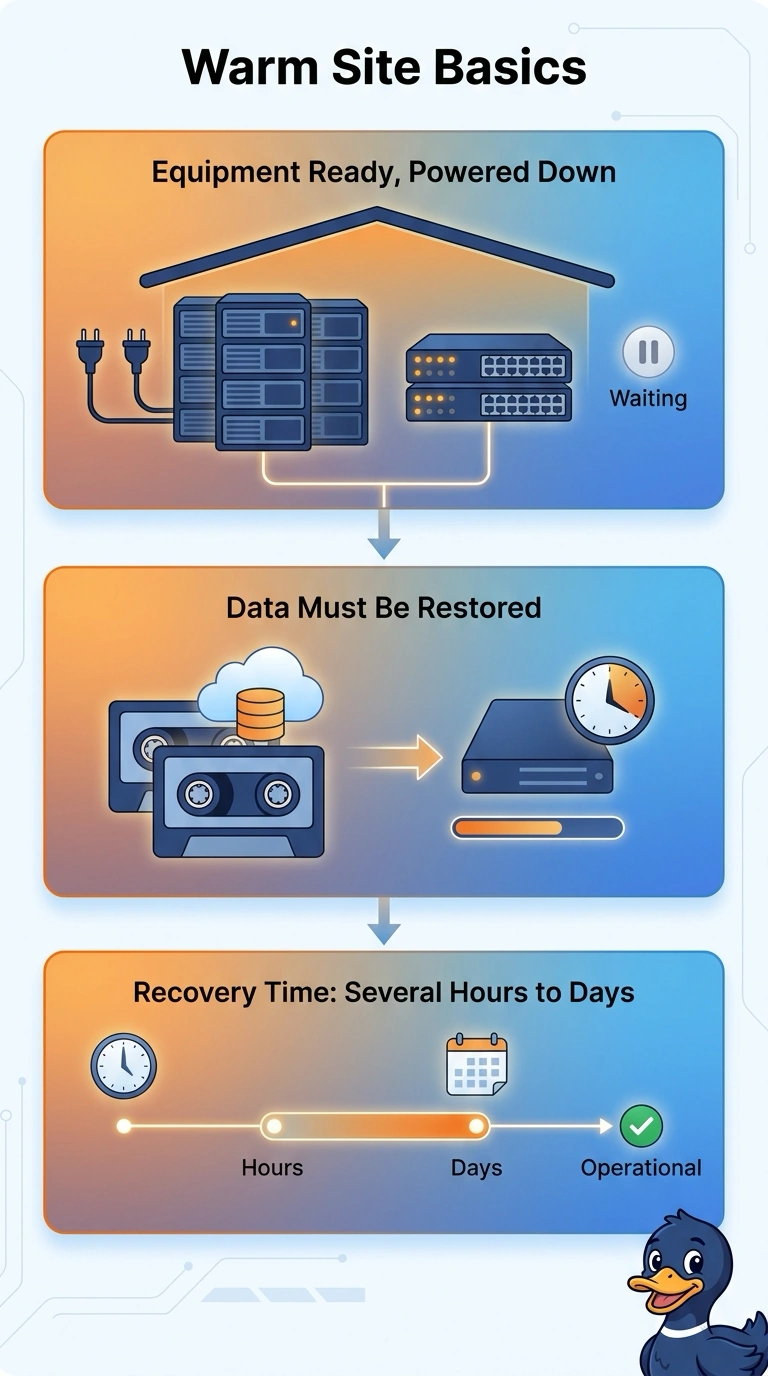
The furniture is already in the spare apartment, and you still have to carry the boxes in. Equipment waiting, plus a restore that takes hours rather than a hardware shopping trip, is a warm site. A cold site would be an empty room, and a hot site would already have today's data.
Full Explanation
A warm site has hardware in place and does not keep a current copy of the data, so recovery includes restoring from backup. That lines up with servers already installed, a restore still required, and a recovery measured in hours rather than in days of procurement. A cold site is space and power without waiting equipment. Calling this site cold contradicts the servers that are already there. A hot site keeps equipment and current data so service can move with little delay. It does not omit the current data and demand a full restore. A tabletop exercise is a discussion of a scenario. Waiting servers do not turn a site into a meeting. Exam caveat: warm and hot are about how ready the data is, not about a vendor's marketing name. If replication is actually current, you are describing a hot design. Operational check: time a restore onto the waiting servers and compare that time with the recovery time the university accepted. Time the restore, and remember the site cannot recover data newer than the last backup you can actually restore.