
A retail office lost its internet circuit for part of a day and wants the uptime the provider committed to, plus the credit if that commitment was missed. Which record answers that?
Select an answer to reveal the explanation.
Short Explanation
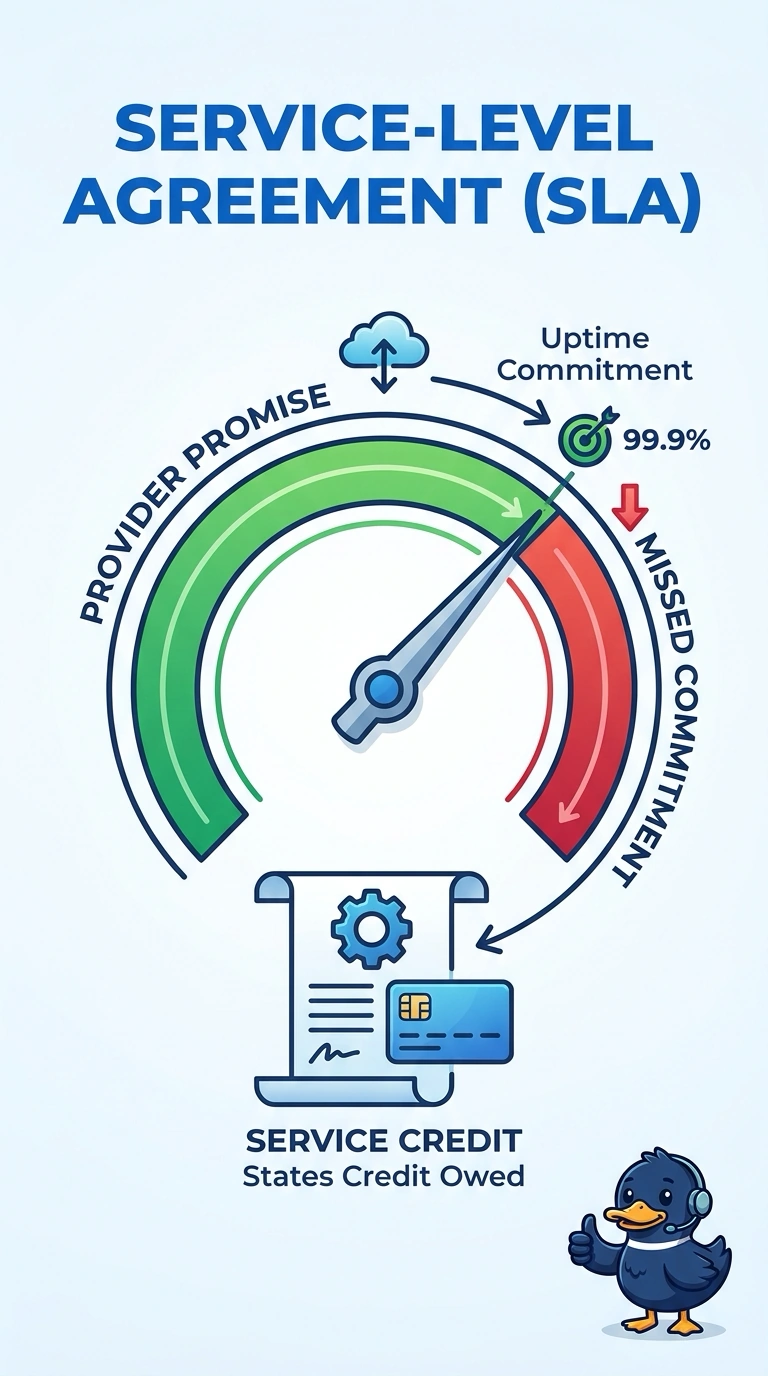
You are not looking for a cord, a serial number, or a picture of the radio signal. You are looking for the promise the provider made about uptime and the credit you are owed when they break it, and that promise is the service-level agreement. Grabbing a cable drawing answers a different outage.
Full Explanation
A service-level agreement records the availability or performance a provider commits to and the remedy, often a credit, when the provider misses it. The office wants the committed uptime and the credit terms after a circuit outage, which is exactly what that agreement is for. A cable diagram shows physical runs inside the building. It does not state a provider's uptime commitment. An asset inventory tracks what the company owns, including serial numbers and warranties. The circuit outage is a provider failure, not a warranty lookup on a switch. A wireless heat map shows coverage on the sales floor. It does not contain the internet provider's credit terms. Exam caveat: an SLA states the target and the remedy. It does not by itself prove the outage happened. You still need the monitoring record of when the circuit was down. Operational check: pull the agreement, compare the measured downtime with the committed window, and file the credit the agreement describes. Compare the outage timestamps from your monitor with the window the agreement actually counts before you file the credit.