
One lab PC at a university resolves the portal name to a lab address. DNS on the university resolver returns the production address. That PC has the lab address in its hosts file. Why does only that PC differ?
Select an answer to reveal the explanation.
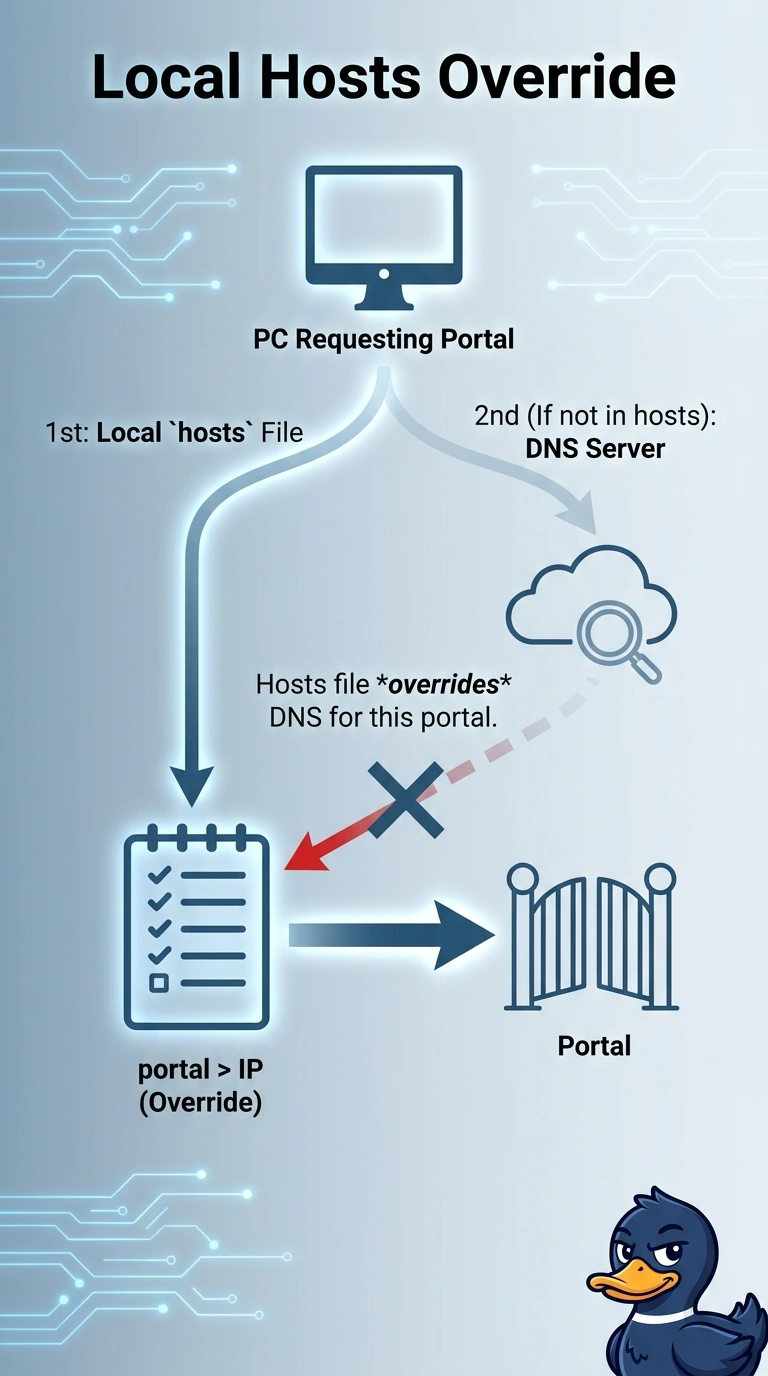
Short Explanation
This one computer has a sticky note on the monitor that disagrees with the company phone book, and it reads the sticky note first. That sticky note is the hosts file, and it overrides the resolver for the name it contains. A lease, a mail record, or a missing reverse record would not single out this PC's answer for a name you looked up.
Full Explanation
On a typical host the local hosts file is checked for a name and can supply an address without using DNS. This PC has the lab address in that file for the portal name, so its result differs from the production address the university resolver returns. Other PCs without that line follow DNS. A DHCP lease provides an address, mask, and options to a client. It does not override a DNS answer for one name, and a stale lease would not explain a hosts-file line that matches the wrong address. An MX record tells mail servers where to deliver mail for a domain. It is not how a PC resolves the portal for a browser. A missing PTR record means a reverse lookup fails. It does not make one PC ignore a forward answer that every other PC accepts. Exam caveat: some operating systems can be configured to prefer DNS over the hosts file. The usual troubleshooting case, and the one this stem describes, is the hosts file winning. Operational check: open the hosts file on the lab PC, remove or comment the portal line, flush the resolver cache, and confirm the name now matches the production address.