
A county records office can wait several days after a disaster and must spend as little as possible. It can rent space and power, and it would buy equipment only after the disaster. Which site type fits?
Select an answer to reveal the explanation.
Short Explanation
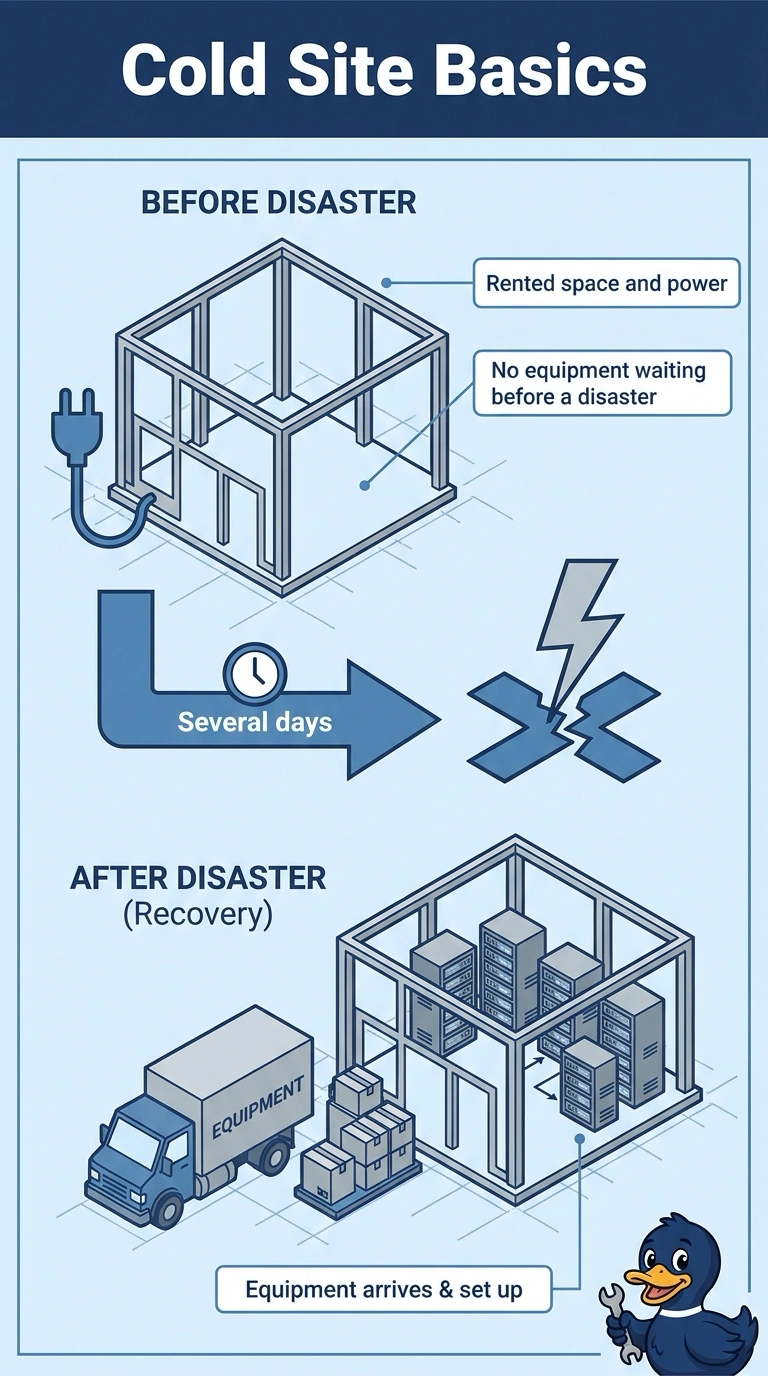
You are renting an empty garage, not a garage with cars already parked and fueled. That empty garage is a cold site: space and power, and the equipment shows up only after you need it. A hot site is the staffed, current copy you pay for so you can move quickly, which is the opposite of the county's budget and its willingness to wait.
Full Explanation
A cold site provides space and basic facilities such as power, and it does not keep waiting equipment or a current copy of the data. Recovery takes the longest because gear has to be obtained, installed, and loaded after the disaster. The records office accepts several days of downtime and wants the lowest spend, so a cold site matches both constraints. A hot site keeps equipment and current data ready for a short recovery. It is the most expensive of the three site types, not the cheapest. A warm site already has hardware in place and still needs current data restored. It is not a site that lacks floor space until a disaster is declared. A tabletop exercise is a discussion of a scenario in a meeting room. It is not a facility. Exam caveat: the cheap site is only acceptable when the recovery time objective really is measured in days. A payroll system that must return in hours cannot use this design. Operational check: write the recovery time the county accepted next to the contract, and confirm the contract supplies space and power without a standing equipment bill.