
A factory DHCP scope covers 10.8.8.0/24. The gateway 10.8.8.1 and two printers are static inside that range. A laptop is later leased 10.8.8.1 and the gateway disappears. Which setting should have prevented that lease?
Select an answer to reveal the explanation.
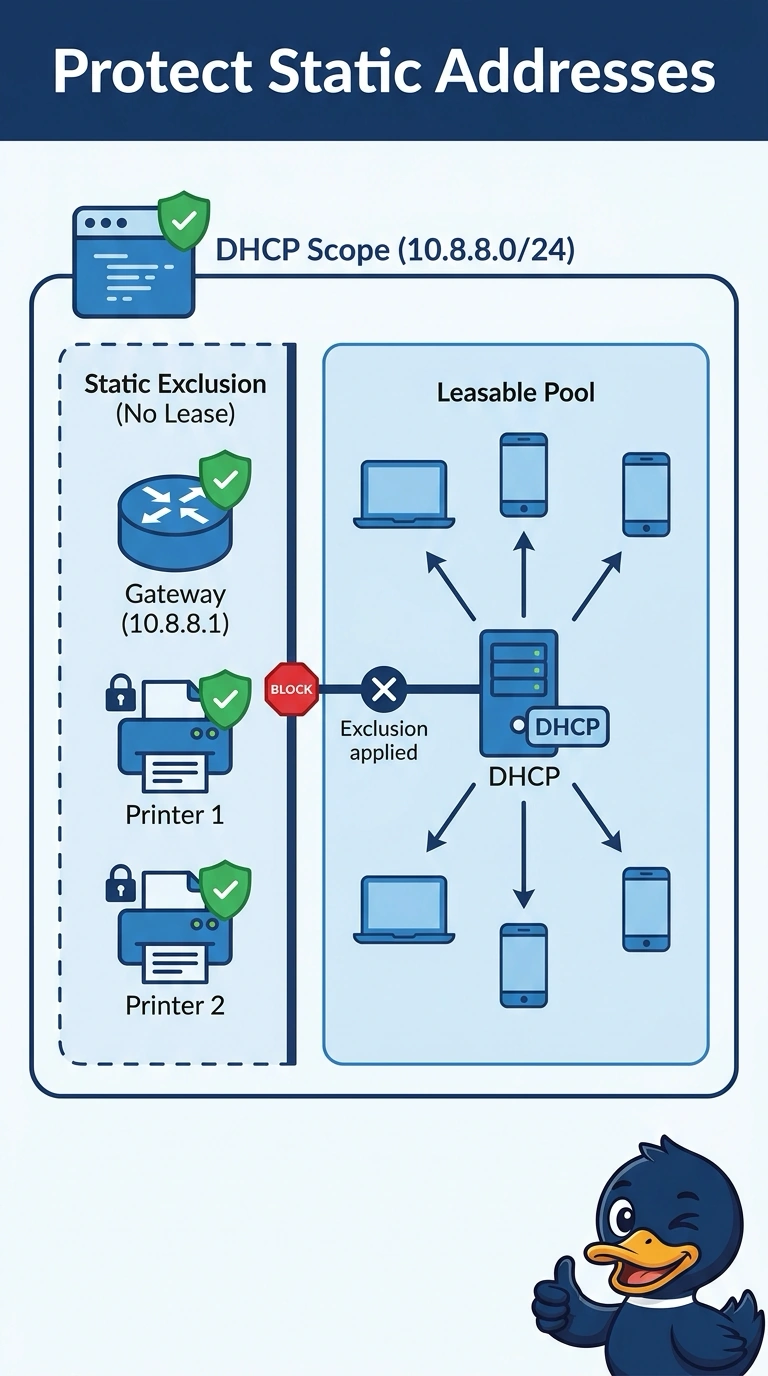
Short Explanation
The DHCP server is handing out a street number that already belongs to your router, like a clerk selling somebody else's house. An exclusion takes those static numbers off the list the clerk may sell. A reservation is a reserved table for one known guest, and a shorter dinner seating does not stop the clerk from giving away the router's address.
Full Explanation
An exclusion is an address or range inside a scope that the DHCP server will not lease. The gateway and the printers are statically addressed inside 10.8.8.0/24, so those addresses must be excluded. Without that, the server can offer 10.8.8.1 to a laptop, the laptop and the router conflict, and hosts lose their gateway. A reservation pins one MAC address to one IP address. It is how a known badge printer keeps a stable lease. It is not a rule that gives every unknown laptop the gateway. Lease time controls how long a lease is valid. A shorter lease does not remove static addresses from the pool. An AAAA record publishes an IPv6 address in DNS. It has no effect on which IPv4 addresses a DHCP scope may hand out. Exam caveat: the router and printers could instead be moved outside the scope, but if they stay inside the range the exclusion is the setting that prevents the lease. Operational check: compare the scope's exclusion list with every static address in that subnet, then renew the laptop and confirm it receives an address other than 10.8.8.1.