
A school facilities lead wants a drawing of subnets, router hops, and which VLAN sits behind which gateway. Cable paths and rack elevations already exist. Which drawing answers that request?
Select an answer to reveal the explanation.
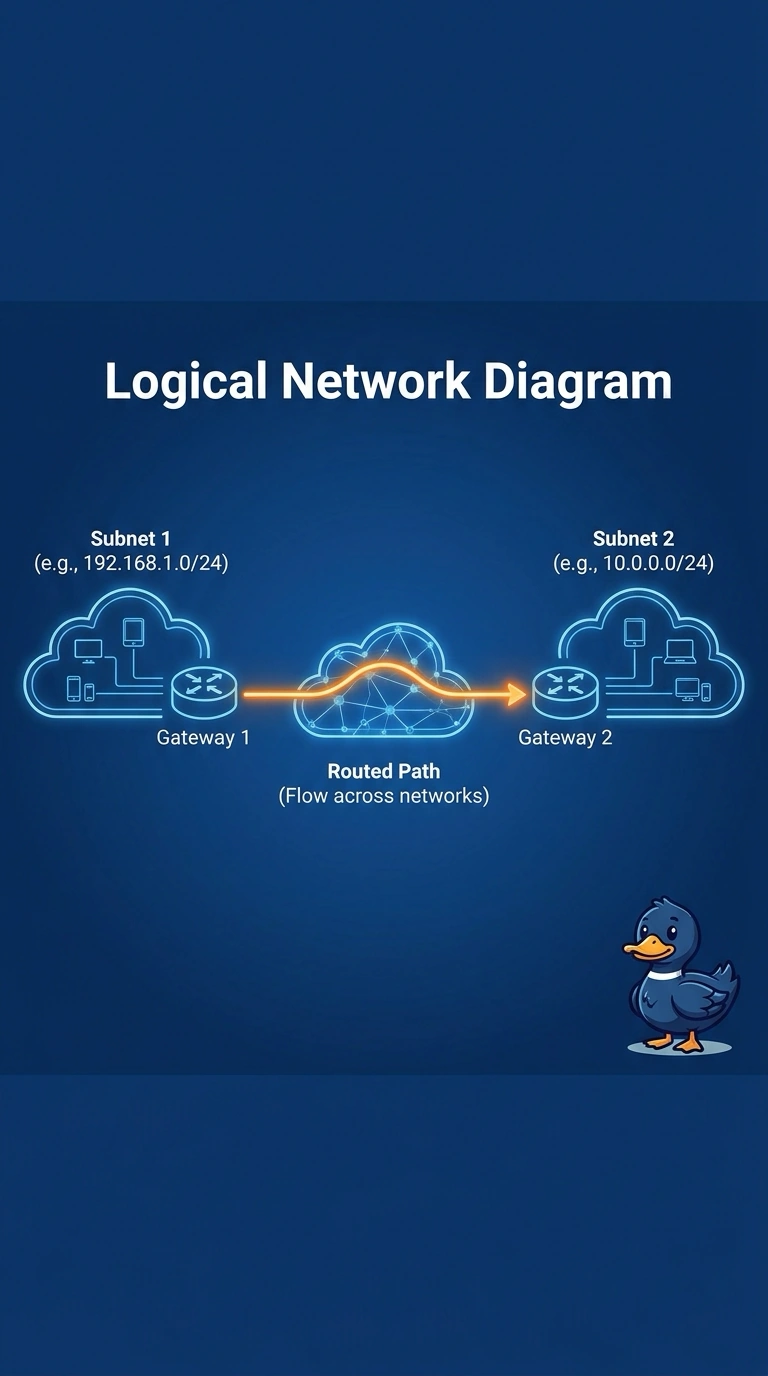
Short Explanation
You already know which cord goes where and which box sits on which shelf. What is missing is the street map of subnets and router hops, and that street map is the logical diagram. A heat map or a rack picture answers a different question, so do not grab it just because it is also a drawing.
Full Explanation
A logical network diagram shows addressing and forwarding relationships: subnets, VLAN-to-gateway mapping, and the path between routers. The facilities lead asked for those relationships, and the cable paths and rack elevations are already on file, so another physical drawing does not answer the request. A cable diagram records the physical run from faceplate to panel and switch port. It does not show which gateway serves a VLAN. A rack elevation shows equipment position in the rack, which helps a technician find a chassis and does not describe the routed path. A wireless heat map records radio coverage. It is the right picture before access points are mounted, not the picture of subnets and hops. Exam caveat: a layer-3 diagram and a logical diagram are the usual names for this view, while a layer-1 diagram is the physical path. Operational check: pick the drawing that lets you name the gateway for a user VLAN and the next router hop, and leave the cable and rack drawings for physical work.