
A monitoring station needs the catalog of objects a factory switch can report through SNMP. Which set of definitions is that catalog?
Select an answer to reveal the explanation.
Short Explanation
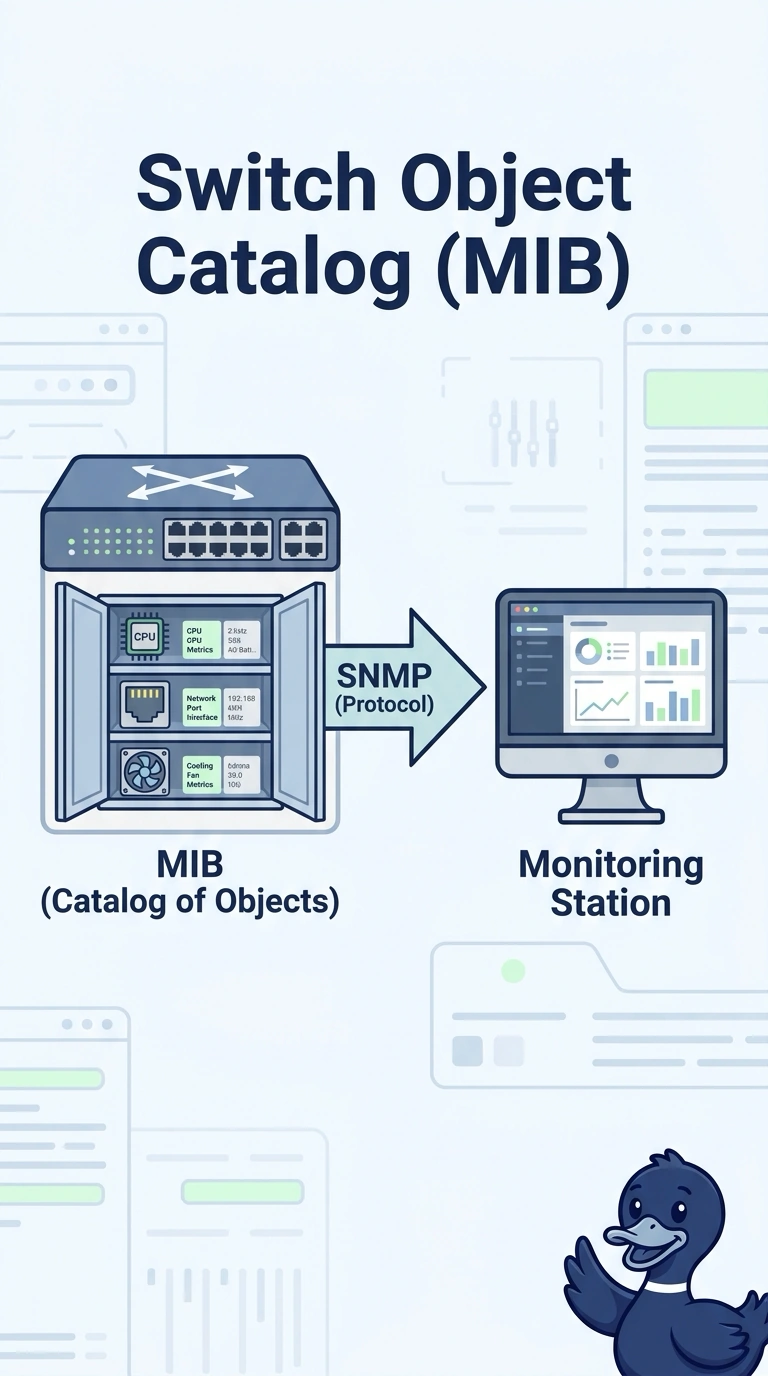
Before you can ask a switch how busy a port is, you need the list of questions it understands. You load the management information base, the catalog of objects the switch can report. A community string only gets you in the door, a trap is the switch calling you, and one object identifier is a single question rather than the catalog.
Full Explanation
The management information base is the catalog of objects a device can expose through SNMP. The factory station loads that catalog to know which counters and states this switch can report. A community string is the credential SNMP version 2c carries with the request. It decides whether the switch answers, and it is not the list of objects. A trap is a message the switch sends on its own. It uses the definitions, and it is not the catalog. A single object identifier is the tempting twin because it is how you name one counter inside the catalog. It is one question, not the set of definitions the station needs. Exam caveat: the station and the switch have to use the same object definitions. A catalog that does not match the software can make a real counter look missing. Operational check: poll one interface counter from the loaded catalog and confirm the value matches the counter on the switch. Record the reading before the change and the reading after it so the next shift can see the symptom actually moved.