
A retail chain can lose no more than 15 minutes of sales transactions, and stores can sell on paper for up to four hours while systems return. Which target is the 15-minute figure?
Select an answer to reveal the explanation.
Short Explanation
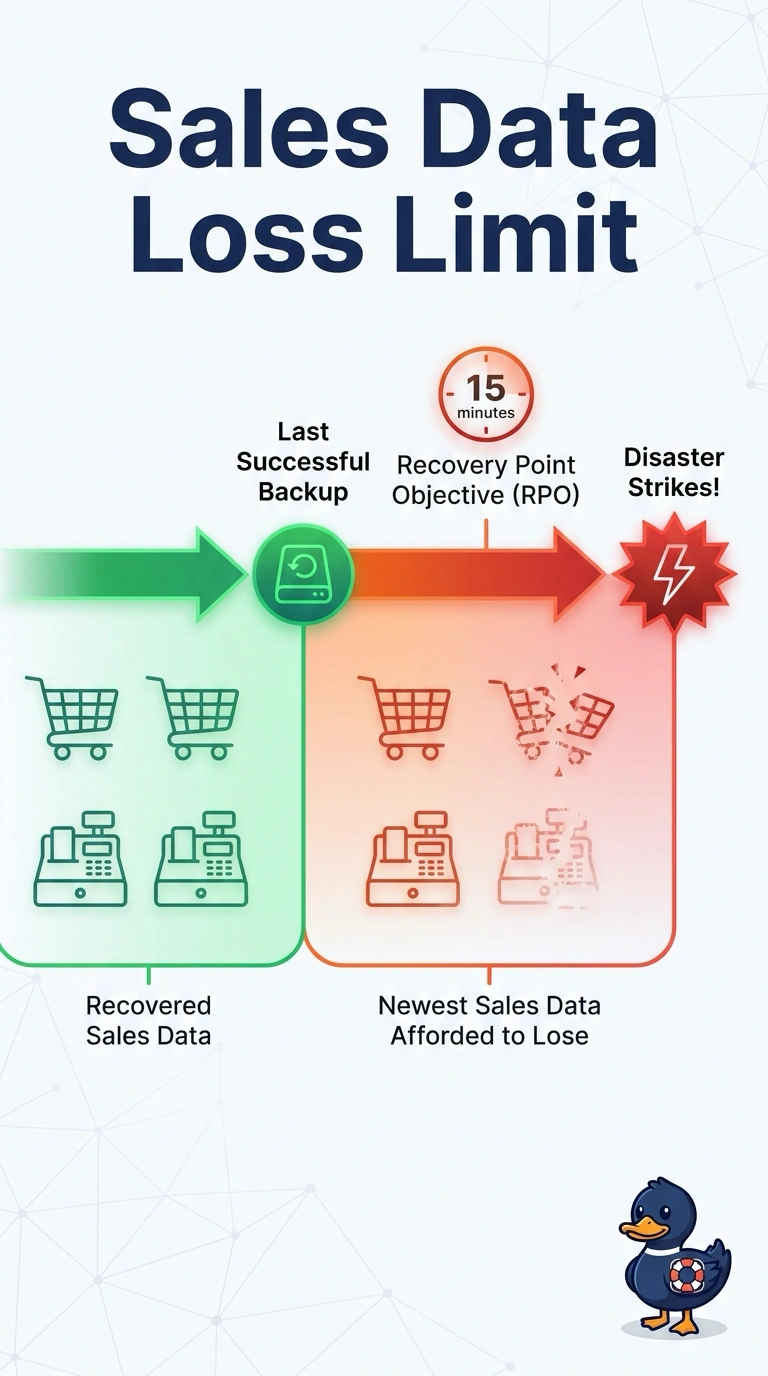
Think of the recovery point as how stale your last good copy is allowed to be. You can stand to lose 15 minutes of sales, so that 15 minutes is the recovery point objective. The four hours a store can run on paper is a different promise, the recovery time objective, and it does not rename the data you are willing to lose.
Full Explanation
The recovery point objective is the maximum age of data the organization can afford to lose, measured backward from the moment of failure. Losing no more than 15 minutes of sales means backups or replication must create a restorable point at least that often, so the 15-minute figure is the recovery point objective. The recovery time objective is how long the service may stay down. The four hours of paper sales is that target, and swapping the two names is the usual trap because both numbers appear in the stem. Mean time to repair is an average of how long repairs actually take. It describes past or expected fix time, not the business limit on data loss. Mean time between failures is an average of how long a component runs before it fails. A longer figure means fewer failures. It says nothing about how many minutes of transactions may be lost. Exam caveat: a design can miss one target while meeting the other. Replication every hour can still fail over in minutes, which would satisfy a short recovery time and violate this 15-minute recovery point. Operational check: compare the sales system's replication or backup interval with 15 minutes, and time a restore drill against the four-hour recovery time, treating the two results as separate pass or fail marks.