
A data center polls its switches with SNMP version 2c, and a capture on the management VLAN shows the community string in clear text. Which change removes that clear-text string and adds both authentication and encryption to the polls?
Select an answer to reveal the explanation.
Short Explanation
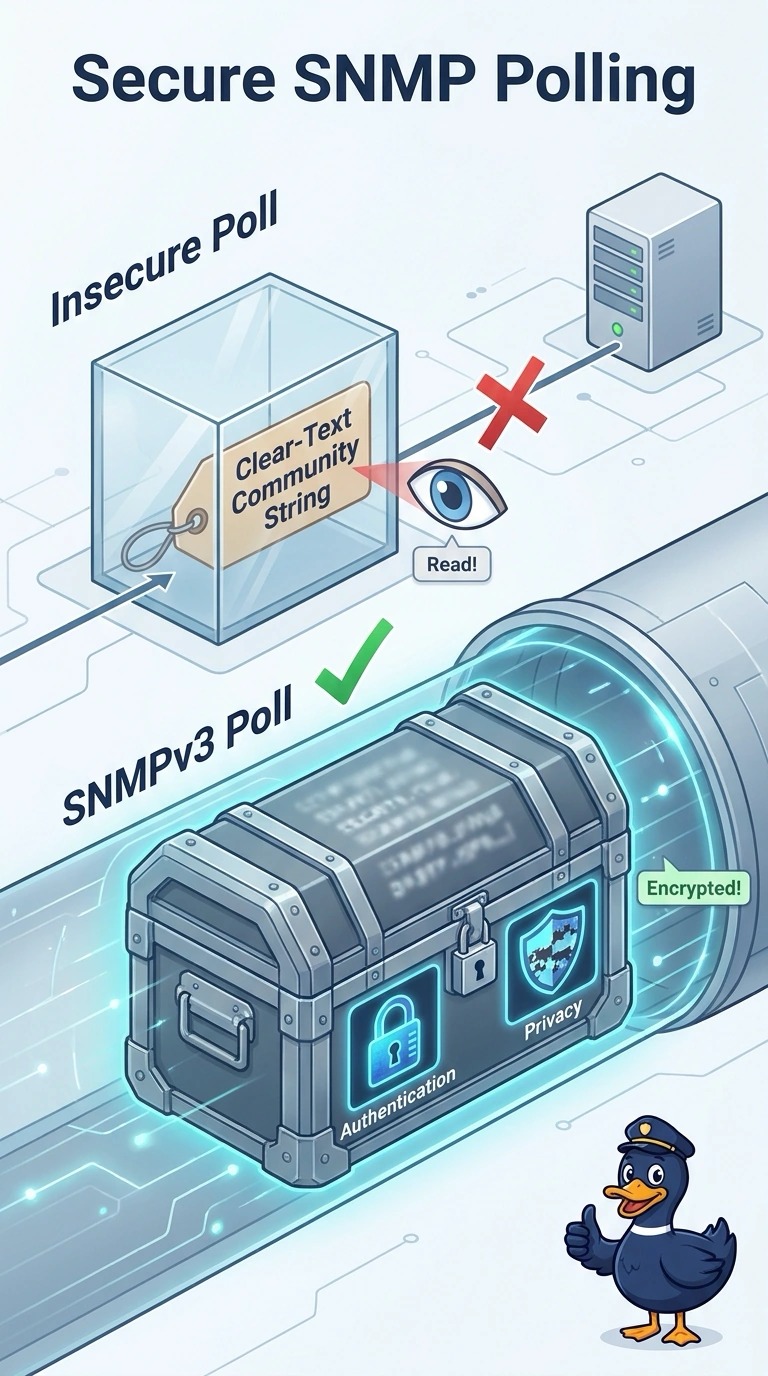
A community string is a shared password written on a postcard, so anyone who captures the management VLAN can read it in version 2c. You can make the name longer or poll less often, but neither change encrypts it. Use SNMPv3 with authentication and privacy enabled to authenticate the polls and encrypt their contents.
Full Explanation
SNMP version 2c authenticates a poll with a community string that travels in clear text. Anyone who captures the management VLAN can read and reuse it, which is what this data center has observed. SNMPv3 with authentication and privacy enabled replaces that exposed community-string model: the manager and switch authenticate the exchange, and privacy encrypts the SNMP payload, so a capture does not reveal a community string. SNMP version 1 with the same community does not encrypt the community field; it uses the same clear-text community design and adds none of the SNMPv3 protections. A longer SNMP version 2c community known only to the management station is still sent in clear text, so its secrecy is lost when a poll is captured. More frequent polling and disabling traps change event collection, not the contents of polling packets; polling more often can put additional copies of the string on the wire. Exam caveat: SNMPv3 can be configured without authentication and privacy, so merely enabling version 3 does not meet the requirement. Practical check: capture a new poll, confirm it uses SNMPv3 and the community string is no longer readable, and verify that the switch user is configured for authentication plus privacy.