
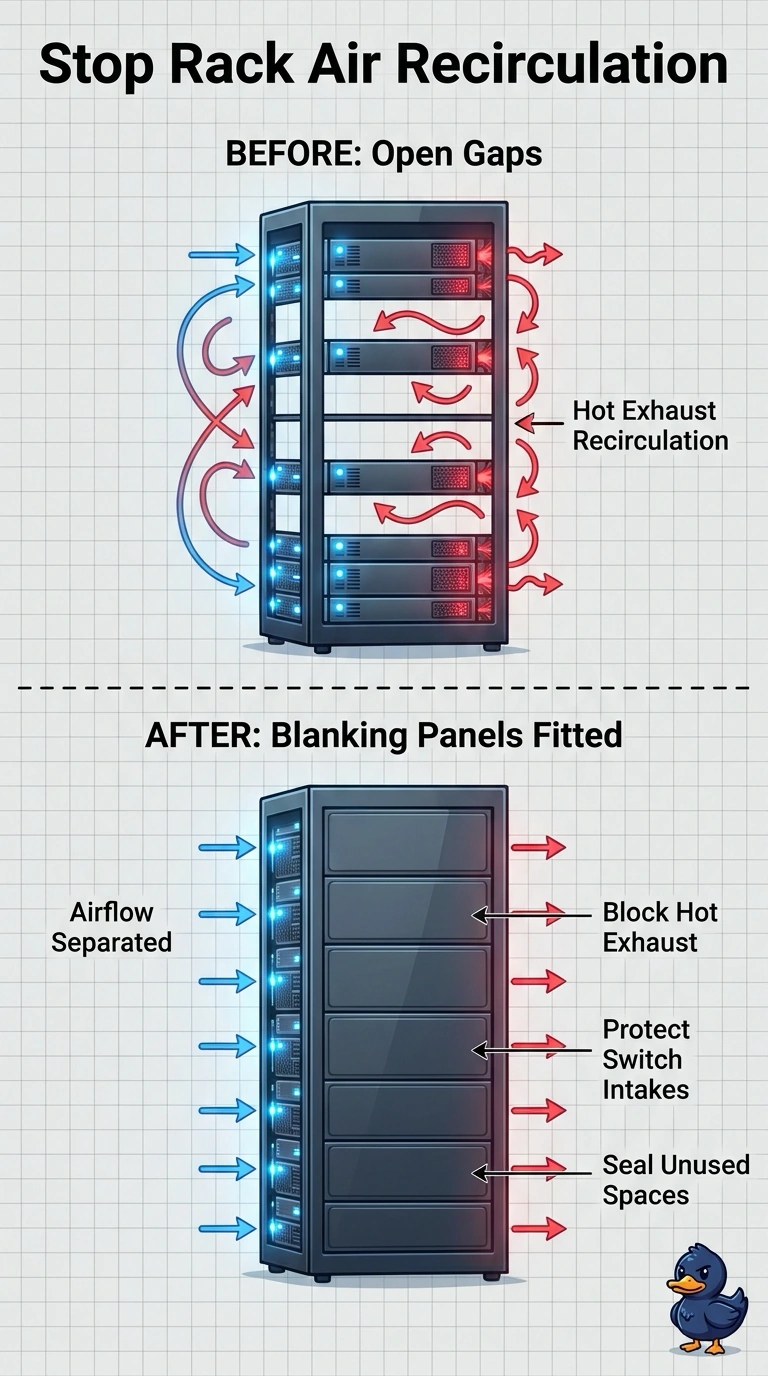
Empty gaps in a data-center rack let hot exhaust curl around into the switch intakes. Which install practice closes those gaps?
Select an answer to reveal the explanation.
Short Explanation
Hot air is sneaking through the empty holes and getting sucked back into the intakes, like leaving windows open between the kitchen and the dining room. You cover those holes with blanking panels. Taking the doors off, aiming intakes at each other, or drying the air does not close the gaps.
Full Explanation
Blanking panels fill unused rack units so hot exhaust cannot recirculate through the gaps into the cold-air intakes. The data-center rack has empty gaps and the exhaust is curling into the intakes, so fitting blanking panels is the practice that closes that path. Removing the rack doors lets the hot and cold aisles mix more freely, which is the opposite of separating them. Facing intakes toward each other makes each switch draw the other's exhaust. A dehumidifier removes moisture. It is not a panel and it does not block an empty rack unit. Exam caveat: blanking panels work together with a defined cold aisle and a correct intake direction. Panels alone do not fix a switch that is mounted backward. Operational check: fill every empty unit in the rack, confirm intake air is the cold-aisle air, and watch the switch temperature alarms clear. Leave no open unit above or below a hot switch, including the gaps beside a partially filled shelf. Recheck the intake temperature after the panels are in, not only the look of the rack.