
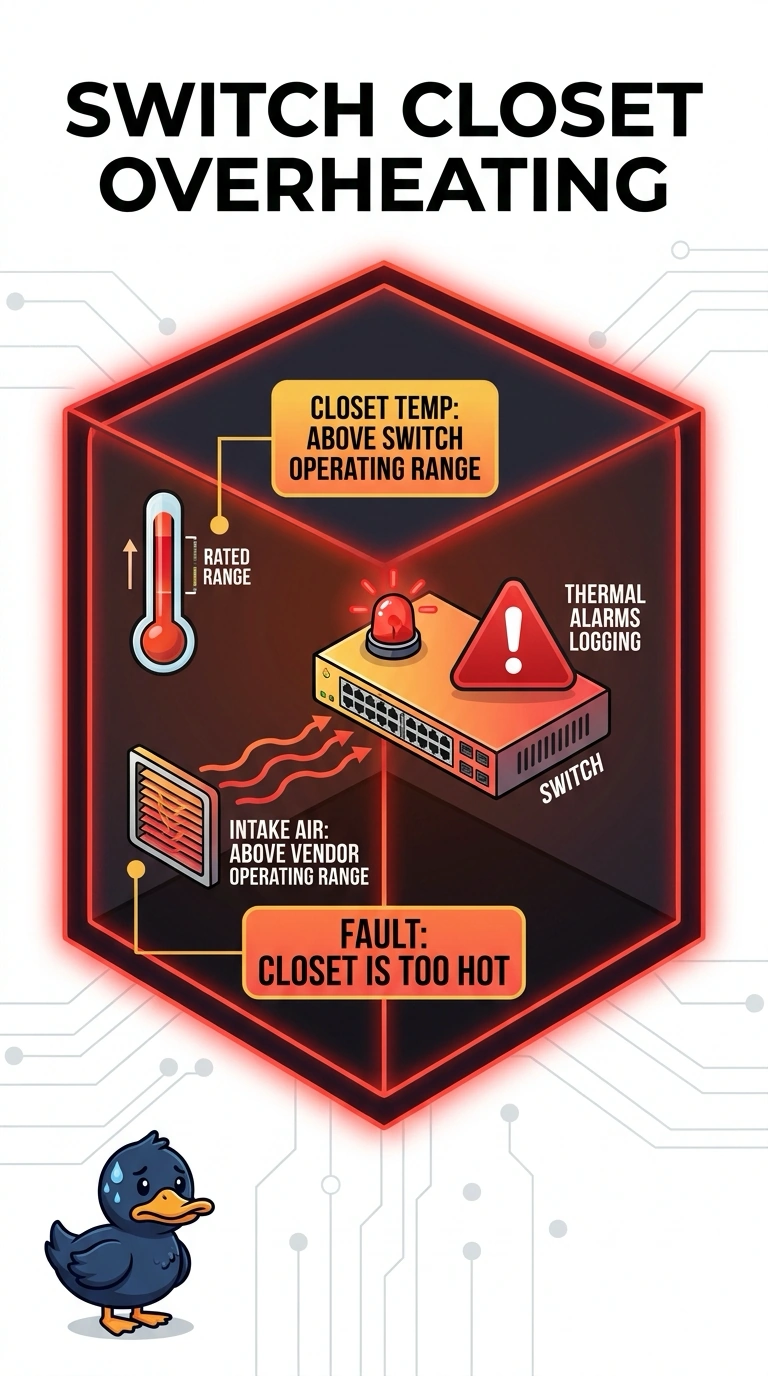
A retail closet's switches are logging thermal alarms. The room is hot and the intake air is above the vendor's operating range. Humidity is normal and the UPS is idle. Which condition is the fault?
Select an answer to reveal the explanation.
Short Explanation
You can trust the intake reading: the closet is above the switches’ rated operating range, which explains the thermal alarms. Temperature is the fault here; low humidity, an idle UPS, and plenum-rated cable do not explain the hot intake air.
Full Explanation
Network equipment is rated for an intake-temperature range, and thermal alarms indicate that the switches are outside that range. Here, the room is hot and intake air is above the vendor’s range, while humidity is normal and the UPS is idle, so the fault is the closet temperature. Low humidity can promote electrostatic discharge, but it does not heat the intake air or, by itself, cause a thermal alarm. A failed UPS battery may matter during a power cut or a failed self-test, but an idle UPS with a normal utility feed is not the source of a hot room. Plenum-rated cable is designed for use in air-handling spaces; its jacket rating does not make a switch log a thermal alarm. Exam caveat: airflow direction still matters. A switch can overheat in a cool room if its intake is blocked or it faces the hot aisle, so a normal room thermometer does not end the check. Practical check: measure the intake air, clear blocked vents, and correct the cooling or rack placement until the intake is back within the vendor’s range and the alarms clear.