
A data room in a courthouse must have fire suppression that will not soak the switches and routers if it discharges. Which choice fits the equipment?
Select an answer to reveal the explanation.
Short Explanation
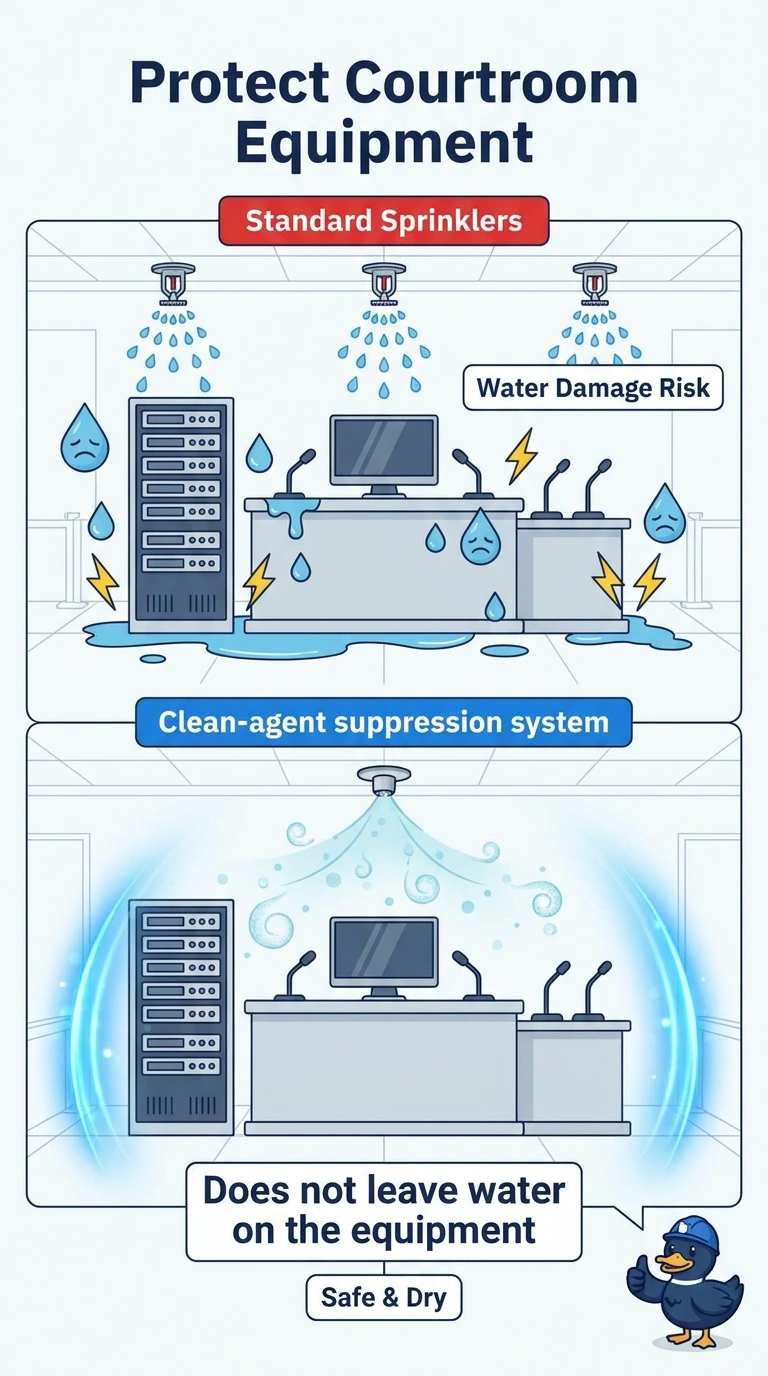
You do not put a shower head over a rack of live switches and call it protection. A clean-agent system is built to knock down a fire without soaking the equipment. Raising the temperature or drying the air may change the room, and neither one is fire suppression.
Full Explanation
Equipment rooms use a clean-agent or other non-water suppression system so a discharge does not flood electronics the way a water sprinkler does. The courthouse requirement is suppression that will not soak switches and routers, so a clean-agent system matches. A water sprinkler is a common building system and a poor choice directly over live network gear because a discharge destroys the equipment it was meant to protect. Raising the thermostat changes the cooling setpoint. It does not suppress a fire, and a hotter room works against the equipment. A dehumidifier controls moisture. It is not a fire-suppression system. Exam caveat: the building fire code decides what is legal in that room. The exam point is the equipment-friendly suppression method, not a specific product brand. Operational check: confirm the room's suppression is a clean agent, that the racks are not sitting under a wet-pipe head, and that facilities has a test record for the system. Walk the room with facilities and note every head that can still discharge water onto the racks.