
Horizontal cables in a school should be installed so a closet switch can be replaced with short patch cords and nobody has to re-terminate the cable inside the wall. Where should those runs land?
Select an answer to reveal the explanation.
Short Explanation
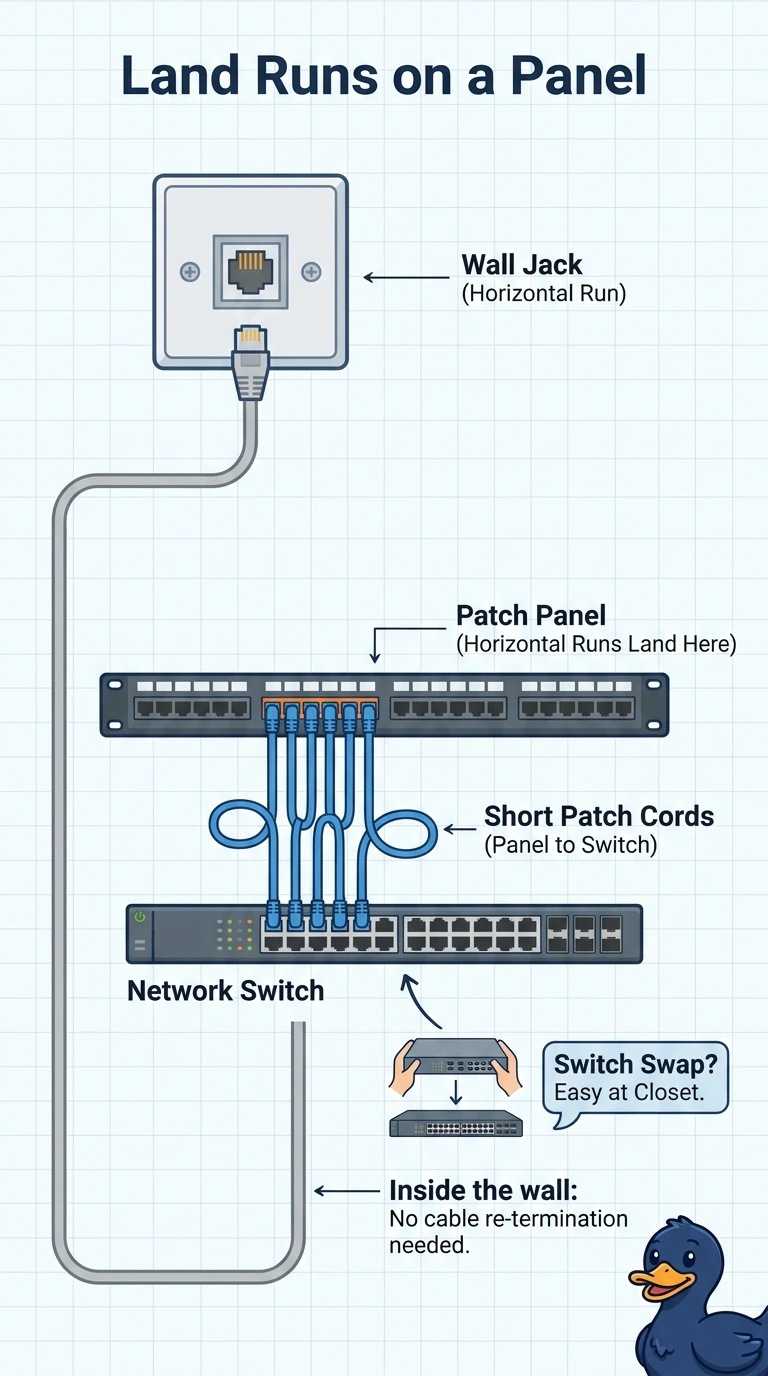
The cable inside the wall should be a permanent resident, and the switch should be easy to unplug. You land the horizontal runs on a patch panel and use short patch cords to the switch, so a replacement is a cord move. Punching the wall cable onto the switch, onto a voice block, or into a fiber cassette does not give this closet that swap.
Full Explanation
Structured cabling terminates horizontal copper on the back of a patch panel. Short patch cords connect the panel to the switch. Replacing the switch moves cords and leaves the in-wall cable alone. Landing the cable on the switch ports means the next replacement re-terminates the permanent run. A 66-block is the tempting twin because it is also a punch-down in a closet. It is the older voice block, not the data panel this switch is patched from with short cords. A fiber cassette terminates strands. These runs are copper. Exam caveat: the panel does not repair a damaged horizontal run. It only makes the switch end modular. Operational check: label each panel position to the room jack, move one patch cord to a spare switch port, and confirm the room comes up without touching the cable behind the panel. Leave a spare patch cord in the closet so the next switch swap does not tempt anyone to punch the horizontal cable down. Tag the panel position to the room jack so the next swap does not land the cord on the wrong port.