
A library switch has no VLAN 40 yet, and a new catalog PC must be an access port in VLAN 40. What has to happen on the switch before that assignment will stick?
Select an answer to reveal the explanation.
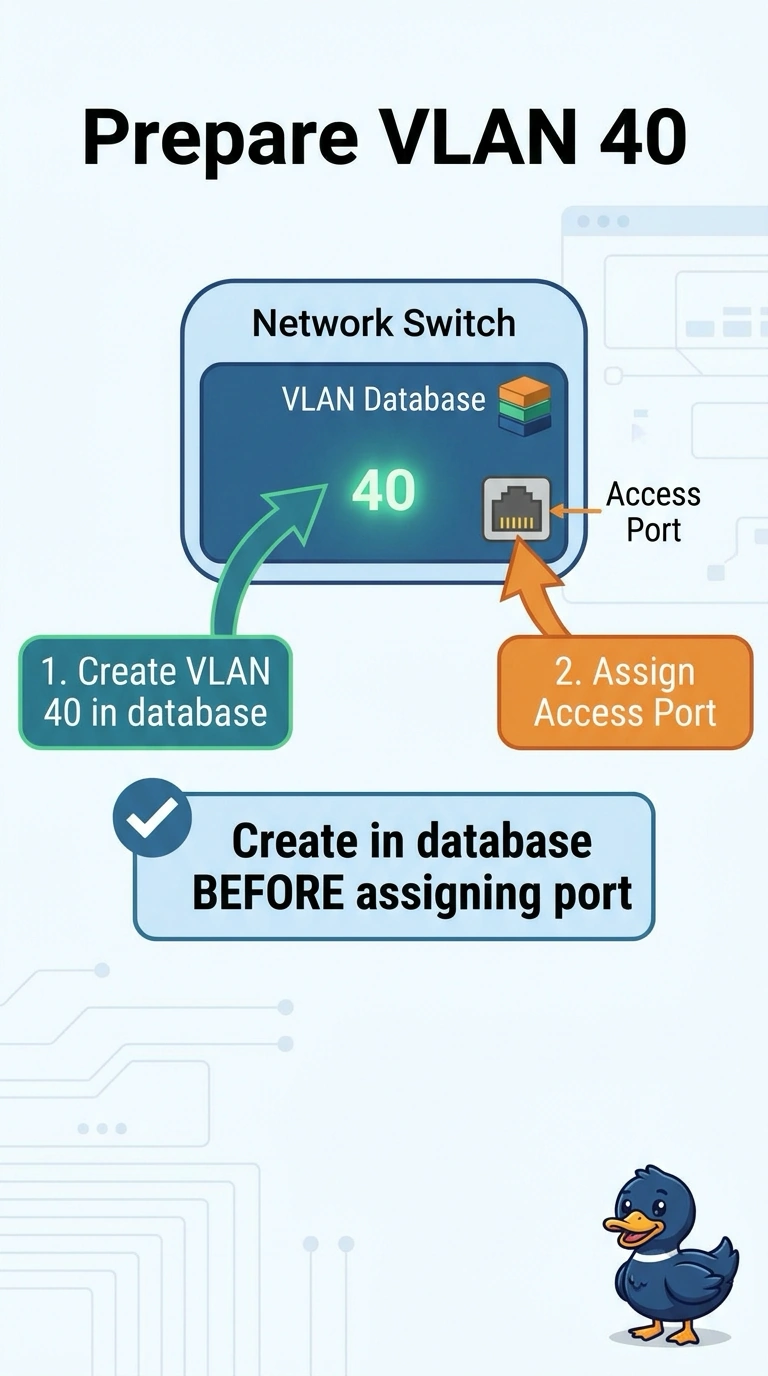
Short Explanation
You cannot assign a desk to a room the building does not have. You create VLAN 40 in this switch's VLAN database first, and then you place the catalog PC's port in it. Adding the number only on a router, only as a native VLAN, or only on a different switch leaves this switch with nothing to assign.
Full Explanation
An access port can join a VLAN the switch knows. Creating VLAN 40 in this switch's database lets the catalog port be assigned to it. Adding it only on an upstream router may help routing later and does not create the VLAN on this switch. Setting a trunk's native VLAN to 40 changes how untagged frames are treated on that trunk. It does not create the access VLAN. Creating VLAN 40 on a different switch is the tempting twin because the VLAN number then exists somewhere. This library switch still has no VLAN 40 to assign. Exam caveat: on a trunked campus the VLAN also has to be allowed on the uplinks. Creating it here is the first step, not the only one. Operational check: show the VLAN database, confirm VLAN 40 exists on this switch, confirm the catalog port is an access port in it, and confirm it can reach another host in that VLAN. After the VLAN exists, assign the port. Creating the VLAN alone does not move the catalog PC into it. Show the VLAN on this switch, not on the neighbor, before you assign the catalog port.