
A winter closet at city hall is so dry that technicians get static shocks whenever they touch a switch. Which condition explains the shocks?
Select an answer to reveal the explanation.
Short Explanation
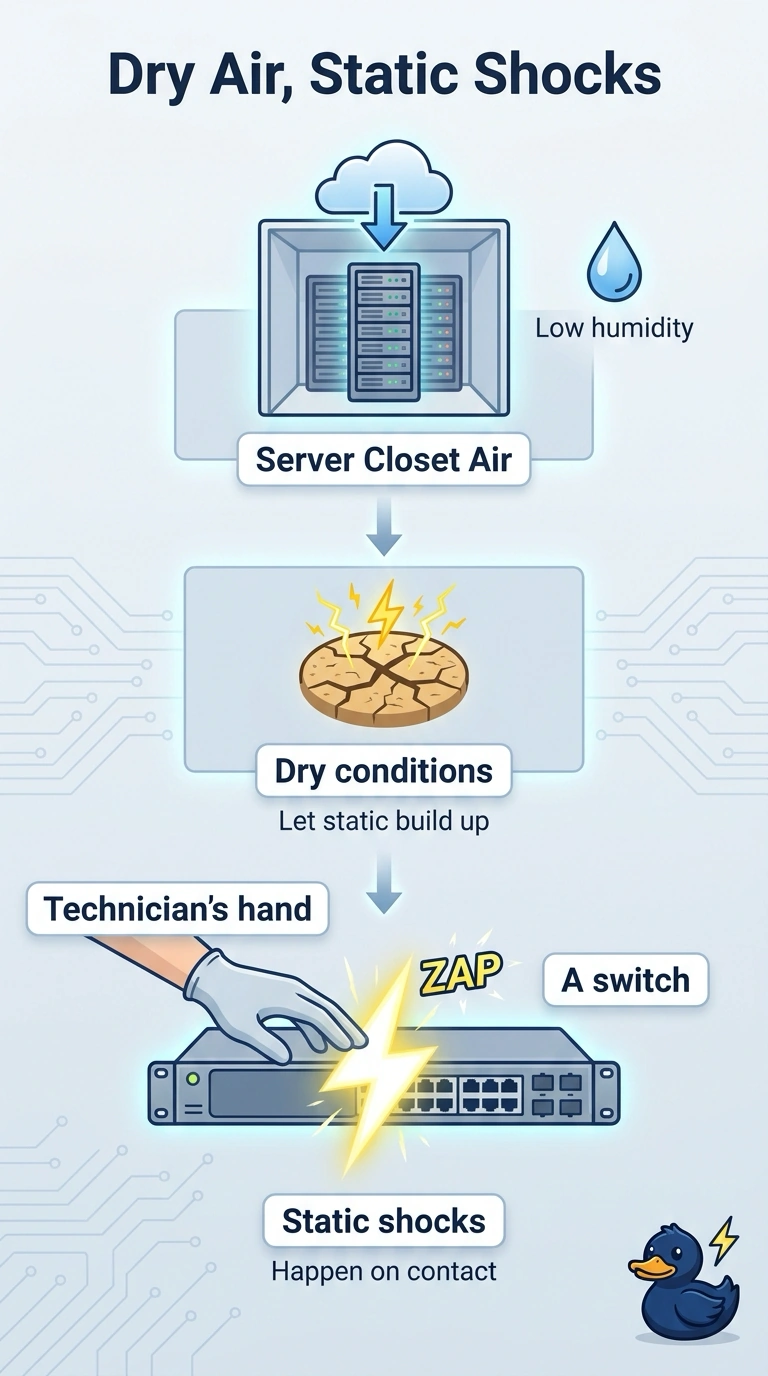
Winter air in a closed closet is a wool sweater on a dry day. You feel the spark because humidity is low and the charge has nowhere to bleed off before your hand reaches the switch. High humidity works the other way, and a missing ground would be a power fault, not a winter spark.
Full Explanation
Electrostatic charge builds and discharges more readily when the air is very dry. A winter closet with low humidity is a classic place for a spark as someone touches a grounded switch chassis. The condition that explains the shocks is the low humidity. High humidity is the reversed environmental fault. Damp air bleeds charge off slowly and brings condensation, and it is not when these dry-air snaps show up. A temperature below the switch's operating range can harm the device, and the spark is an electrostatic event tied to dryness, not to the thermometer by itself. A missing equipment ground can put dangerous fault current on a chassis. That is a continuous shock hazard from the electrical system, not the small static snap technicians feel in dry winter air. Exam caveat: humidity that is too high causes corrosion, so the fix is a controlled range, not an unmonitored humidifier. Operational check: read the closet humidity, compare it with the site standard, and correct the HVAC before you replace switches that are only announcing the dry air.