
A media archive holds photographed newspaper pages and needs the printed words as searchable text. Which method performs that step?
Select an answer to reveal the explanation.
Short Explanation
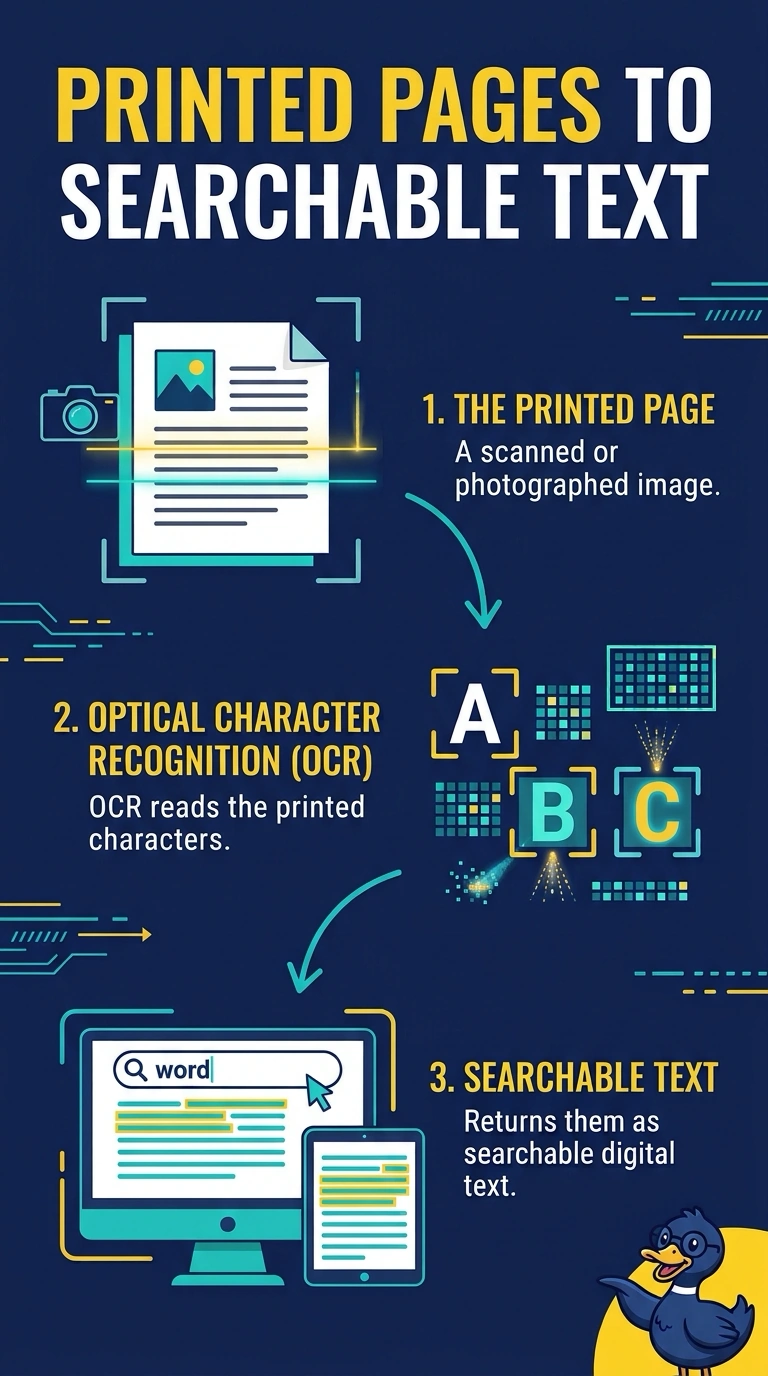
You need a reader for photographs of type, not a critic of the story. Optical character recognition pulls the printed words out of the page image. A box around a picture, or a mask of ink pixels, still leaves the words unread.
Full Explanation
Optical character recognition takes an image of printed or written characters and returns those characters as text. The archive's photographed pages become searchable only after that reading step turns ink shapes into words. Object detection can localize a photograph or a region on the page, but a box is not a transcription of the article. Sentiment scoring assigns a tone to text it already has, so it cannot start from a picture of a page. Semantic segmentation can label pixels as paper or ink and still stops short of recognizing which characters those ink pixels form. On a photographed page the words are still shapes of ink until a recognizer maps those shapes to characters. The archive's search index stays empty until that mapping exists, even if a person can already read the headline by eye. A box, a tone label, or a pixel class can sit beside the page and still leave the index with nothing to search. Exam caveat: finding a text block is not the same step as reading it; recognition is the step that emits characters. Operational check: run a page image through the method and confirm the output is the printed sentence, not a box, a tone label, or a pixel mask.