
A clothing retailer's service desk wants a system that reads each complaint email and recovers what the shopper is asking for, without composing a reply. Which capability fits that job?
Select an answer to reveal the explanation.
Short Explanation
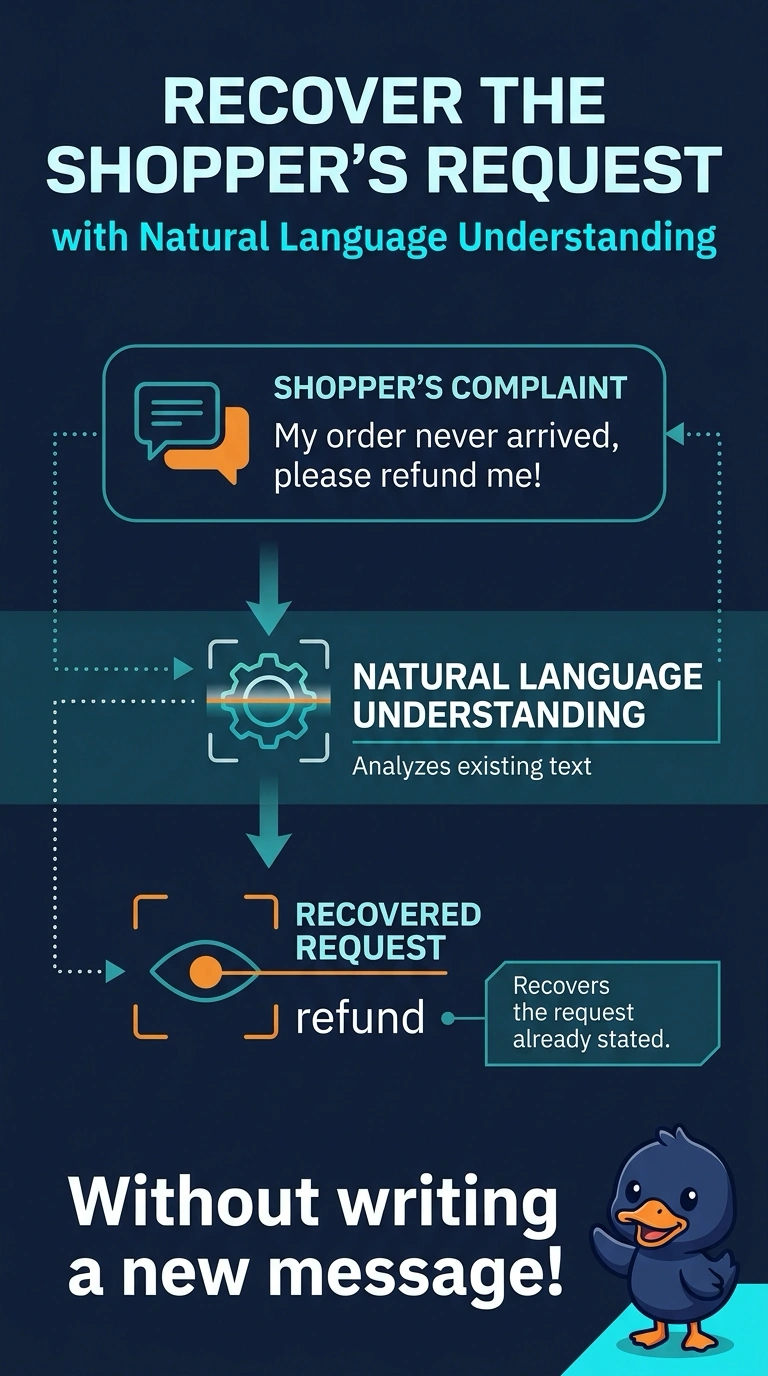
Reading the complaint is like taking the customer's order, while generation is like writing a reply they never asked you to send. You want the capability that recovers the request already in the email. The trap is picking a writer when the desk asked for a reader.
Full Explanation
Natural language understanding recovers meaning that is already present in text, which is what the service desk needs when it must state the shopper's request and must not compose a reply. The complaint already contains the ask, so the fitting capability reads that meaning out rather than creating new prose. Natural language generation produces new text, such as a drafted apology the shopper never sent, and that is the step the desk excluded. Stemming only reduces words to rough roots so related spellings can match later; it never states what the shopper wants. Stop-word removal drops frequent function words before a count or a model and likewise does not extract the request. Exam caveat: a later step might ask a generator to draft a reply after the request is known, but drafting is a separate capability from understanding the complaint. Operational check: feed the system a complaint that asks for a refund on a torn coat and confirm the output states that request rather than a newly written email.