
A logistics company can rent a large pool to train a dock-delay model that will not fit a training run on the gate scanners, but live gate scores must be produced inside the warehouse network, where that rented pool is not allowed to run. Which deployment split fits?
Select an answer to reveal the explanation.
Short Explanation
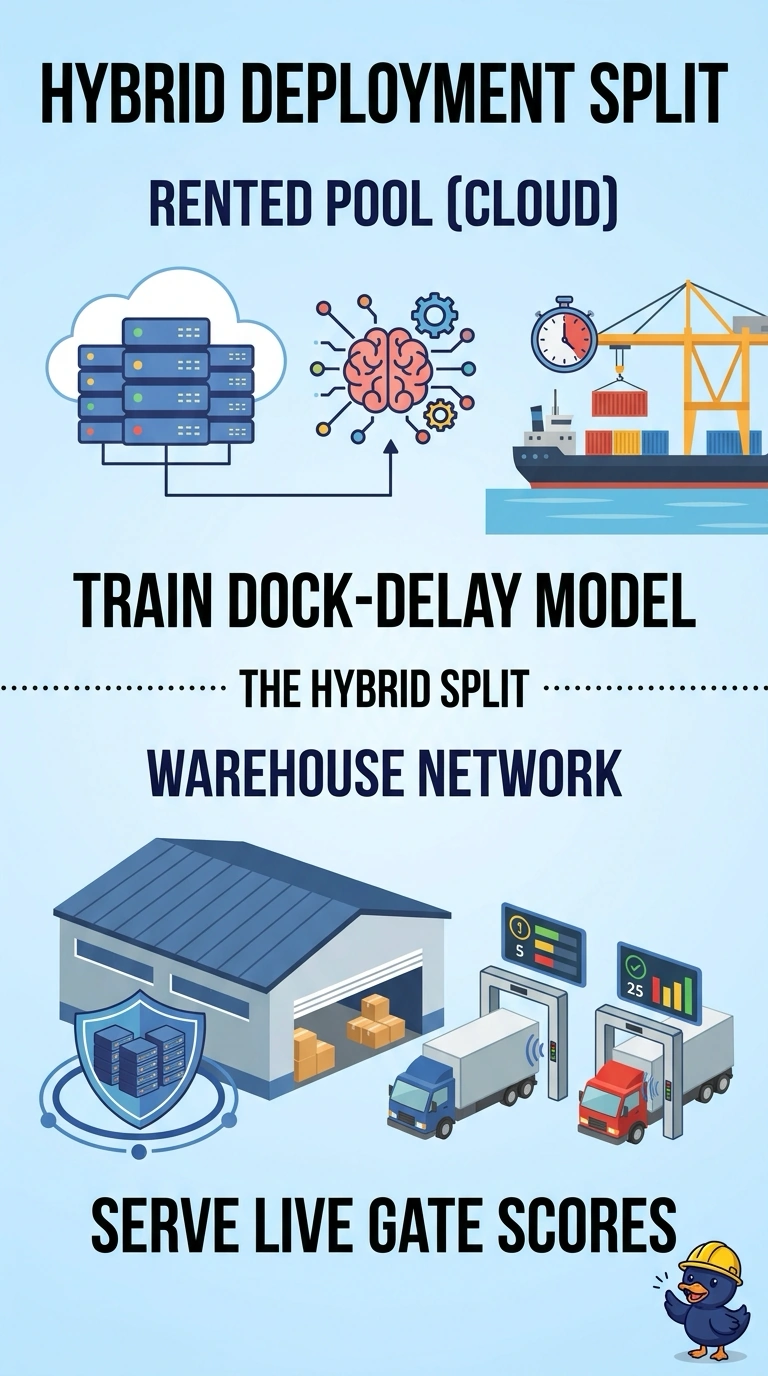
Training and serving do not have to share one building. You want a hybrid split that trains in the rented pool and serves live scores inside the warehouse network. The trap is doing both steps in the one place the hardware or the rule will not allow.
Full Explanation
A hybrid split puts training in one environment and serving in another. This model needs the rented pool because a training run will not fit on the gate scanners, and the live scores must be issued inside the warehouse network, where that pool is not allowed to run. Doing both training and serving on the scanners fails the fit of the training run, however close the scanners are to the trucks. Doing both on one warehouse server fails the statement that this server cannot finish training in the time allowed. Doing both inside the rented pool produces the live scores outside the network that is required to issue them. What may move between the two homes is the trained model artifact; the live scoring step stays in the warehouse. Exam caveat: the hybrid pattern here is a split of steps across environments, not the use of two vendors to perform the same step twice. Operational check: confirm training jobs are submitted only to the rented pool and that each live gate score is returned by the service running inside the warehouse network.