
A factory packages a camera model that scores frames on the line. When one serving copy stops, a replacement should start, and when the line speeds up, more copies should run. Which platform role places those copies, restarts a stopped copy, and scales the count?
Select an answer to reveal the explanation.
Short Explanation
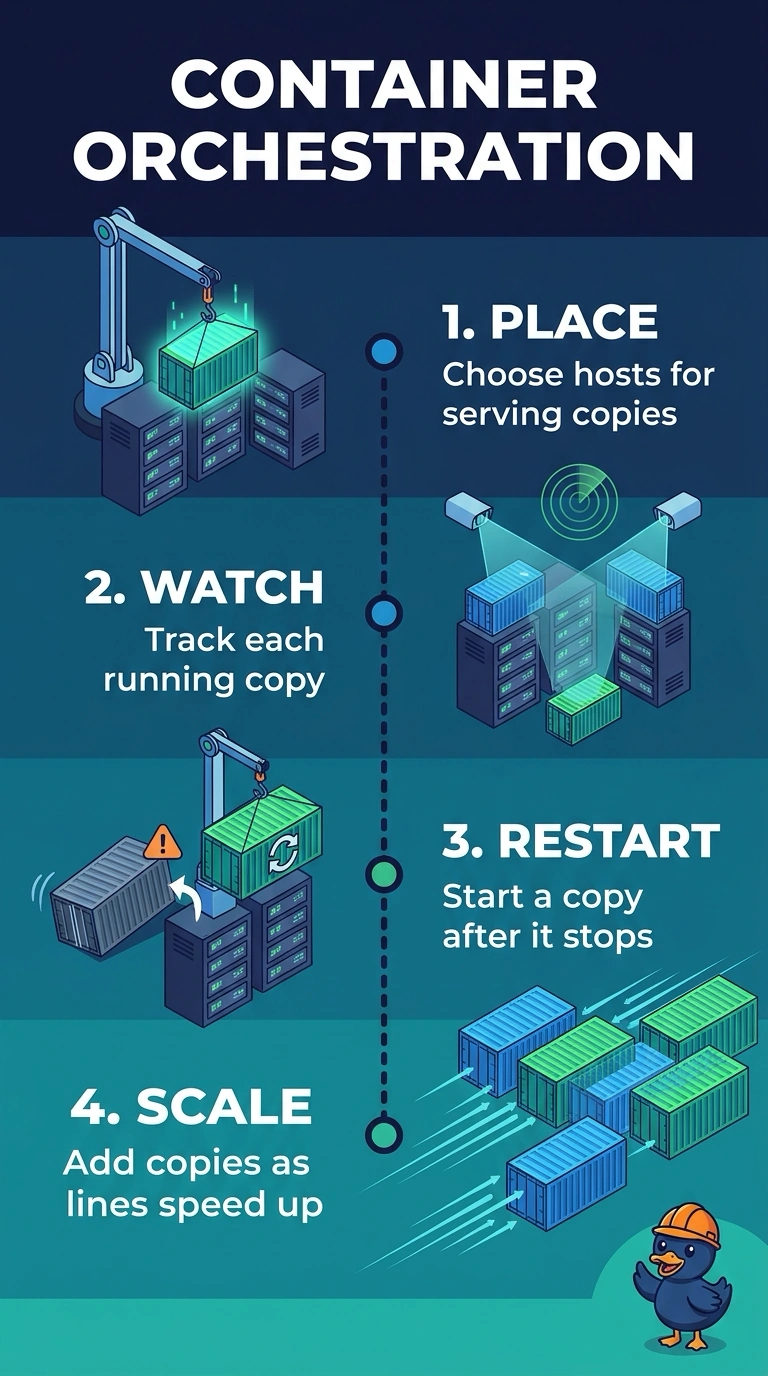
Someone has to dispatch the trucks, not just file the route on a shelf. You need container orchestration to place the scoring copies, restart one that stops, and add copies when the line speeds up. A registry, a dashboard, or a training log will not put those copies on the line.
Full Explanation
Container orchestration decides where serving copies run, replaces a copy that has stopped, and changes how many copies run as load changes. On this line, that means placing the frame-scoring units, starting a replacement when one dies, and adding units when the line speeds up. A model registry records which version was approved, but storing a name does not launch, restart, or multiply the process that scores frames. Placement, restart, and scale belong together because a dead copy and a faster line are both gaps between the desired count and the copies actually running. A monitoring dashboard reports latency and errors after copies are already running, so it observes the fleet rather than placing it. An experiment tracker keeps the parameters used during training and does not operate the live serving units at all. Exam caveat: orchestration keeps the declared count running, but it does not by itself prove the model inside the copy is the approved version. Operational check: stop one scoring copy during a steady shift and confirm a replacement appears, then raise the frame rate and confirm the running copy count increases.