
A media platform runs ingest, then clean, then publish. When the clean step fails, the team wants that step tried again, and it does not want publish to start before clean succeeds. Which capability provides that control?
Select an answer to reveal the explanation.
Short Explanation
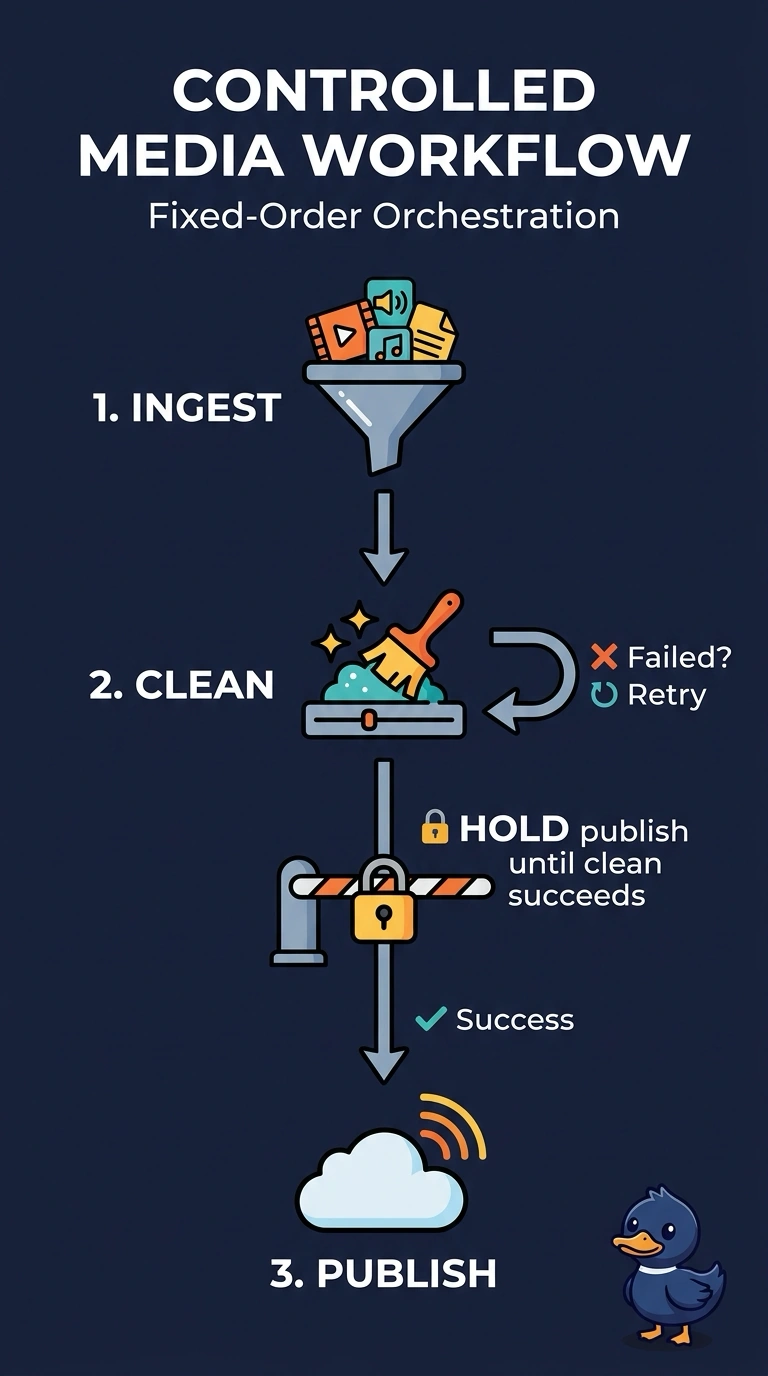
You need orchestration to run ingest, clean, and publish in order, retry clean when it fails, and hold publish until clean succeeds. Lineage tells you where a field came from, but it does not rerun a failed step.
Full Explanation
Orchestration controls execution order and failure handling, so it can run ingest, then clean, then publish, retry clean when it fails, and hold publish until clean succeeds. This directly meets the platform’s requirement: a failed clean step must be tried again, and publish must not begin before clean succeeds. Lineage records where each published field came from and which cleaning rule transformed its value; it does not start, sequence, or retry jobs. A refresh cycle states how often the published table is brought up to date, but does not by itself order ingest, clean, and publish or retry a failed step. A columnar layout stores each published field in its own run so readers can scan one field without reading the rest of the row; that affects reading, not execution order or retries. Exam caveat: a retry policy that marks clean as failed and continues to publish still fails the requirement, because publish must wait for a successful clean. Practical check: make clean fail in a test run and confirm that it is retried and that publish does not start until clean succeeds.