
A telecom planner downloads a drive-test dataset that anyone can fetch from a public archive. The file's license allows research and forbids using the measurements in a commercial planning product. Why is public access not permission enough to build that product?
Select an answer to reveal the explanation.
Short Explanation
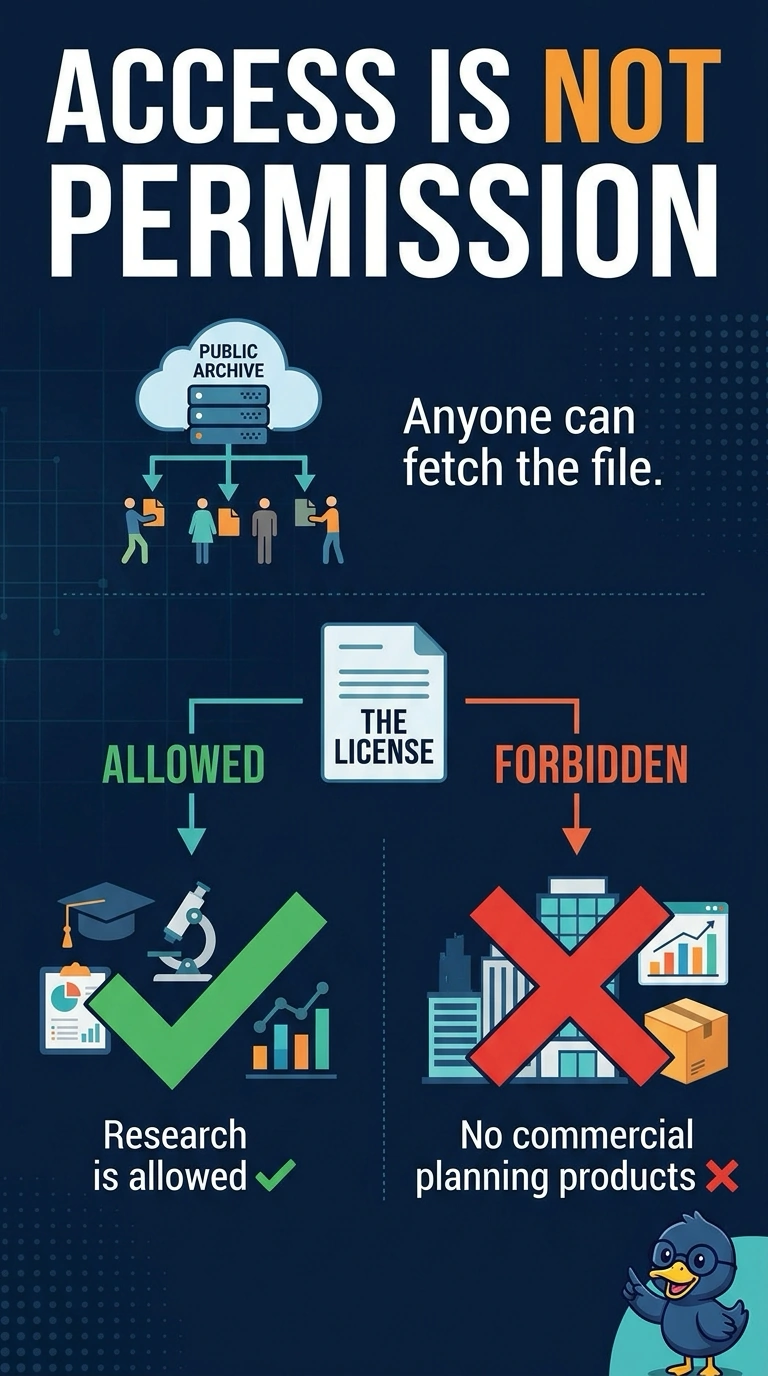
A book left on a bench can still carry a note that says you may not sell it. You downloaded a drive-test file anyone can fetch, and its license still forbids a commercial planning product. The trap is reading public access as a grant of every commercial right.
Full Explanation
Public availability means people can obtain the file. It does not, by itself, state what they may do with it. The license that accompanies this drive-test set allows research and forbids using the measurements in a commercial planning product. That use restriction survives the fact that the archive is open. The planner who builds the forbidden product is outside the grant, even though no login stood in the way of the download. Synthesis is a different limitation. Nothing in the stem says the measurements were generated or that rare towers were omitted. The commercial clause is a reuse rule, not a warning about missing patterns. An administrative billing source would be data collected to run subscriber invoicing. A public drive-test archive is not that system, and the stem's limit is the license, not a mismatch with a billing purpose. Saving the file does not extinguish the posted terms. A download copies the data. It does not rewrite the license into an unlimited grant. Exam caveat: other public datasets do allow commercial use, often with attribution, so the safe inference comes from the grant text and not from the word public. Operational check: open the license shipped with the archive and find the commercial-use clause before any planning product is trained or shipped.