
A logistics warehouse rebuilds its stored on-hand inventory table from the source system every night, and morning analysts need the name for that cadence before they trust the report. Which concept states how often the stored table is brought up to date?
Select an answer to reveal the explanation.
Short Explanation
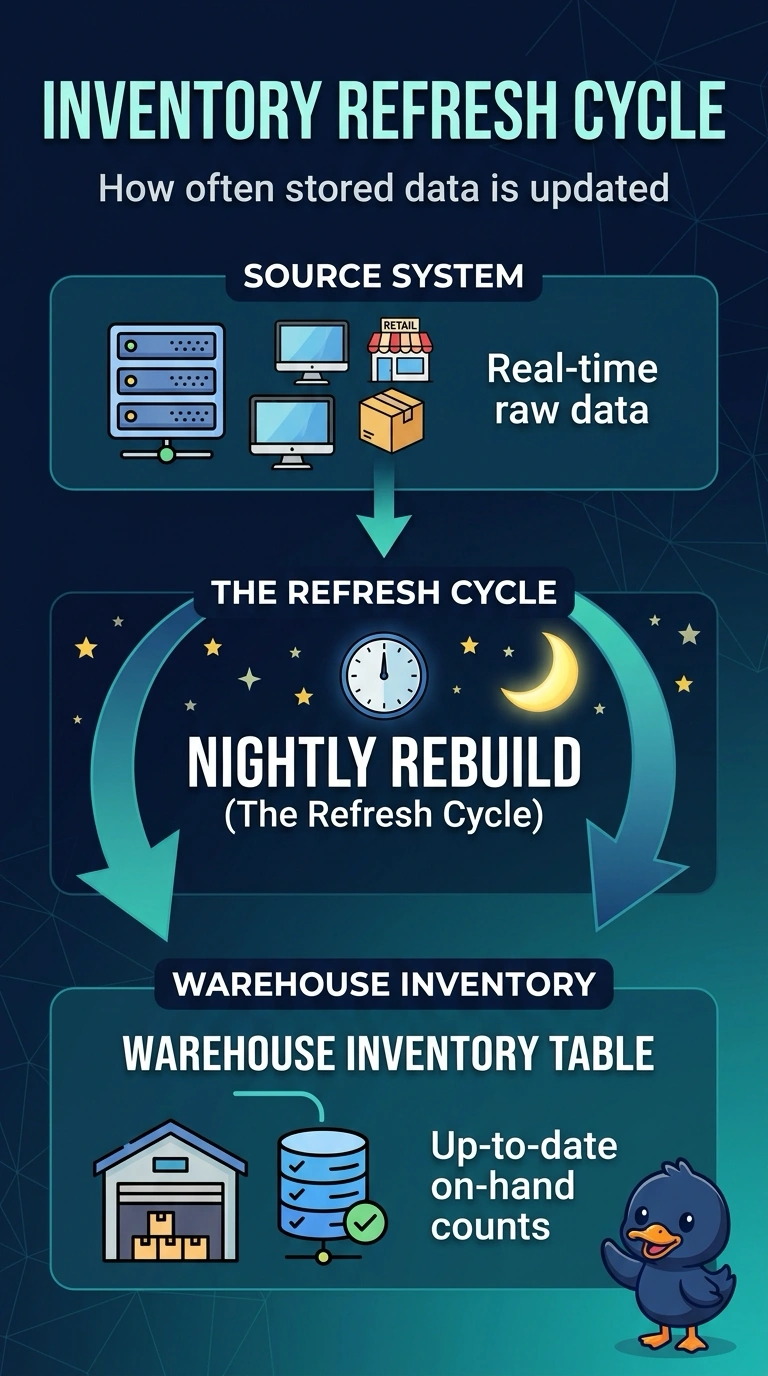
The sticker on a stockroom door should tell you how often the counts on the shelf are replaced. The refresh cycle is that sticker: it states how often the stored on-hand table is brought up to date from the source system. The trap is orchestration, which orders the nightly steps and retries failures but is not the name of the cadence.
Full Explanation
The refresh cycle is the cadence at which a stored table is brought up to date from its source. For this inventory table the rebuild happens every night, and the concept that names that schedule is the refresh cycle. Lineage names the source column and the transform that produced on-hand counts; it does not state how often the reload runs. Orchestration orders the nightly steps and retries failures; analysts can use it to see job control, but it is not the name of the update cadence they need to quote. Retention decides how long older snapshots are kept, which is a storage lifetime rather than the frequency of the current rebuild. Quoting the step list or the retention window answers a different operations question than the cadence the morning analysts asked for. Exam caveat: the refresh cycle describes how often the stored table is updated, and it does not by itself prove that each source extract was complete. Operational check: read the table's refresh definition and confirm it states the nightly rebuild the morning report relies on, separate from the step order and the retention window.