
A regional bank must move older wire-transfer files out of the hot query store because investigators rarely open them, yet a fraud review months later still needs a copy that can be retrieved. Which action meets both needs?
Select an answer to reveal the explanation.
Short Explanation
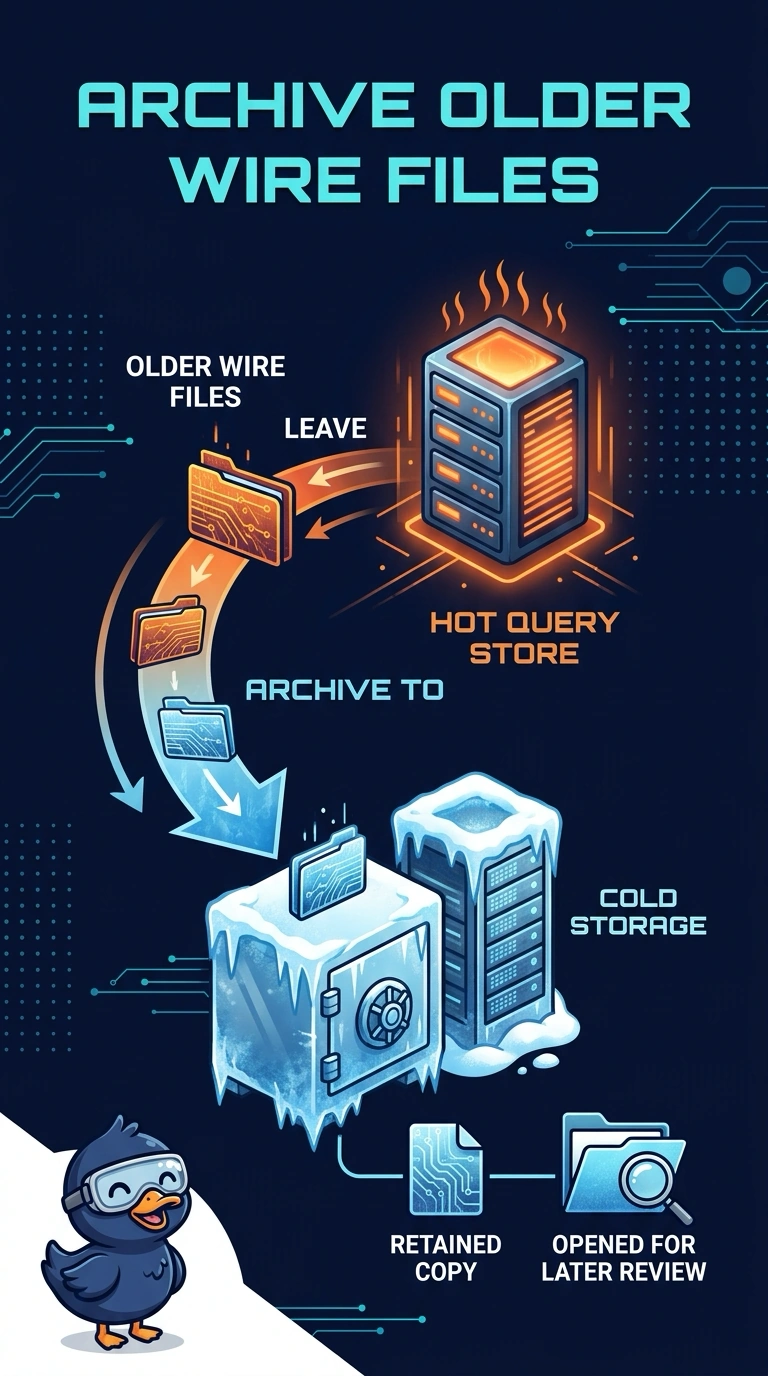
Old files are like boxes you move to a back room, not boxes you throw in the shredder. Archiving takes the wire files off the hot store and still leaves a copy your investigators can open later. The trap is deleting them to save space, which wins the storage fight and loses the audit.
Full Explanation
Archiving moves data that is rarely queried into colder storage while keeping a retrievable copy. The wire files leave the hot query store, which is what the bank asked for, and a fraud review months later can still open the original records. Deleting the files from every store does shrink the hot tables, but it removes the evidence a later audit would need, so it satisfies only the space goal. Leaving every file in the hot query store preserves access, yet it ignores the requirement to take rarely opened files off that store. Regenerating wires from downstream summaries fails for a different reason: summaries are aggregates, not the original transfer records, so they cannot stand in for a retained copy of the source files. Opening a cold copy can be slower than a hot query, and that delay is acceptable when the files are rarely needed and the retained bytes are intact. Exam caveat: an archive is a retention choice, not a claim that the files must stay on the fastest disks; cold storage can be slower as long as the copy remains. Operational check: restore one archived wire file in a drill, confirm the bytes match the original, and confirm the hot query store no longer holds that file.