
An agency director says to use a newer method on the inspection data and gives no decision, no cost for a missed violation, and no cost for a false flag. What should the analysts do first?
Select an answer to reveal the explanation.
Short Explanation
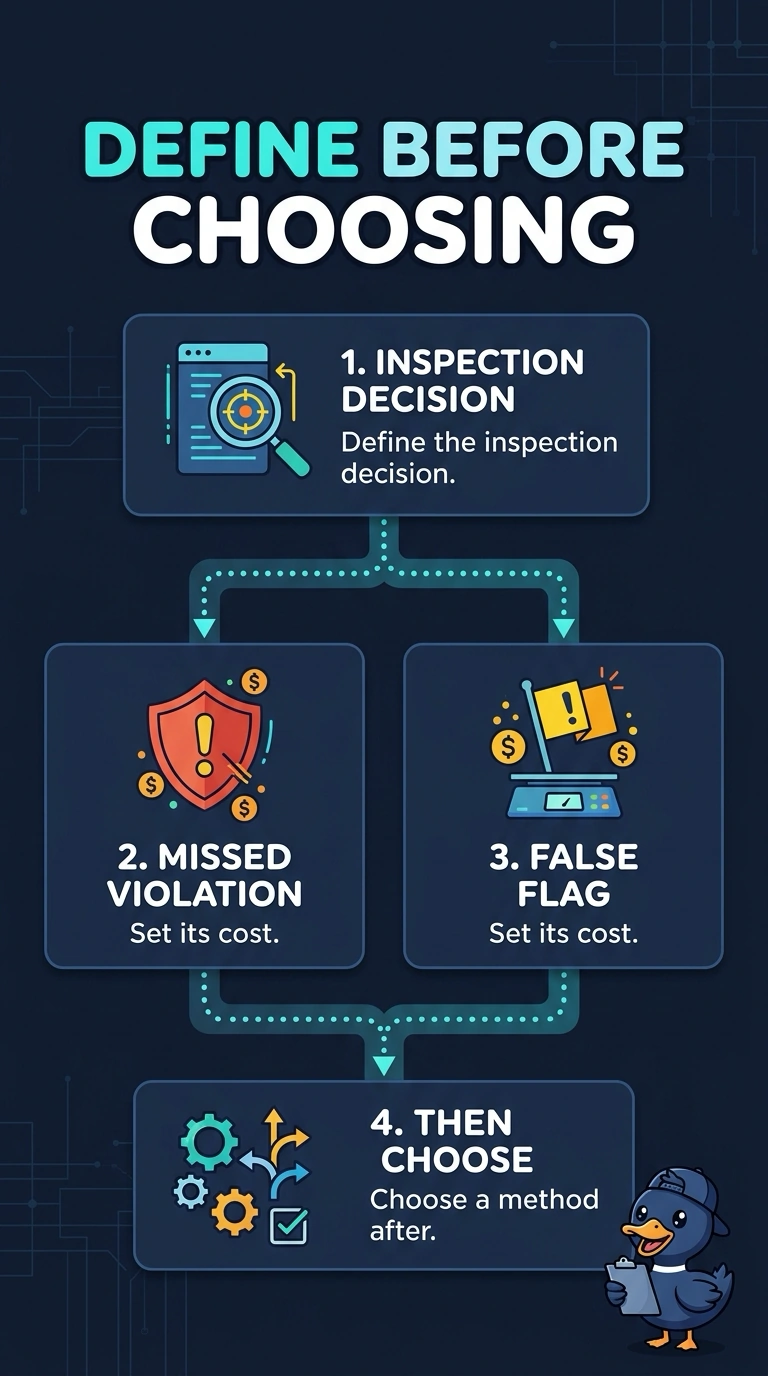
Use a newer method is a wish, not a spec, until you know what decision it serves and what each mistake costs. You translate that vague request into the inspection decision and the error costs first. Highest accuracy on a random split, or a bigger file alone, does not supply the missing decision.
Full Explanation
A request to use a newer method names a technique and skips the decision the technique is supposed to serve. The analysts first have to translate it into the inspection decision, such as which sites to flag, and into the costs of a missed violation versus a false flag, because those costs decide what a good error looks like. Starting to train the newest runnable method treats a vague sentence as a mandate and can optimize a model that does not match the decision. Highest accuracy on a random split assumes every error is equal, which is the assumption the missing costs were needed to challenge. Collecting more rows may help later, but extra rows do not state the decision or the two error costs, so sample size is not the first gap. Exam caveat: method choice comes after the decision and the error costs are explicit; a newer algorithm is not evidence that the current decision was wrong. Operational check: write one sentence that states the inspection decision and one that states the relative cost of a miss versus a false flag, and only then compare methods against that statement.