
In a bank's monthly delinquency pack, two readers treat one column differently: one counts days past due, and the other counts accounts already charged off. What should accompany the pack so each field has one meaning?
Select an answer to reveal the explanation.
Short Explanation
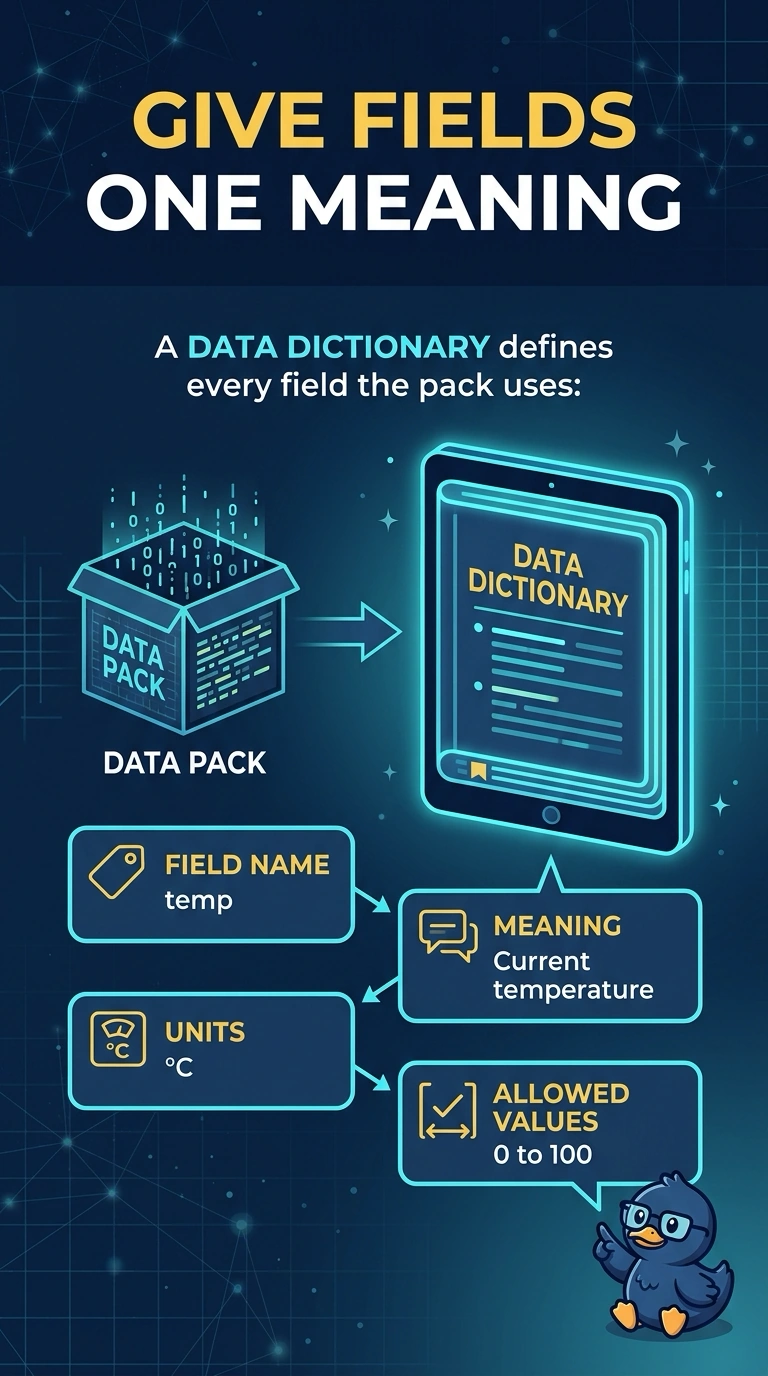
A column title is a sticker on a jar, not the recipe inside. You need a data dictionary that states what each field means, including its units and allowed values. A style sheet, model card, or limited change log cannot define the disputed column for you.
Full Explanation
A data dictionary travels with the report and gives each field one definition: what the column counts, its units, and the values that are allowed. The disagreement here is exactly that kind of gap: one reader treats the column as days past due, while the other treats it as accounts already charged off. A style sheet governs fonts, logo placement, and colors, so it can make the pack look consistent while leaving the column's meaning unsettled. A model card describes how a credit score was trained and which applicant features entered that score; it does not define what a report column counts. A change log that lists only columns added this month records new arrivals but leaves the older disputed column undefined. Exam caveat: a dictionary fixes meanings; it is not a note identifying which meanings changed since the prior edition. Practical check: ask both readers to define the disputed column using only the dictionary, then confirm they describe the same count, units, and allowed values.