
A telecom churn pack no longer matches last month's edition. The definition of an active line was narrowed, and the scoring model was retrained on newer history. Readers need a record of what moved, not a restatement of every field that stayed put. What should accompany this edition?
Select an answer to reveal the explanation.
Short Explanation
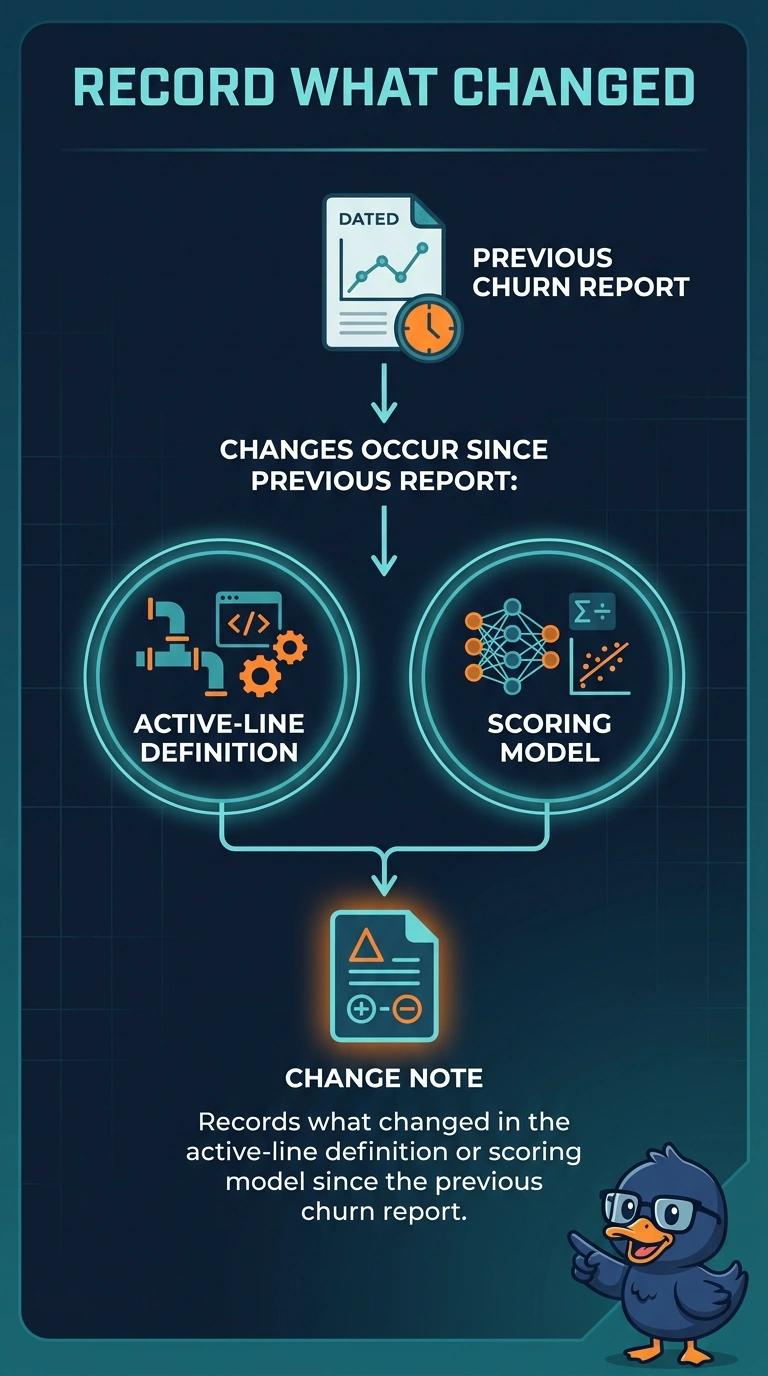
Two editions of a report are two batches of a recipe, and someone changed the recipe. You need a change note that records what moved in the data or the model since the last report. The trap is restating every field from scratch and skipping what actually changed.
Full Explanation
A change note is the record of the delta since the last edition. Here that delta is a narrower definition of an active line and a scoring model retrained on newer history, and readers comparing the two packs need those changes written down. A data dictionary that restates every field supplies meanings and, as described, does not say what moved, so it misses the request even though a dictionary is useful for a different job. A contrast note that darkens pale text and enlarges captions addresses an accessibility review and ignores both the definition and the retrain. A chart-type note that swaps a pie for a line changes a graphic and also says nothing about the definition or the model. Exam caveat: a change note supplements field definitions; it does not replace the definitions of columns that did not change. Operational check: compare the note with the definition now in force and with the model version in production, and confirm both the narrowed active-line rule and the retrain are written there.