
A utility must decide whether to roll a truck for a suspected outage. After a new alert launches, app logins rise, but logins do not change which trucks roll or which calls are real. Which response to that login count fits the decision?
Select an answer to reveal the explanation.
Short Explanation
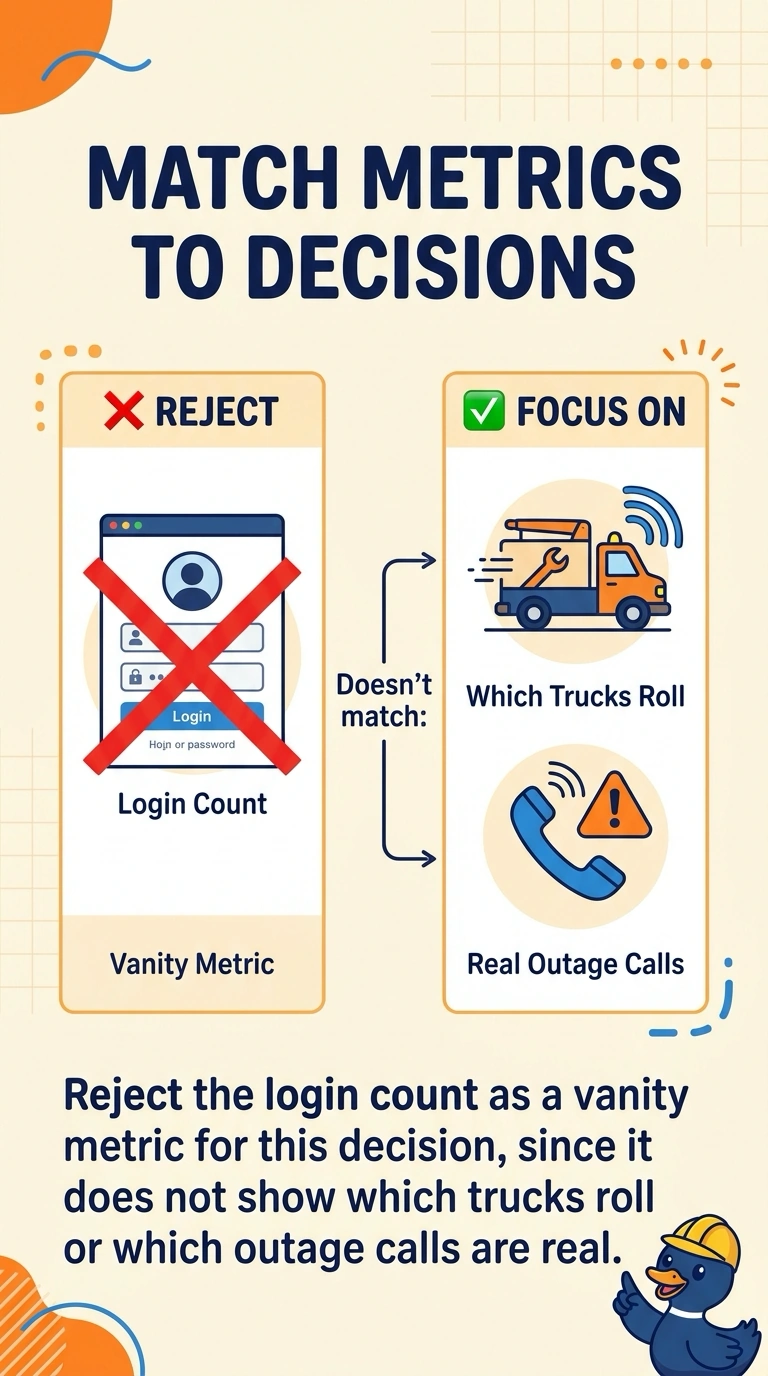
Applause in the lobby does not tell you whether the right truck left the bay. You reject the login count as a vanity metric because it does not match the truck-roll decision. The trap is treating a rising login number as proof that the outage calls got better.
Full Explanation
The decision is whether a truck should roll for a suspected outage, which depends on which calls are real and which crews are sent. App logins can rise because the alert is easy to tap, with no change in those calls or crews. A metric that moves without matching the decision is a vanity metric, and it should be rejected as the measure of this choice. Adopting logins as the success metric treats a side effect of the alert as if it were better outage response. Reporting logins as confirmation that the right trucks were sent invents a link the stem says is absent. Optimizing the model for logins and assuming truck rolls improve when the app opens more often trains the system toward the vanity metric. Exam caveat: a login count can stay on a dashboard for a different question, such as whether people saw the alert; it is a vanity metric when it is used to judge the truck roll. Operational check: confirm the go or no-go criterion is truck-roll quality on real outages, and that the login series is not that criterion.