
A hospital model flags readmission risk. On the visits it was trained on, it looks far better than the ward's current rule. On a later week of visits held out of training, that gain disappears. What should the team report as the result?
Select an answer to reveal the explanation.
Short Explanation
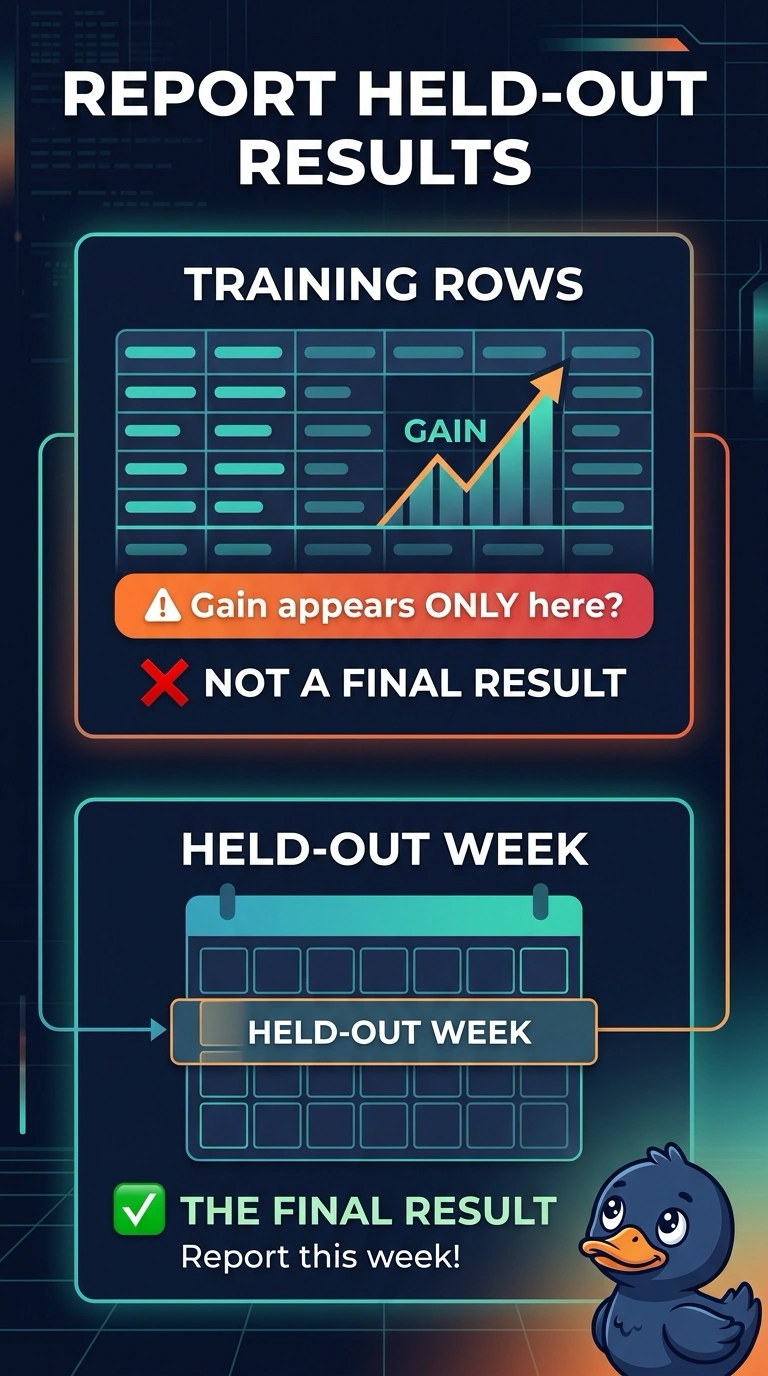
A perfect rehearsal is not opening night. You report the held-out week, because a gain that shows up only on the training rows is not a final result. The trap is publishing the training score the model already had a chance to memorize.
Full Explanation
The training rows are the visits the model was allowed to fit, so a large gain there can be memorization of that sample rather than a rule that works on the next week. The later week was held out of training, and on those visits the gain over the current ward rule disappears. The result to report is that held-out week; a win that exists only on the training rows is not a final result. Anything that puts the fitted visits back into the headline, including a blend or a dismissed dip, reports a rehearsal the model was allowed to memorize. Reporting the training gain as the result presents the rehearsal as the performance. Averaging the training win with the held-out failure manufactures a middle number that hides a failed check on unseen visits. Calling the held-out week a dip that does not change the finding keeps the training score as the record after the confirming week contradicted it. Exam caveat: the training score can still be kept to diagnose overfitting; it is not the number in the decision memo. Operational check: confirm the figure quoted as the result is computed on the held-out week and not on the rows used to fit the model.