
A hospital ward uses skin-temperature probes that physically clip at the top of their rated range, so hotter readings never appear in the feed. A modeler asks whether a software setting can lift that ceiling. Which statement describes the limit?
Select an answer to reveal the explanation.
Short Explanation
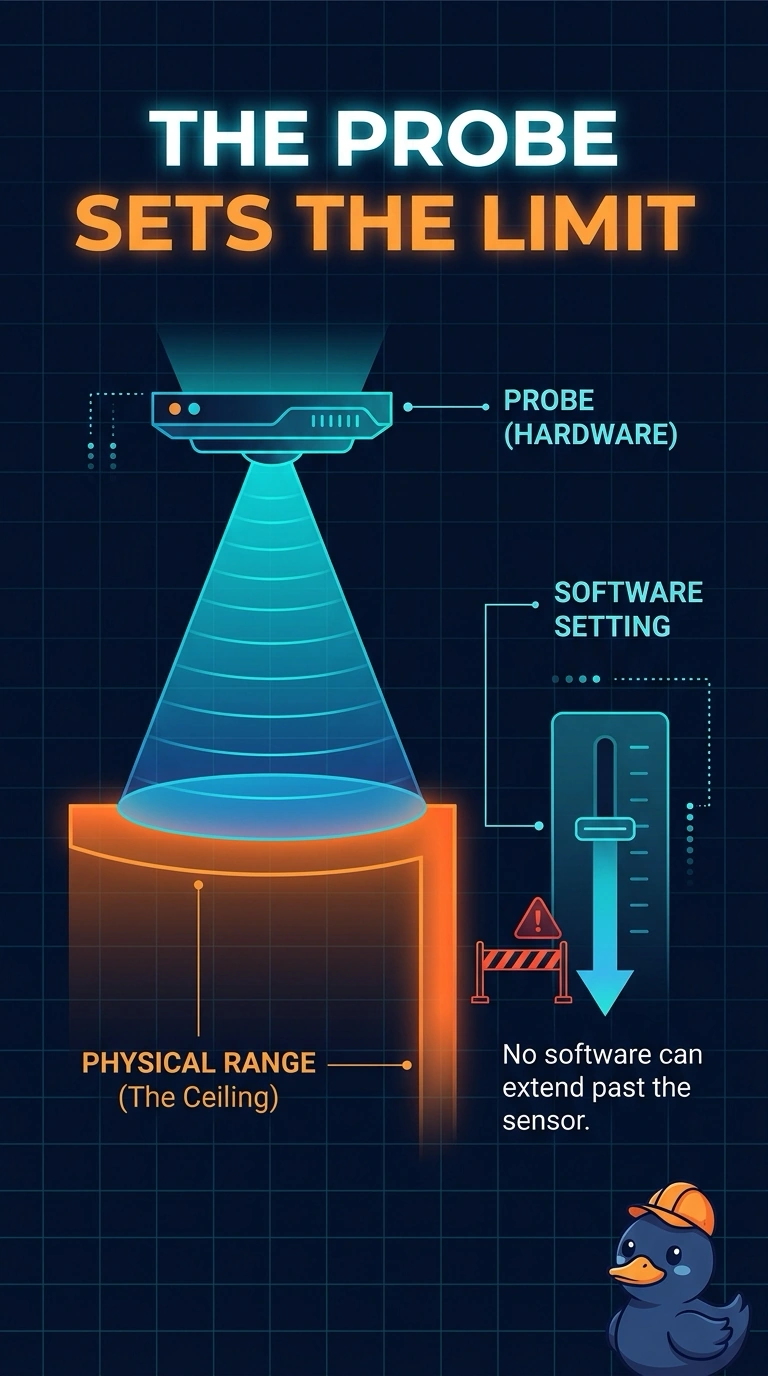
A tape measure that ends at a certain mark cannot record a longer length just because you ask the spreadsheet nicely. The probe's ceiling is that kind of hardware limit, and no training setting extends it. The trap is treating a physical clip as a numeric type or a learning-rate choice.
Full Explanation
A probe can report only values inside the range its hardware was built to sense. Once the skin temperature reaches that rated top, further heat still exists in the patient but the stored reading sits on the clip, and no dtype, learning rate, or axis setting creates the missing higher values. Widening a chart axis changes how points are drawn and does not write new measurements into the feed. Raising the learning rate changes step size during fitting and cannot observe a temperature the sensor never emitted. Switching to a wider numeric type changes how a number is stored, not the physical ceiling of the probe, so the column still tops out at the same clipped value. Many true temperatures above the rated top land on that same stored value, so the clip cannot be inverted later by a model. The ceiling is fixed by the probe that was installed, and the training setup can only live with it. Exam caveat: a software cap added later in a pipeline is a different limit and can be edited; this stem is the sensor's own rated range. Operational check: read the probe specification for its rated maximum and confirm the stored readings pile up at that ceiling rather than spreading past it.