
A retail clothing chain wants one feature that puts weekly revenue and selling-floor area on a single scale, so a small high-earning shop can be compared with a large low-earning shop. Which engineered feature does that?
Select an answer to reveal the explanation.
Short Explanation
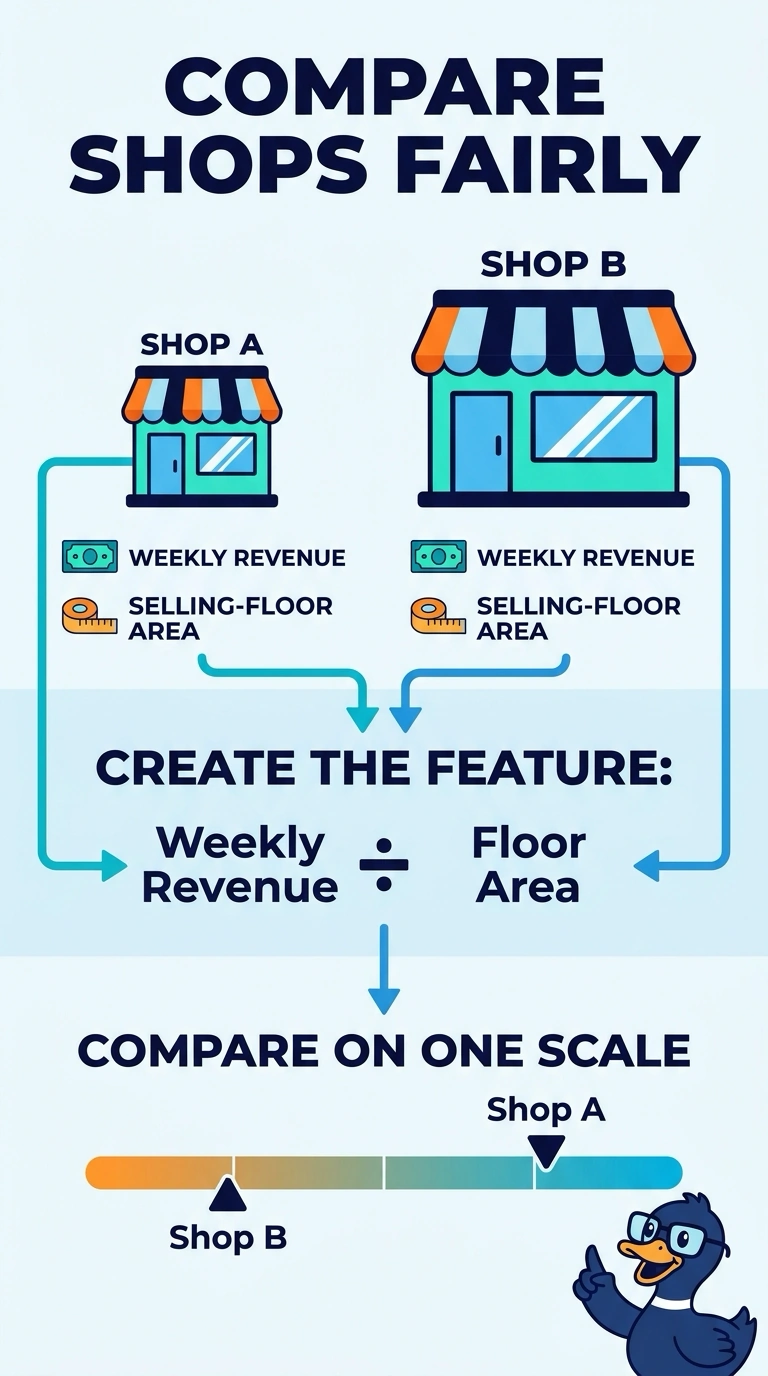
You compare shops fairly when you put sales and space on one scale, the way price per pound lets you compare a small bag with a large one. A ratio feature does that job. Don't reach for a category code or a transform of revenue alone.
Full Explanation
A ratio feature divides one related measure by another so both pieces of information live on a single scale. Revenue divided by selling-floor area is revenue per unit of space, which lets a small high-earning shop be compared with a large low-earning shop without keeping two columns in the comparison. The chain asked for that combined scale, not for a new encoding of an unrelated category. One-hot encoding of region expands a nominal label into indicator columns and does not use revenue or area at all. A logarithm of revenue alone changes the shape of one measure and never brings floor area into the new column. Bins of floor area replace size with a band label and leave revenue on its original scale, so the two measures are still separate. Exam caveat: a ratio is only meaningful when the denominator is a real related measure and is not zero, so empty shops need a defined rule before the division. Operational check: compute revenue per square foot for a small high-earning shop and a large low-earning shop and confirm the ratio ranks the small shop higher on productivity.