
An agency tracks monthly caseload. Leadership asks whether the caseload is rising or falling, not how large it is right now. The analyst can store the caseload level or the month-to-month change. Which statement about those two features is correct?
Select an answer to reveal the explanation.
Short Explanation
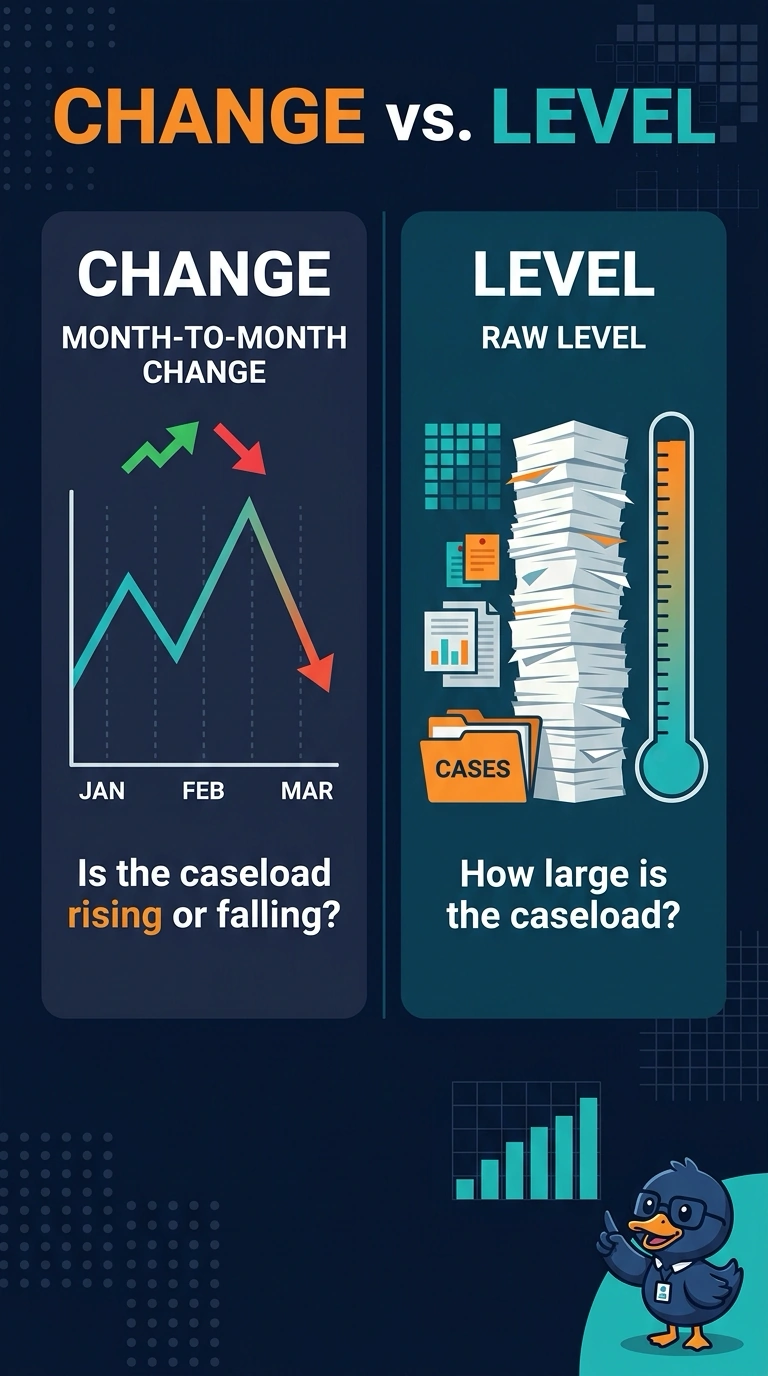
The mile marker tells you where you are, and the change in that marker tells you whether you are moving forward. The month-to-month change answers whether caseload is rising or falling, while the raw level answers how large the caseload is. The trap is thinking a large level already proves the caseload went up.
Full Explanation
A level feature answers how large the caseload is in the current month. A month-to-month change answers whether that level rose or fell from the previous month. Leadership asked the second question, so the change is the feature that matches, and it is not the same question the raw level answers. A large level can be flat or falling, so the level does not already show that the caseload rose. Preferring the level for a rise-or-fall question keeps the size and throws away the direction leadership requested. A change is not a rescaled copy of the level: rescaling would preserve order among the monthly sizes, while a difference can be positive for a small caseload and negative for a large one. Exam caveat: the change feature drops the starting level, so a later question about how large the caseload is still needs the level stored beside it. Operational check: compare two successive months, confirm a small caseload can show a positive change and a large caseload can show a negative change, and use the change column for the rise-or-fall question.