
A utility forecasts the next day's peak load and includes a column that holds the peak from the day before the row being predicted. On today's row the column is yesterday's peak, and the column is not the peak the forecast is trying to produce. What is that column?
Select an answer to reveal the explanation.
Short Explanation
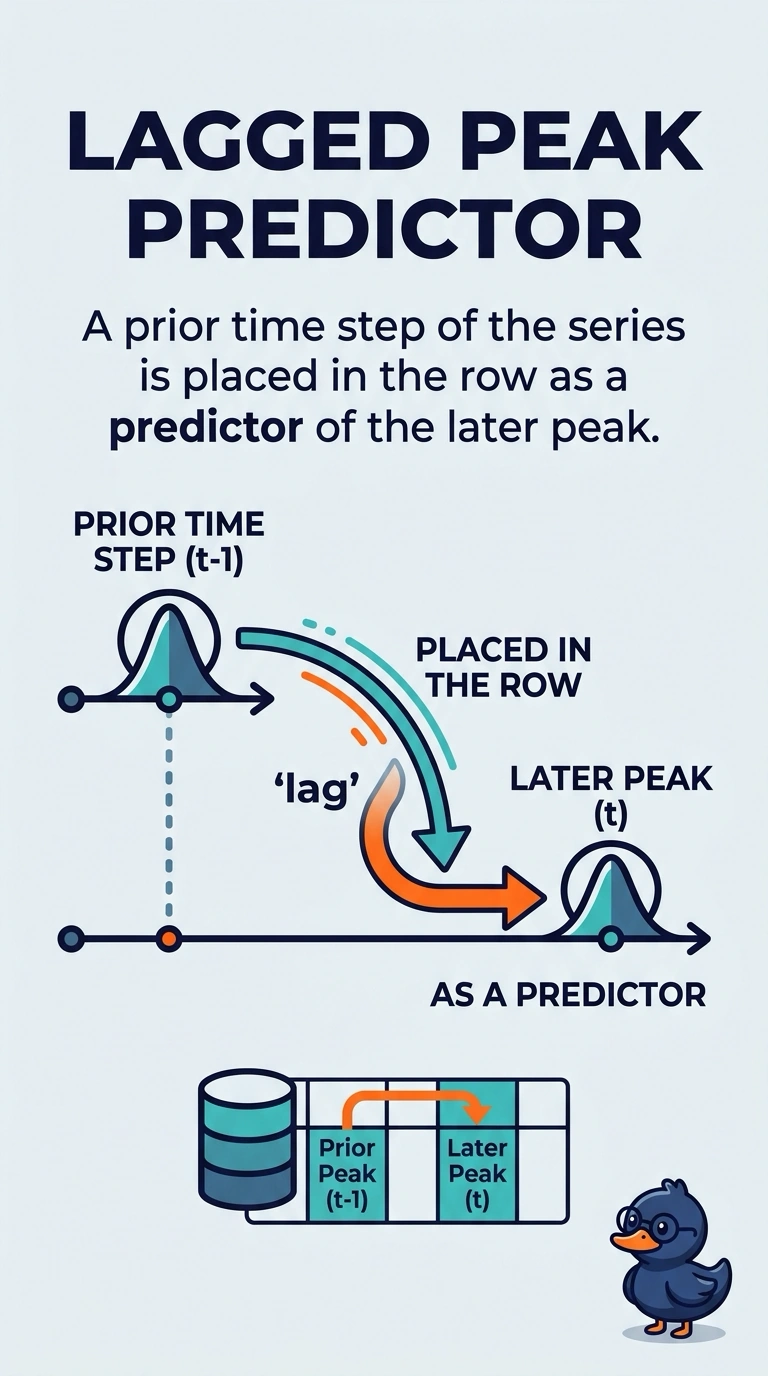
Yesterday's weather is a clue for today only because it has already happened. You placed the previous day's peak load into the row that forecasts the later peak. The trap is calling that column a lead of tomorrow or a subtraction, when it is simply the prior peak itself.
Full Explanation
A lag is an earlier observation of a series used as a predictor for a later row. The column holds the peak from the day before the row being predicted. On today's row it is yesterday's peak. It is known before the forecast is issued, and it is not the future peak the model is trying to produce. That is a one-day lag of peak load. A lead would point the other way in time. It would hold the next day's peak, which is the target itself, and using it as an input would give the model the answer it is supposed to forecast. The stem says the column is not that peak. A first difference would store the change, current minus prior, rather than the prior level. The column holds yesterday's peak itself, so it has not been subtracted from today. A seasonal factor is a repeating calendar weight, such as a typical July adjustment. An earlier peak can be used in seasonal work, but this column is defined as the immediately prior observation of the same series, which is a lag, not a calendar index detached from the series. Exam caveat: a lag is usable at forecast time only when that prior period is already observed. A lag built from the row's own target is leakage. Operational check: compare the column's date with the date of the row it predicts and confirm the column is strictly earlier and was not computed from the future peak.