
A factory will try a new coolant on some production lines and keep the current coolant on the others. Supervisors want the new coolant only on the lines that already record the fewest defects. Why should those lines be assigned by chance instead?
Select an answer to reveal the explanation.
Short Explanation
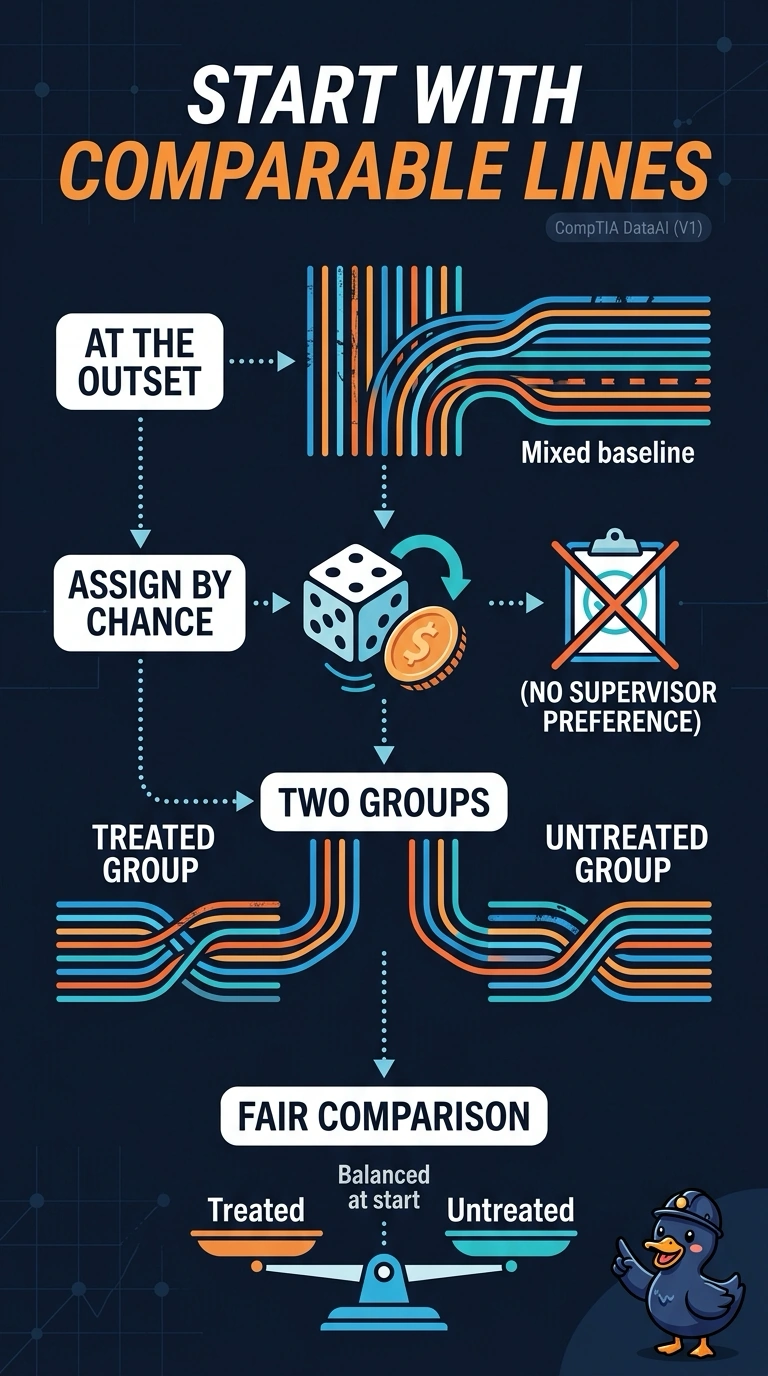
Letting supervisors hand the new coolant to the lines that are already clean is like starting a race with the favorites ahead. You assign lines by chance so the groups start comparable in a randomized trial. The trap is calling a preferred-line rollout a fair test of the coolant.
Full Explanation
A randomized trial assigns the treatment by chance so the treated and untreated lines start comparable, instead of being separated in advance by the outcome the trial will measure. Giving the new coolant only to the lines that already have the fewest defects hands the treatment to lines that were ahead, and the later gap mixes the coolant with that head start. Switching every line at once and comparing the plant with its own past is a before-after of a full rollout, not chance assignment, and it folds in every other plant change over that period. Letting the busiest lines opt in lets operators who expect a gain select the treatment, which is preference again rather than chance. Exam caveat: chance balances the groups through the assignment procedure; with few lines the observed averages need not match on every covariate, and the protection is the procedure rather than a claim that the lines are identical. Operational check: read the assignment log and confirm each line was placed by chance, then compare defect rates from before the trial and confirm the already-clean lines were not handed the new coolant as a block.